When Clean Looks Hide Dampness at the Door
Gasket-sealed storage blocks dust but traps moisture with wet gear; venting after use keeps gear dry and storage practical.
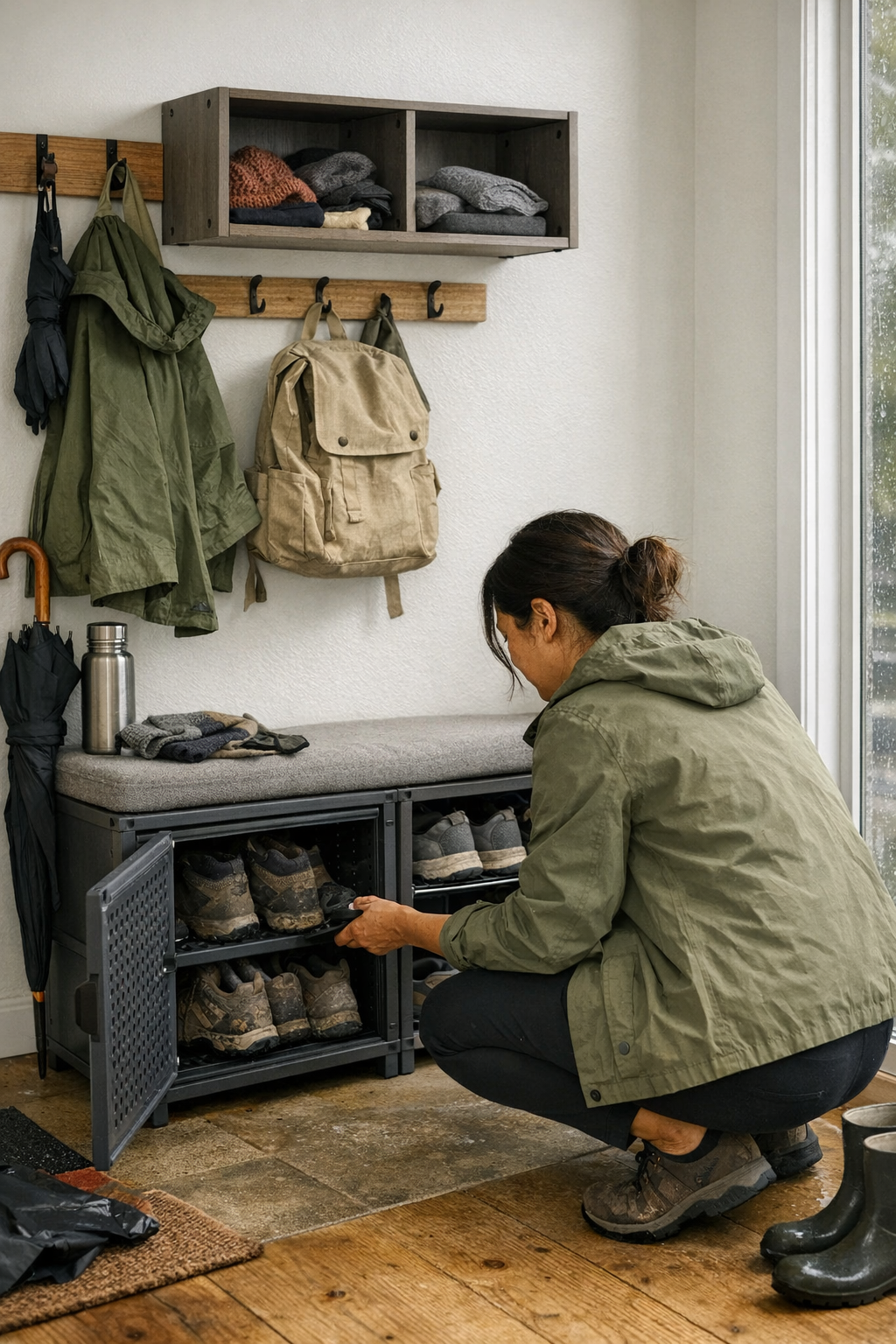
There’s a subtle relief in closing the door on a day’s worth of weather—the boots, bags, and stray hats tucked away out of sight, giving the entry that rare, quiet calm. I used to feel accomplished whenever the threshold looked tight and controlled, everything sealed behind gasketed cabinets and lidded drop spots. Over time, though, a different kind of unsettledness started to linger just out of view—a low, slightly musty trace in the air and gear that wasn’t quite as fresh as it promised to be. The entryway storage kept the space looking orderly, but the reality beneath felt less settled.
The Surface Isn’t Always the Story
You don’t notice it immediately, not in the gentle hum of comings and goings. The place looks orderly—bags lined up, nothing spilling into the narrow pass-through, the bench edge mostly clear except for a glove or two left out of habit. When cabinets are gasket-sealed, dust stays out and everything remains hidden.
But routine use pushes back. Shoes slide in after rainstorms, jackets folded away when still damp at the cuffs. After a few days, the precise order begins to loosen. The air inside those sealed utility cabinets grows close. You sense it in small details—a cool dampness to shoes in the morning, stiff zippers resisting a smooth slide, a faint, contained fog clinging to gear. That was what kept pulling me back to reconsider the setup.
The Drift of Everyday Use
Some things resist being tamed by rigid structure. Rows of shoes drift out as if kids intuitively reach for pairs that dry better on open racks, even if it makes the entry look untidy. There’s an invisible drift here: a single bag left under wall hooks instead of tucked behind a door, umbrellas wedged into tight corners near the utility cabinet. You find yourself improvising—a cabinet door left cracked overnight, gloves draped on the bench edge to give them breathing room.
It’s an imperfect rhythm, but it starts to make sense. Allowing spaces to breathe—a slightly open door here, an exposed shelf there—makes the entry feel lighter, even if it looks less controlled for a moment. The gear dries faster, the space resets itself sooner, and the pressure from repeated arrivals and departures eases.
The Tradeoff Beneath the Tidy Surface
There’s a quiet cost to prioritizing a sealed, perfect surface. Real daily routines push back—a slow but constant pressure that turns pristine order into persistent clutter. Dust is easy to hide behind tightly closed cabinet doors, but moisture isn’t. You feel it every time clammy shoes reappear or catch that first swirl of stale air greeting your return.
It’s a small realization but a practical one: the most useful entryway storage merges control with forgiveness. It’s not just about sealing away mess but about making room for what actually moves through the threshold. Sometimes, letting the system breathe wins out over rigid order. That thin line between looking finished and feeling settled defines everyday entry routines.
If you want to see how these tradeoffs play out in everyday setups, I sometimes browse ideas here: http://www.betweenry.myshopify.com