When Clear Bins Stop Helping and Start Annoying
Clear bins frustrate when placed poorly; keeping frequently used bins within easy reach keeps storage practical and reduces hassle.
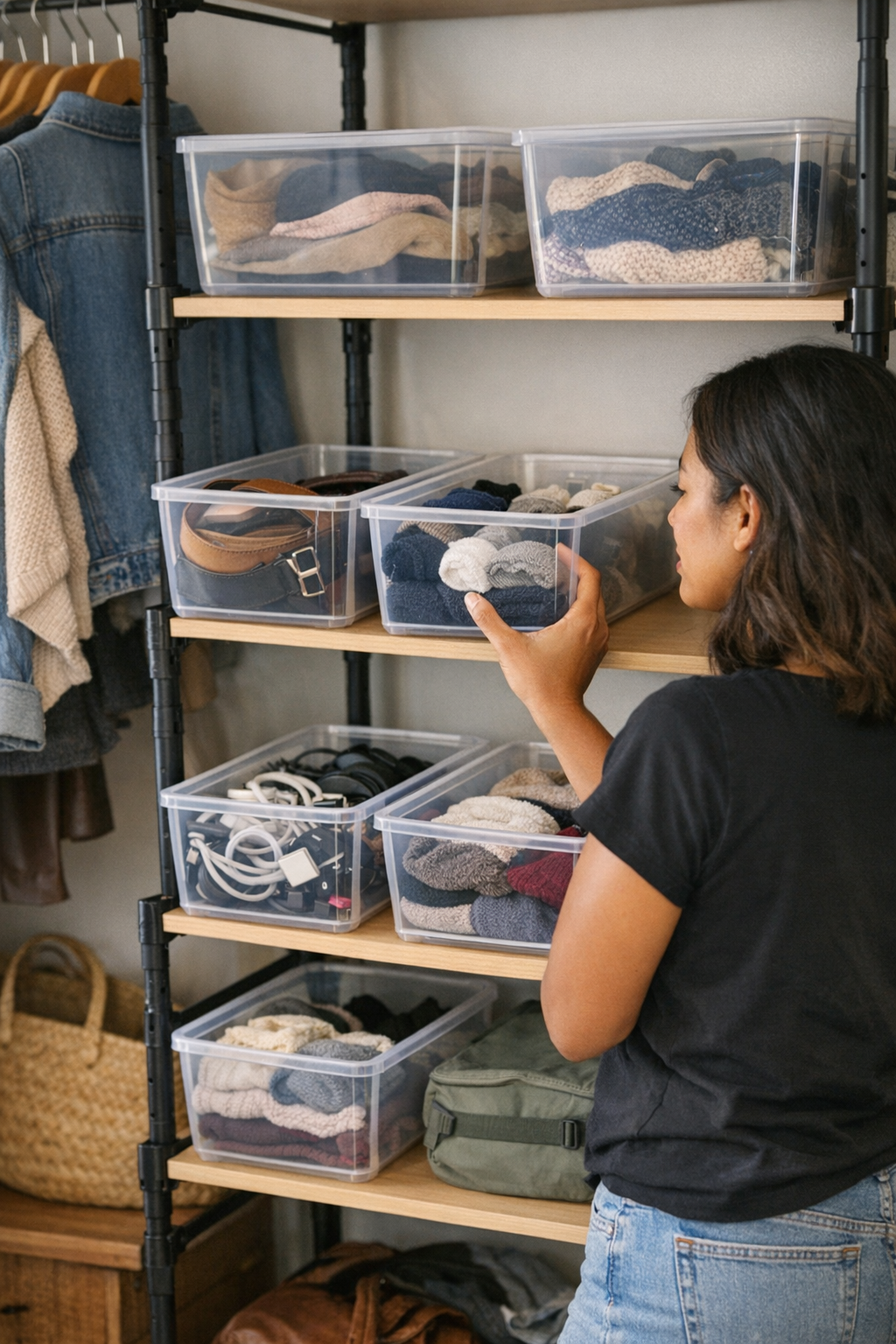
There’s a small satisfaction in seeing everything at a glance—socks, linens, cords—neatly lined up in clear bins on a shelf. The promise feels simple: less searching, more ease. For a while, you don’t question it. Organization feels done. But slowly, something interrupts that sense of order.
It’s not the bins themselves. It’s the friction you start to notice whenever you need something—a quiet shuffle here, a little frustration there. The discovery sneaks up on you: visibility doesn’t always equal accessibility.
The Silent Creep of Frustration
At first, all appears tidy. But daily life chips away at even the best systems.
You don’t notice it immediately.
Reach up for socks on a bleary morning, and the top bin wobbles. Try to grab a charger from the bin at the back, only to move two others first. Each time, there’s a choice: take the extra step or just set the item aside for now. Before long, a pile forms on the shelf, then the floor. The system that once felt like a solution quietly unravels.
Somehow, what was meant to reduce clutter starts scattering it again—only in new places.
When Visibility Isn’t Enough
Clear bins promise clarity. Their contents line up, visible and contained.
But in real life, reach takes priority over what you can see.
A morning in the closet: bins stacked just over shoulder height, edges nudging your wrist as you juggle one-handed grabs. By midweek, the effort wears thin. You start leaving belts or socks beside the bins instead. There’s a subtle threshold—a moment when a habit changes, not with drama, but with a small sigh of inconvenience.
You feel it.
Order survives not in how things look, but in how they flow with your daily rhythm. If reaching the bins feels like work, you stop using them, almost without realizing.
The Refresh That Changed Things
One afternoon, I swapped the entire setup—just moved the bins around until the most-used one sat exactly at arm’s reach, shelf-edge level. No stacking, no lids to juggle when tired. Suddenly, returns happened on autopilot. No piles. No extra thought.
It’s the difference between seeing something and reaching it. The clarity of the bin meant less than the comfort of the grab. High shelves became home to the rarely touched; daily staples stayed close and easy. The change was quiet, almost boring, but it stuck.
Sometimes, the simplest shift—matching access with need—makes a system last. The ease you feel every morning is a quiet kind of satisfaction.
These thoughts came together while reworking a closet for someone who was tired of making the same mess, over and over.