When Clear Paths Make Backyard Chores Feel Lighter
A storage setup that protects the walkway improves movement and upkeep, reducing blockages and keeping the area organized through repeated use.
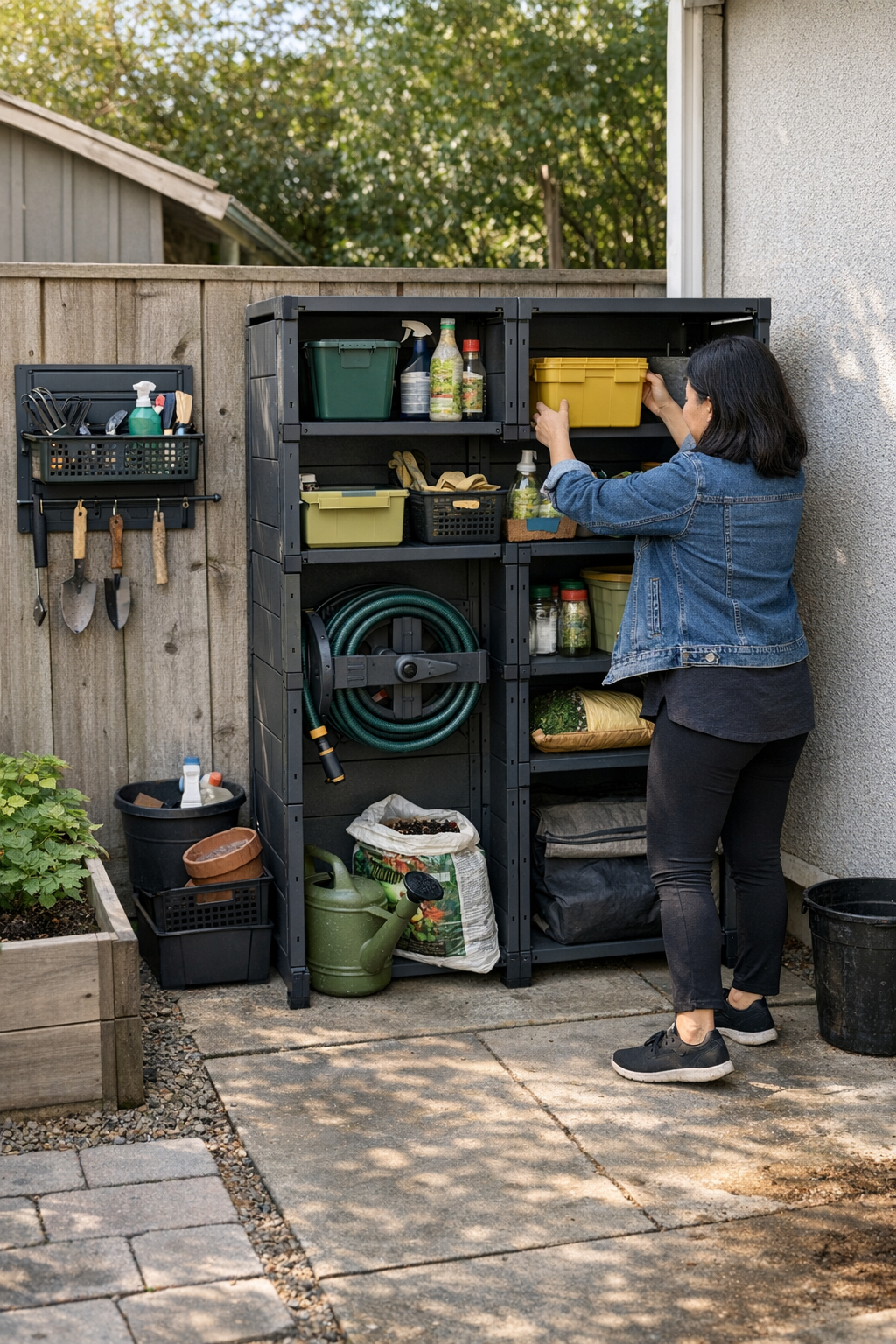
It’s surprising how quickly a backyard can feel cramped. Often, it happens gradually, and you can’t quite pinpoint when a clear path became an obstacle course. We add storage—sheds, cabinets, modular organizers—to make space for tools and gear, thinking we’re creating tidy solutions. But over time, another kind of clutter starts to build up. Not the clutter hidden away, but the subtle kind that interrupts movement.
You don’t notice it right away. The open path you had when you first set everything up shrinks inch by inch with each busy stretch. What started as added storage ends up crowding the flow of daily use instead of improving it. The difference reveals itself quietly, in the way you find yourself stepping aside just to get from one end of the yard to the other.
The Unseen Cost of a Blocked Path
Some storage setups look efficient on paper—a sleek wall system, a modular shed along the fence. But in the rush of outdoor projects, I learned that even a few inches lost in a walkway can throw off the whole backyard routine.
At first, it’s a slight detour, a narrower gap to squeeze through while carrying a garden bag or guiding a child. But it accumulates. By the end of the week, tools pile “temporarily” in these tight spots. You set something down “for just a moment” because maneuvering around it isn’t easy. That’s what I kept coming back to: walkways, not shelves, decide if a space gets easier or harder to use.
Clearing Space for Actual Use
There was a turning point when I realigned cabinets so storage edges stopped exactly at the walkway—no overlap, not even a rake’s width in. Suddenly, nothing needed to be shifted just to pass through. Doors opened smoothly, items went in and out without a fuss, and those little detours disappeared.
Movement became automatic again. No more gear left behind in a reset pile. Even after a full week of heavy yard use, nothing drifted into the walk zone. The ease of a clear path became obvious—and surprisingly impactful. That clear line on the ground did more for the yard’s usability than doubling storage ever had.
Less Storage, More Flow
This might seem counterintuitive, especially if you want to “use every inch.” But from different setups I’ve lived with, the spaces that worked best—where nobody had to pause or recalculate their steps—were the ones where walkway space was kept sacred, never sacrificed for a bigger shed or another bin.
Looking back, frustration always traced to the same quiet shift: storage cutting into circulation paths. The payoff for protecting walkways? A steady flow without constant resetting or repeating corrections—a kind of order that settles and stays.
These small but real insights came from reworking my own yard’s outdoor storage and utility setups. If you want to explore more about managing limited backyard space with wall systems, modular units, and smart circulation, see what’s available here: http://www.tidyyard.myshopify.com.