When Closet Order Meets Everyday Chaos
Wire shelf baskets keep mixed items contained but need extra moves for access, while dividers tidy stacks but can’t keep them in place through busy use.
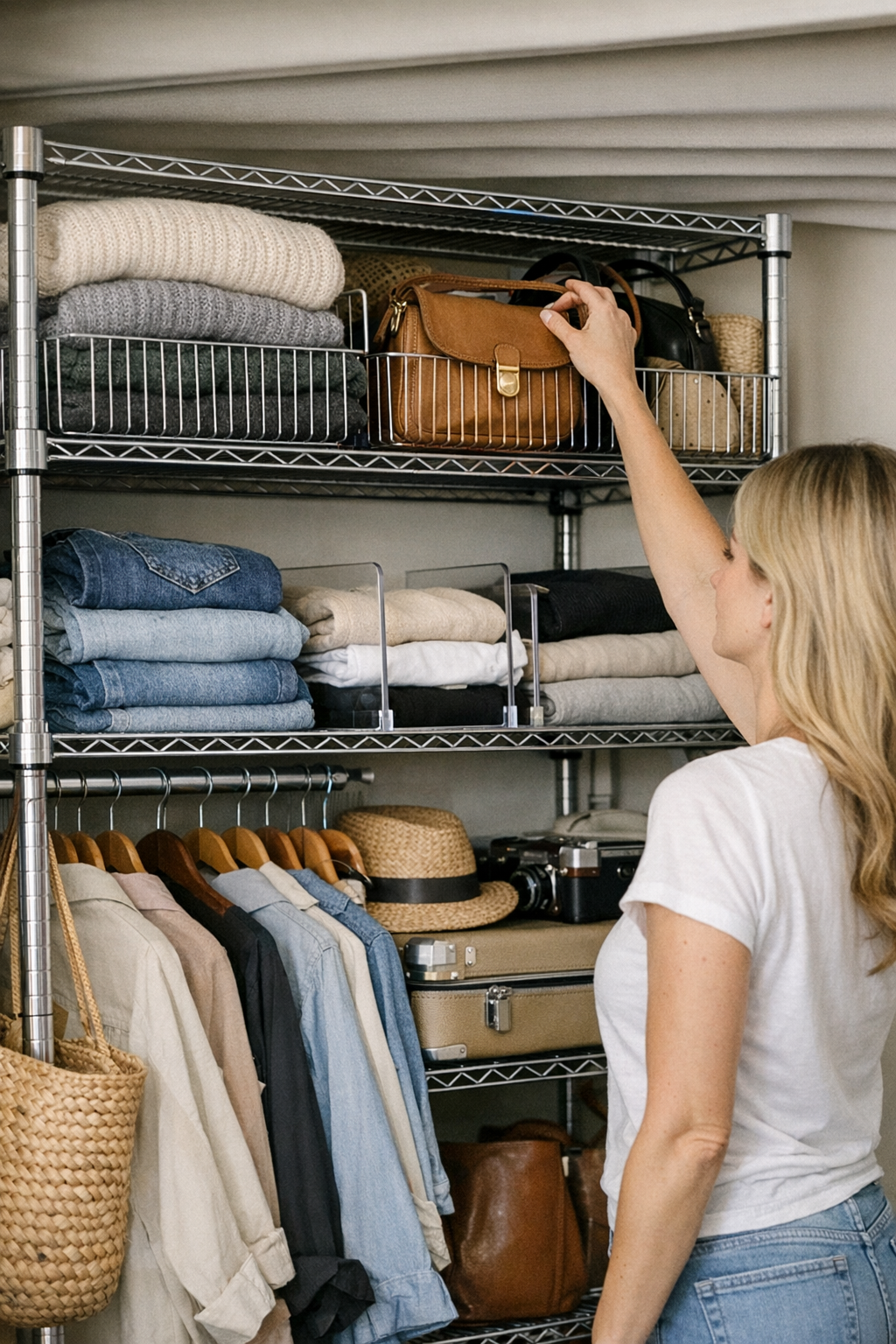
Somehow, shelves look their best when no one’s using them. All tidy rows and sharply defined groups, the closet holds its breath—waiting for the week to begin. There’s a gentle satisfaction in a space in order before the rhythms of living unsettle the surface. Choices between wire shelf baskets and simple shelf dividers seem minor in these moments—a little detail. But as the days pass, the balance shifts.
What seems like a decision about appearance is really about subtle friction—those moments when stored things tip, blend, or hide from sight. Wire shelf baskets and shelf dividers both promise help, but their differences only surface when daily habits push against the edges.
You don’t notice it immediately. But you feel it.
The Quiet Undoing
At first, acrylic dividers slice shelves into orderly segments. Everything lines up: sweaters, jeans, bags. But perfection doesn’t last—one hurried grab, one stack shrinking with use, and suddenly categories slide. The neat lines blur, and the shape of the closet changes with every touch. It’s not just the big, clumsy reaches in the morning; over time, small shifts accumulate, and boundaries meant to stay fixed start to wobble.
Wire baskets offer another promise. Purses and loose knits, once quick to drift, now stay grouped. For a while, it holds. But now the pause comes from somewhere else—a small moment every time you reach for something not on top. You might find yourself lifting a whole bin, rediscovering things you’d meant to keep sorted. In that instant, the order remains—but access demands more.
Life, it seems, always finds ways to test any system.
The Subtle Limits
Most closet strategies hold together well in imagination. But real days don’t play by the rules we hope for. Stop to notice on a Thursday: that shelf set with dividers looked crisp on Sunday, but now jeans lean against sweaters, and someone’s bag has toppled over yesterday’s neat piles. The intention was firmness, but dividers can’t always hold back the effects of quick mornings or uneven items.
Try baskets instead, and the pattern flips. The chaos of sliding stacks softens, replaced by more grounded categories. But something else yields—visibility. A favorite scarf sinks to the bottom, and grabbing it means halting and re-sorting. There’s a trade, and it asks if speed or containment matters more on any given day.
Order is always a negotiation with the way we actually move and live.
A Gentle Shift
One recent weekend, I tried replacing shelf dividers with just two baskets—one for heavier sweaters, another for clutch bags. After a few days, a new rhythm emerged: space along the shelf edge stayed clear, lost items stopped vanishing into the gaps, and resets became an afterthought instead of a chore. There was less frustration, a quieter sense of belonging to the space.
I noticed, though, that some vertical room now sat empty—a quiet inefficiency. Something about this felt honest. The shelf would never look perfect, but it finally matched how the closet was truly used. Sometimes the simple act of picking becomes less burdensome when a system just absorbs the mess, letting small misalignments happen.
Every closet tells on its own rhythms. There are no perfect choices—just moments when the right structure makes things softer, not stricter.
I thought about these changes for a while, quietly, while working on some smaller projects, including this one for Shopify.