When Closet Stacks Lose Their Shape and What That Feels Like
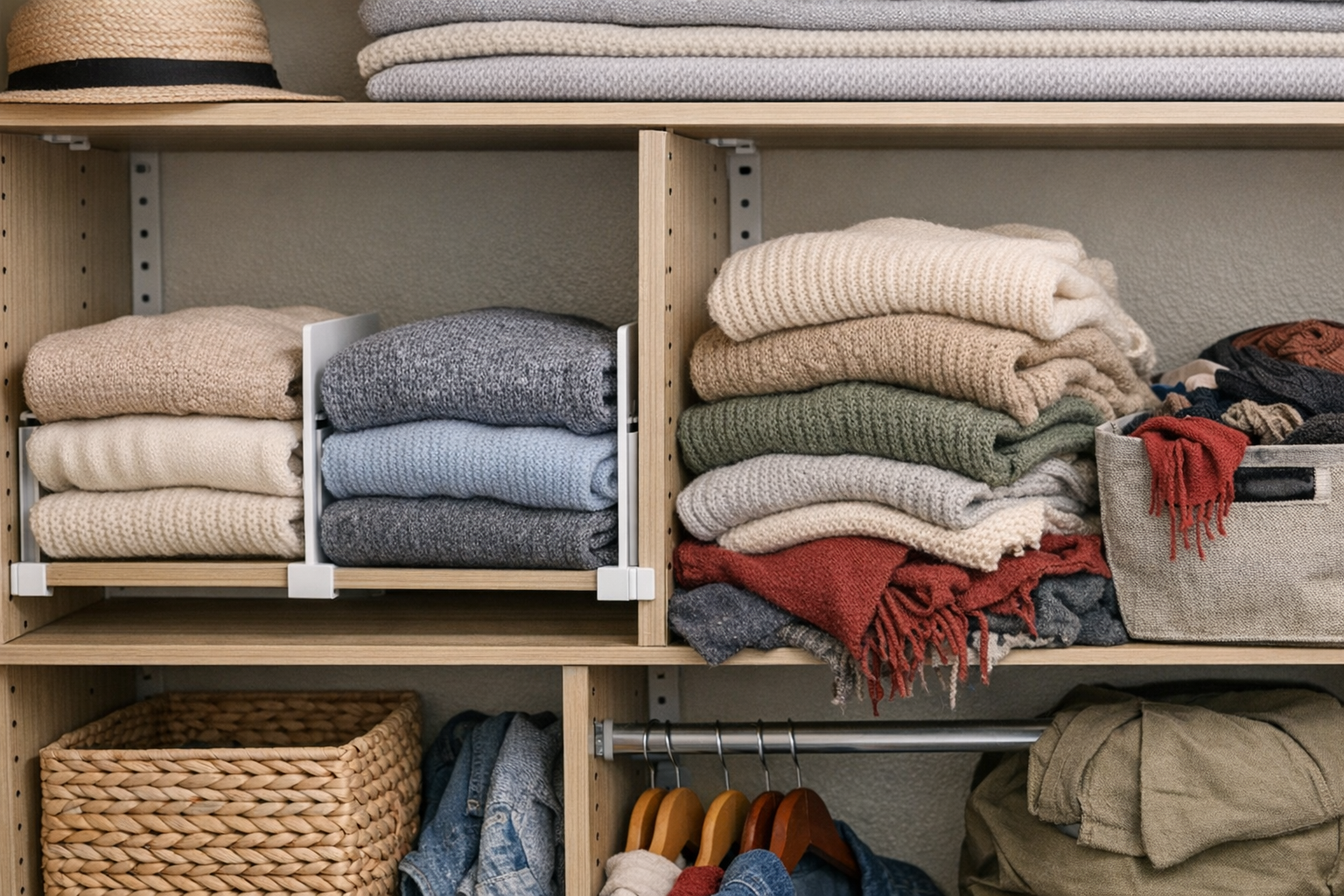
Stacking only works if each pile has a clear boundary; dividers keep stacks stable, categories separate, and resets easy.
There’s a certain satisfaction in standing before a neatly stacked shelf—everything folded, color-coded, tucked into place. For a brief moment, it feels like control. Yet behind every well-stacked pile is a quiet truth: order in a closet depends on the limits we set, and it unravels when those limits disappear.
You don’t notice it immediately, of course. Stacks seem harmless in the beginning. Folded clothes, bins, baskets—all fitting in, saving space. It’s only after a few days, when you reach for something in a hurry, that the hidden instability starts to show. The stack leans. The bin shifts. What once looked like organization now asks for delicate balance, and the ease you hoped for quietly slips away.
The Line Between Order and Overflow
I often think about the difference a small boundary can make.
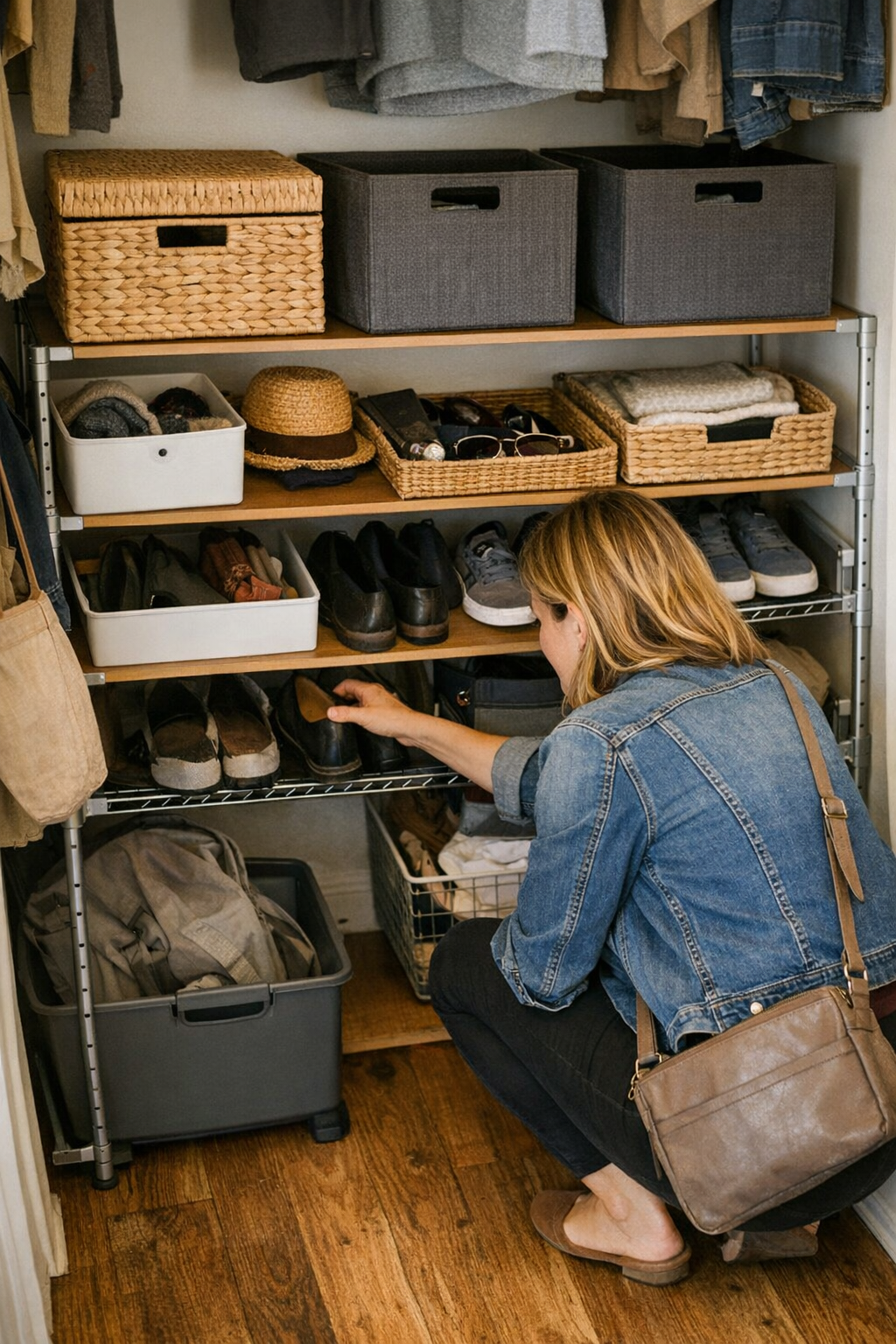
Picture two closet shelves: one where piles end with a sturdy divider, and another where they stretch on, no clear end in sight. The first shelf gives you what you need with just a reach. The second asks for patience—and soon, for repair. You lift a pile; the next one teeters. What was once sorted now begins to blend, socks with scarves, winter with summer.
You don’t notice it at first.
But you feel it. The hesitation when you reach for a favorite sweater. The growing mess beneath a veneer of tidiness.
It’s oddly human. We underestimate drift, the way little shifts add up, until order becomes tangle.
Small Boundaries, Big Difference
Last winter, I watched a master closet lose its form within a week. Freshly folded sweaters, stacked high on open shelves, looked pristine on Monday. By Wednesday, finding one meant disturbing three others. By Friday, the shelf edge was crowded with slumped rows and a scarf wedged beneath a heavy bin—always just out of sight.
Frustration arrives quietly this way: in small doses, until the whole system feels discouraging.
It took just a few vertical shelf dividers—thin, almost unremarkable—to change everything. Stacks found their edge. No more slow-motion collapse, no more reshuffling half the shelf for a single grab. Boundaries, as it turns out, keep the whole thing upright—not just physically, but in spirit. Suddenly, the ritual of putting things away felt less like a chore, more like a reset.
A quick adjustment, but the effect lingered long after.
Where the Stack Ends, Ease Begins
There’s a certain relief that comes from a defined edge—a limit that says, “Stop here.” It’s protection against the subtle creep of overflow. Without a hard stop, every reach nudges stacks out of line, and before you know it, categories blur, the shelf loses clarity, and the daily reset takes a little more effort.
Sometimes it only takes one thought to shift perspective: the edge isn’t the enemy of space—it’s the keeper of it.
Now, each time I fold or put away, there’s less resistance. The shelf gives back what it holds, as if boundaries made space kinder, and daily life a bit simpler.
The best organization quietly supports us in the background—barely noticed, but deeply felt. Lately, I’m learning to listen to where things lean, and to find satisfaction in a well-placed line.
These small realizations found me while rethinking my old closet.