When Cords Interrupt the Quiet Flow of Work
Cable interference under the desk causes chair drag and interruption; a closed tray keeps cords out of wheels but may slow cable access.
When a Chair Stops Rolling the Way It Used To
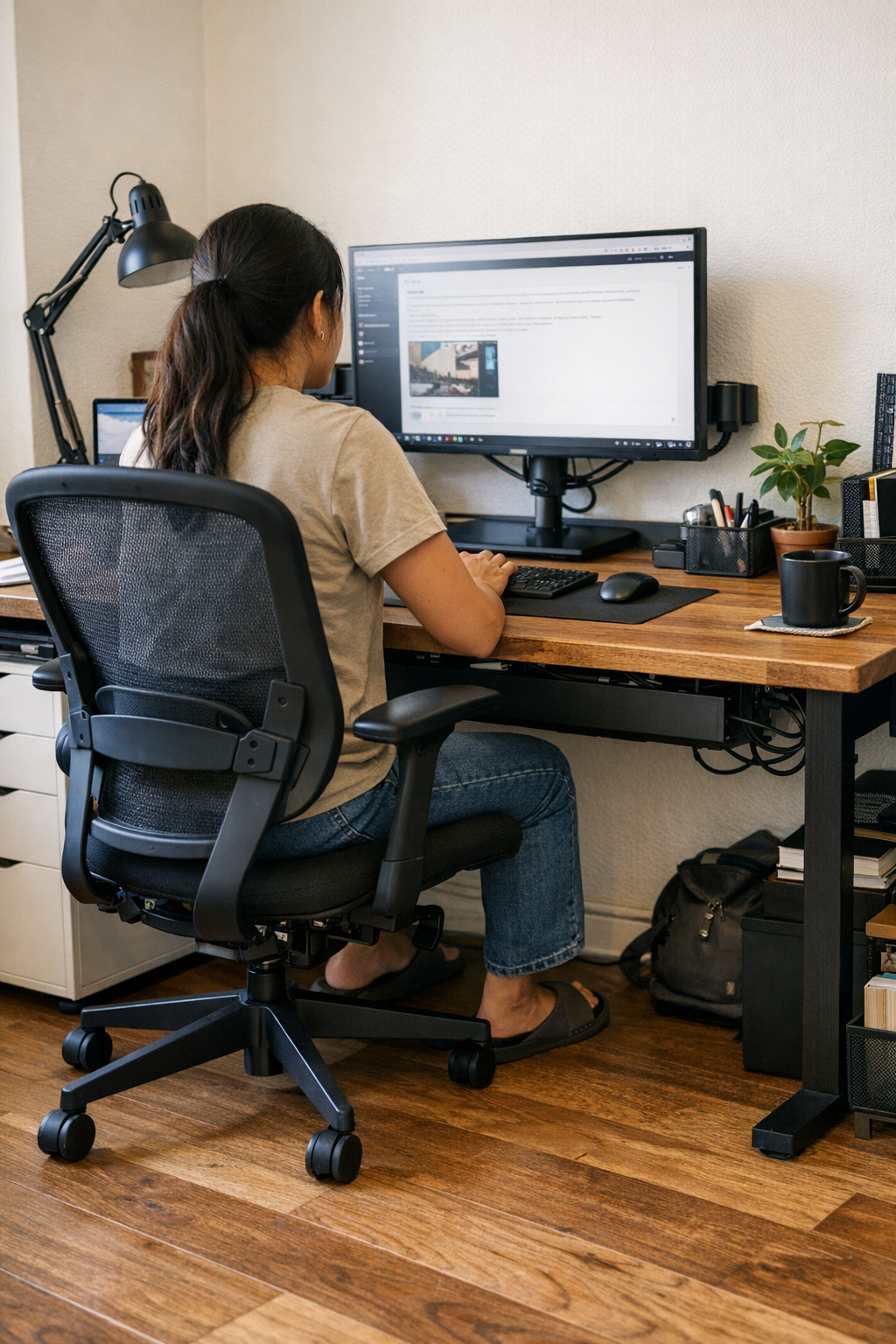
There’s a moment you start to expect—rolling back under your desk, thinking ahead to the next task, maybe distracted by a stray thought or a meeting running late. The chair always moves smoothly… until it doesn’t. You notice a drag, a small stall, maybe a subtle change in how the wheels respond to your push. At first, it’s easy to blame dust or a bit of grit. But over time it becomes clear: it’s the cable, that same black cord slipping out of place and getting caught beneath a wheel again.
This pattern builds quietly through daily work. One cable, maybe two, brushing against chair casters or slipping loose during a hurried laptop reconnection. The interruption isn’t dramatic — more like a repeated nudge, just enough friction to cause a pause you didn’t plan on. What stuck with me was not the tangle or mess, but how tiny snags disrupt the smooth flow of rolling back to your desk.
Small Friction, Accumulated
At first, it looked fine. Cables tucked neatly along the back edge of the desktop, the rest trailing underneath in the familiar pattern left by phone chargers, monitor cords, or loose adapters. There’s a rhythm to sitting down — roll forward, open your notebook, then drift back for a moment to think.
But the difference kept emerging, especially when focus was thin. One caster would stop short. Sometimes the chair needed a lift to free the wheel. Other times the cord bumped loose, sending chargers out of reach. A new routine formed — glancing under the desk before sitting, nudging cables with your foot, adjusting mid-afternoon to keep things moving.
You realize after a few days: smooth chair movement matters more than a perfectly tidy cable layout. And that small, repeated friction grows in frustration when it happens enough times.
A Quiet Adjustment
Rerouting cables above knee height, slipping them into an under-desk mounted cable tray tucked further back, reshaped these delays. The floor stayed clear. Getting in and out felt natural again — exactly how ergonomic or drafting chairs are meant to roll. Only the essential cable — my laptop charger — stayed close enough to reach, but far enough not to catch in the wheels.
This wasn’t about a major overhaul or buying new gear every week. It was simply noticing where friction occurred and shifting cables a couple of inches. That one repeat interruption stopped. The desk’s neatness became functional — not fussy, but aligned with actual work flow.
Late in the day, I found myself rolling freely, less conscious of cables or misplaced chargers. The relief was subtle but real.
The Way Back to Focus
Most workstations can look organized enough: cords gathered, plugs predictable, no obvious tangles. But how your chair rolls — how it catches, stalls, or slides — is the truer test if you use the space daily. Over time, unchecked cables will creep into your routine, turning what should be quick resets into repeated small repairs.
Cleaning up what collects beneath the desk, and moving cables safely out of the chair’s path, doesn’t only declutter. It restores the simple, physical ease of returning to your seat and starting fresh. That ease is quiet, but it lingers.
Sometimes the smallest barrier is why your day feels heavier than it needs to be.
If you want to see what WorkBasic offers for this kind of ritual, it’s here: http://www.workbasic.myshopify.com