When Curves Demand More Than Just Any Blade
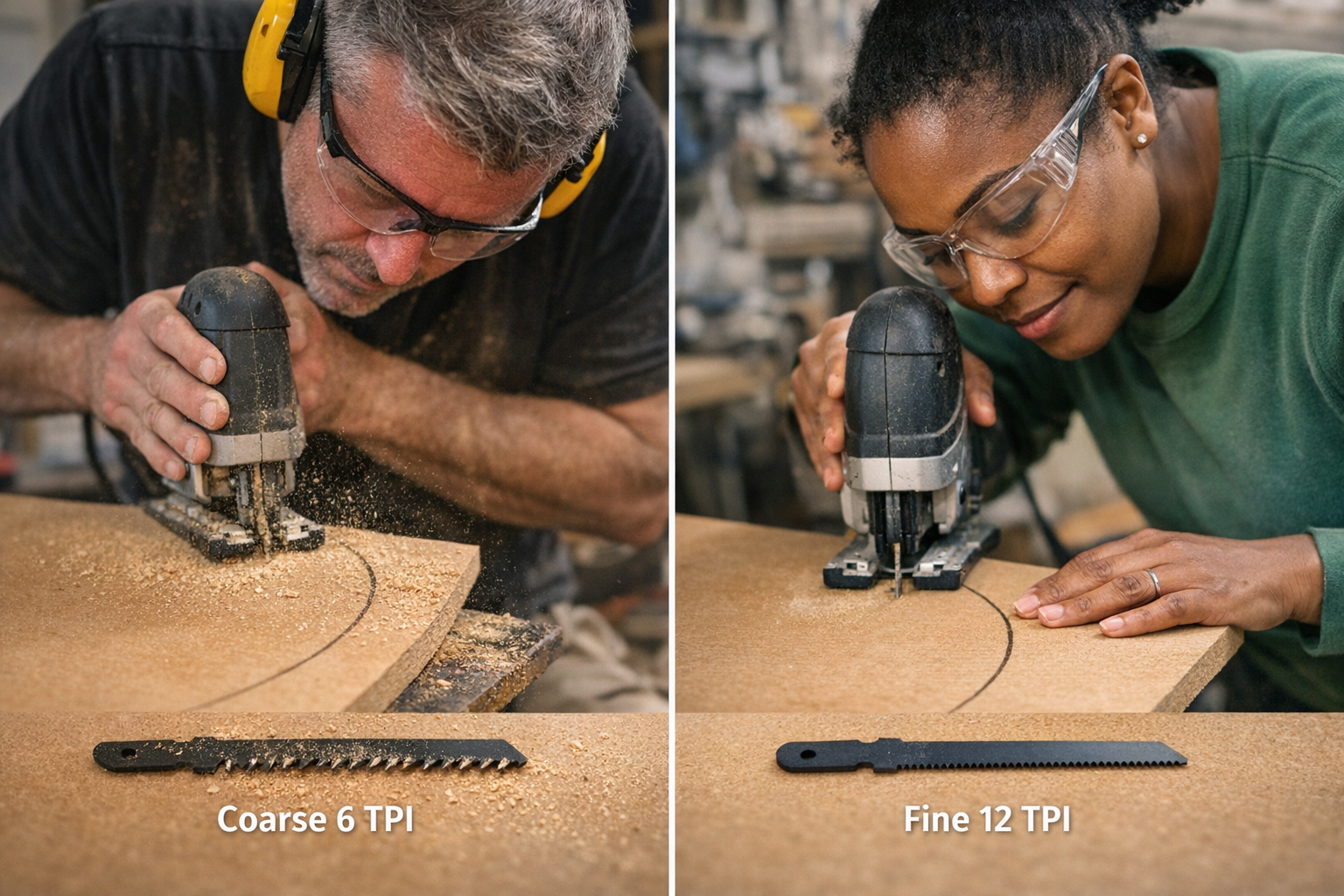
Matching your jigsaw blade to the curve—narrower width, higher TPI for tight arcs—improves control and reduces cleanup time and errors.
When Precision Turns into Frustration (And why your saw blade choice matters more than you think)
You don’t notice the difference—until you do.
Most days, cutting wood follows a familiar rhythm. The saw hums, the curve appears, and you fall into that quiet groove where your hands know exactly what to do. But the illusion only lasts until the blade catches, the line starts to waver, or the surface chips in a way that makes you press pause—suddenly aware of what’s missing: control.
Where the Real Difference Begins
At first glance, jigsaw blades mostly look alike—slim, silvery, some with teeth spaced wider than others. Swap in a new one and the cut feels the same, at least at the start. If you’re only trimming a straight edge or following a broad arc, any wood-rated blade might get you by.
But the real test arrives with the tighter turns. Birch, MDF, maybe some battered plywood you’re coaxing into a new project. The saw glides for a while, then falters as the curve tightens—a barely-there resistance, a drifting edge. You don’t notice it immediately.
But you feel it.
Before long, the curve you planned skews wider. The line you marked starts to disappear under trembling teeth. And suddenly there’s more sanding, more frustration, more time spent fixing instead of finishing.
Tiny Details, Lasting Impact
It’s almost funny how the smallest details, those you barely consider, end up dictating so much. The blade’s width and tooth count—just numbers on the packaging—shape whether your arcs come out crisp or ragged.
Real life has a way of proving this. Think about a project for built-in shelves with curved recesses. First pass, stock blade: the saw shudders, splinters pull away, the cut jerks outside the line. The next moment, you switch to a narrow, fine-toothed blade and something changes: a softness in the cut, a tighter hold on the pencil mark, less noise, less dust. You realize the cleanup nearly disappears—a quick brush instead of an afternoon chasing fibers with sandpaper.
Curves, it seems, have their own quiet demands.
Listening for the Shift
There’s a kind of relief in realizing this isn’t about working harder or wrestling the saw into submission. It’s about letting the tool—and the blade in particular—do the thing it’s shaped for.
You pause, take a breath, and feed the saw a little slower. Maybe turn down the orbital setting. Suddenly, the vibration softens. The line sharpens. It’s a small, almost invisible refresh: the work turns simple again, even satisfying.
It’s a reminder that sometimes, the best solution isn’t to push, but to pay attention. When your hand glides instead of tensing up, you know you’ve picked the right path.
In the end, these differences linger. A neater edge saves you minutes—or sometimes hours—after the cut, letting the project fall together as if it wanted to all along.
These small revelations came together while working on a curved cabinet panel, and if you’re curious, you can read more about the tools behind these moments here.