When Drying Out Feels Like a Daily Struggle
Closed, sealed storage traps moisture and odor; open, vented designs dry faster and ease resets, outperforming moisture absorbers alone.
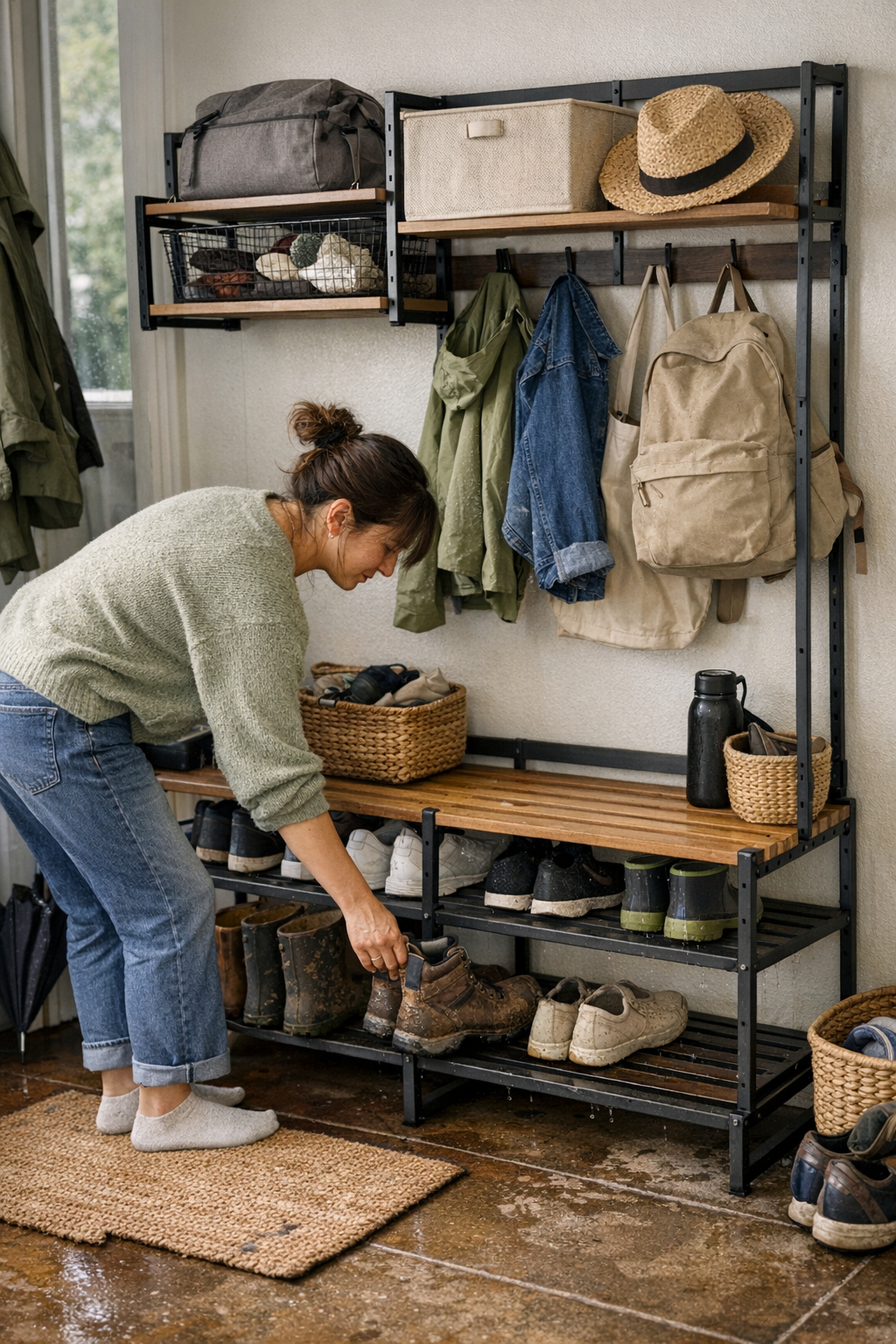
The day I realized our entryway always felt heavier after a storm
There’s a moment, coming in from the rain, when the outside finally fades and inside routines slowly begin again. Shoes leave a wet trail. Bags drop—sometimes exactly where you meant, sometimes not. I had always thought the real issue was the mess, the stuff that comes and goes. But after weeks of cycles—wet, dry, wet again—I started noticing a different pattern. It wasn’t just about what was visible. The transition space itself seemed to slow down, as if every day’s arrival was carrying a little weight from the one before.
The slow build-up you don’t always see
Closed storage, neat cubbies, and sealed benches can trick you into thinking everything is under control. For a while, all looks fine: bags disappear, shoes are tucked away, surfaces stay clear. But you don’t notice it immediately. Smell and dampness creep in quietly—a kind of background reluctance when you open the bench or cabinet again.
It surprised me how quickly that feeling built, especially during stretches of bad weather or busy weeks when resets required more than a quick tidy. The slow, sticky edge to things—shoes that never quite dried, bags that felt cool and heavy the next morning—turned out to be less about clutter, more about the air itself failing to turn over in the narrow pass-through of our entry space.
Sometimes the ‘open’ answer is quieter than it looks
The usual temptation is containment: lids pulled closed, doors hiding the mess. But I noticed each time I left things slightly open—bench lids up, rack sides exposed—there was less of that stale overlap from one day to the next. Open-backed racks and slatted benches didn’t always look perfectly neat, but everything inside felt lighter. That was the part I kept coming back to.
You see it on weekday afternoons, after full rotations of arrivals: the gear left out dried faster, while anything closed in came out needing even more airing. It’s less about display than about remembering that storage also has to circulate air—air in, damp out—even if it means sometimes revealing the in-between mess.
A change that makes spaces feel less burdened
Switching one closed bin for a vented rack felt like a small change, but it was enough to tip daily routines from heavy to manageable. The floors dried faster, the threshold felt clear rather than tacky by evening. The sense of relief wasn’t dramatic, but suddenly mornings started fresh—no stuck lids, no clinging shoe odor, just a kind of neutrality that gave the space back to itself.
Entryways and drop zones absorb more than just clutter and gear—they collect the habits and weather of the week. They hold on to shoe-row buildup, bag drop drift, and damp air trapped behind sealed doors. Sometimes the smallest shift—a gap for air, an open slot in a wall-mounted unit or utility cabinet—makes it easier to reset. Over time, I’ve found it’s this quiet ongoing exchange, not strict order, that helps a transition space feel steady even as routines loop and break.
If you’ve ever wondered what daily flow looks like in practice, there are a few small ideas gathered quietly over here: http://www.betweenry.myshopify.com