When Dust Settles: The Quiet Struggle of Workshop Airflow
You only see how well a ventilation fan performs after repeated use; the right one matches airflow to dust, reducing residue and rework.
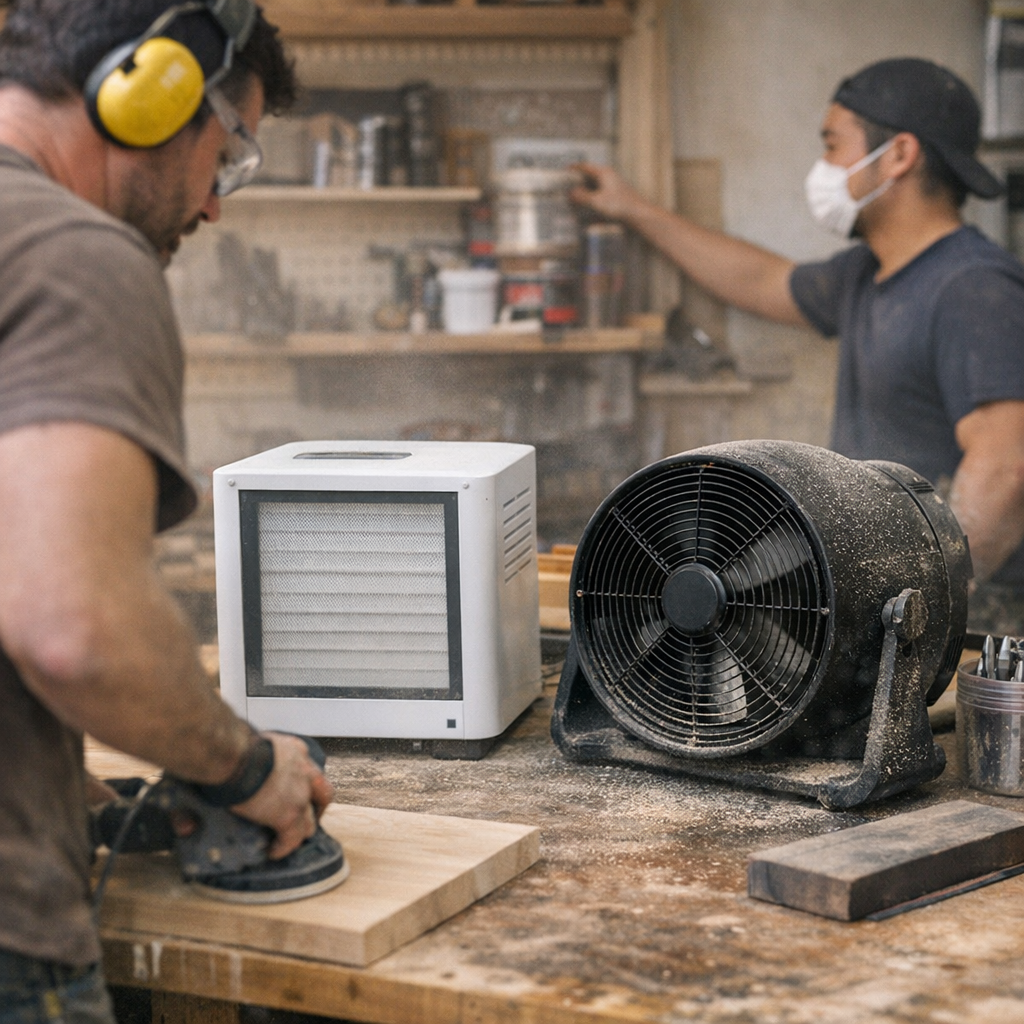
It sneaks up quietly—dust forming in a gentle film over your workbench, clinging to the surfaces you just wiped clean. You don’t really notice airflow in a workshop at first. It’s just something humming in the background, a low whir that fades into the buzz and rasp of an ordinary workday. But hours later, it makes itself known. You touch a finished panel, expecting that smoothness from your careful prep, and feel the grit. That’s when you realize: not all fans are created equal, especially in spaces dense with dust.
What Looks the Same Isn’t Always the Same
To the eye, two ventilation fans might appear cut from the same template, especially when the specs look reassuringly alike. It's only after long stretches—maybe a morning spent sanding dry MDF or cutting boards to size—that their differences start to emerge.
You don’t notice it immediately. But you feel it.
One fan holds a consistent pull, clearing away the pale clouds as they rise, keeping the bench ready and inviting. The other starts out strong but falls behind, its effort pulsing as dust gathers in slow waves along the edges. In the blur of work, that difference is subtle—a patina building along tool handles, a haze resettling beneath the cabinets. It all accumulates, quietly reshaping your process.
The Small Things That Add Up
A shared workshop tells stories by afternoon: air that’s sharp and easy to breathe, surfaces that are simply ready for what comes next. With enough time, the contrast becomes plain. A fan up to the actual dust load keeps things steady—filters fill, yet the air stays clear and your head doesn’t ache from the grit. It’s a gentle rhythm, letting you focus on the cut or brushstroke in front of you.
But when airflow slips behind the dust, everything else slows too. Rings of powder form under machine stands. Paint drifts feel rough, and cleanup stretches on—a quiet grind that wears on more than just materials. Maybe you catch yourself pausing, hand hovering over a finish, spotting particles and wondering how much work will need repeating.
When a Small Change Alters the Day
One late winter, I switched from a fan that boasted heavy numbers to one that matched the real volume. The shift was easy to overlook—a steadier current barely felt on the skin. Yet, at the close of each day, the air was clearer, and the usual layer of dust had fallen away from the reach of every corner and clamp. Airborne particles dropped, and the simple act of wiping a surface turned from labor to routine.
Sometimes, the practical insight is simply this: consistent airflow that matches your pace makes all the difference. Maybe that means nudging up the speed at first, or swapping a filter as soon as you see it graying at the edges. The goal isn’t perfection—just less work undone and more focus left for the actual craft.
I thought about this while cleaning up after a long week in the shop, turning over the contrast between fans that blend in and those that quietly change the day. The details always seem to linger—especially after the dust has settled.
These thoughts found their shape while I tinkered with a new ventilator in the back room.