When Emergency Tools Are Within Reach, Calm Follows
Emergency readiness in the car depends on separating essential tools into dedicated zones to cut search time and avoid critical delays.
You know the feeling—the satisfaction after tucking away every loose cable, charger, and tool, then glancing at a car interior that finally looks settled. A clean, organized car should mean smoother daily use, right? But that quiet realization hits not when everything’s calm, but the first time real stress interrupts your routine. I noticed it on a cold, rainy evening, my hands full, phone nearly dead, and forced to dig past gym shorts and a couple of rolling pens just to reach my charger. That’s when this whole “organization” thing started to seem less straightforward.
The Trouble Hiding Underneath
At first glance, the car looked fine—clear seats, compartment covers closed, trunk space measured and swept. But after a few days of daily use, the little issues started showing up. Odds and ends slowly drifted out of place: a seat pouch now held both a dog leash and some basic jump cables. You notice it after a few trips. One item slides into a crack, another wedged behind yesterday’s shopping bag. The surface remains tidy, but each time you return, it takes a few extra seconds to fish things out.
After about a week, finding the air compressor or emergency kit without moving blankets or wading through crumpled receipts wasn’t luck—it had just become extra effort. Even the simple act of plugging in a phone mount felt awkward, the cable stuck beneath the seat edge or tangled in a floor protector. This is how “concealed” slowly becomes “buried,” and that neat, clean impression starts costing time and adding frustration.
The Difference When It Matters
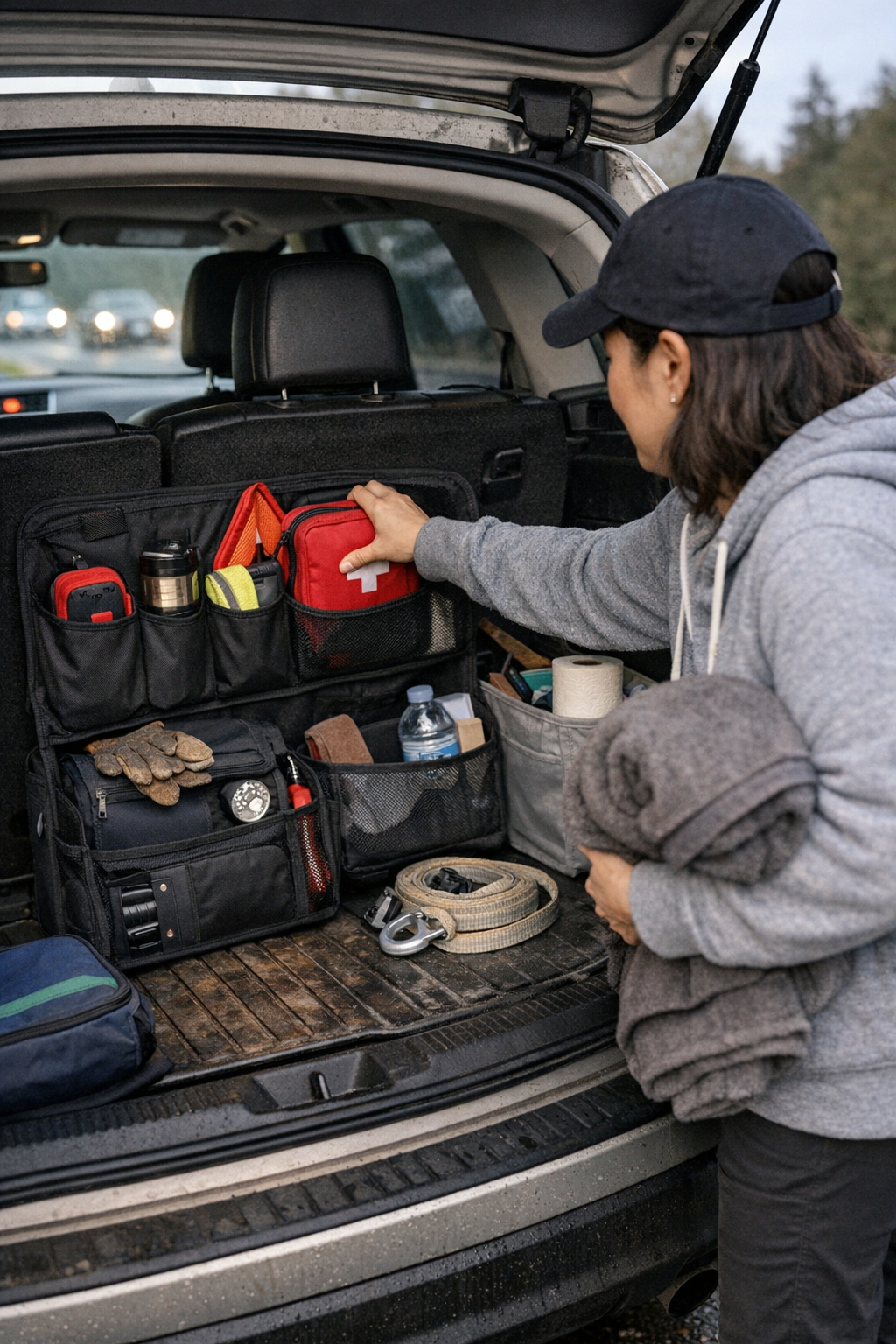
Stress always arrives at the worst moments—heavy traffic, windows fogging, or rain streaming down as you fumble for a flashlight or jump starter. That’s when the difference between visible, easily reachable essentials and something that’s just “stored” becomes clear. A dedicated pocket or bin for emergency gear might not look minimal—it rarely does—but there’s a quiet comfort in knowing your warning triangle or jump pack isn’t tangled with lunch wrappers or dog-wipes.
It’s less about neatness and more about flow. The fewer things that overlap between daily use and critical gear, the less you have to reach, check, or push aside. Simple, but it matters most when you’re tired, running late, or dealing with an unexpected situation outside your normal routine.
Small Changes, Less Scramble
Eventually, I stopped chasing the perfect hidden setup. One side pocket organizer became just for road essentials: flashlight, jump pack, first-aid basics. Nothing doubled up, no snacks or receipts sharing that space. The cargo zone remained for groceries and everyday items, but with a clear line separating “everyday” gear from “emergency” supplies.
And it’s surprising how much those saved seconds add up—the small relief when you reach for something and it’s exactly where you need it, every time.
Real ease isn’t about a visually flawless car interior but about how little you have to think—or hunt around—when the world outside gets messy. There are plenty of organization approaches, but the ones that hold up to daily driving and repeated trips are just a little more human, a little less “out of sight, out of mind.”
If you want to see some of those quiet fixes in action, you can find a few here: http://www.drivewellsupply.myshopify.com