When Entryway Chaos Meets Its Match
Interlocking panels create clear divisions that prevent clutter, speed resets, and maintain order even under daily pressure.
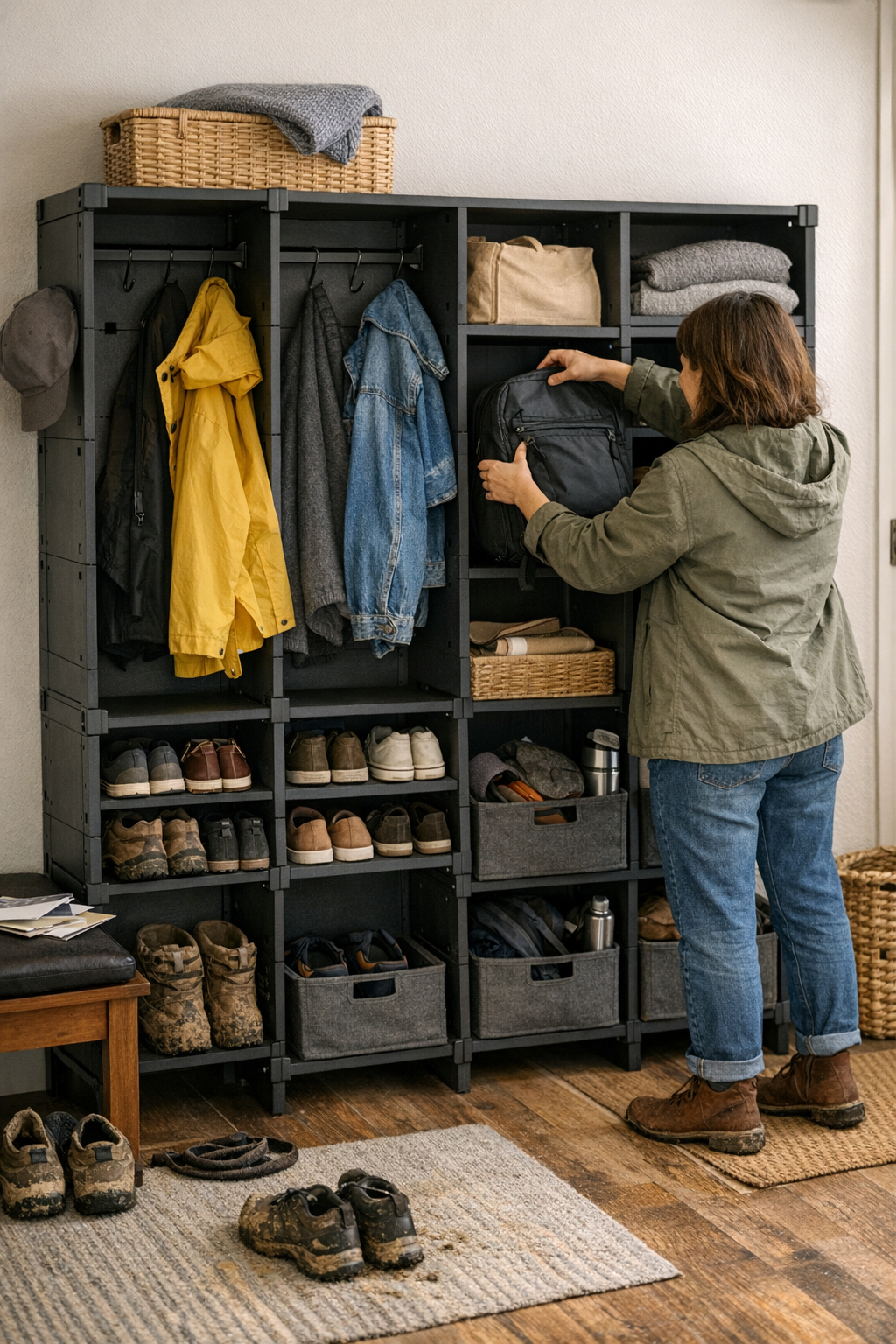
It’s strange how quickly a transition space begins to fray. In the first days after a tidy reset—benches cleared, floors swept, shoes aligned—the area feels optimistic, even promising. But subtle, persistent habits reassert themselves, and by the third week, shoes creep out of line, mail piles with hats, and the clear path is blocked again. That’s when I started noticing how interlocking panels transformed not just the look, but the way order returned.
Boundaries That Don’t Disappear Overnight
You don’t notice the difference immediately.
I moved from an open bench and bin to a vertical wall of slots, thinking it might be excessive. Yet as the days passed, the small separations made a bigger difference than expected. Each item had its designated lane: shoes nested in a row, bags hung over hooks without crowding coats, and keys found a pocket that didn’t take up counter space.
Drop-zone friction still happened, but the overflow stood out instead of blending in. It became clear who’d left their bulky boots twice the width of a column. There was less confusion about whose items belonged where. That visibility was the part I kept coming back to—roles stayed clear even when the entry filled up.
Less Reset Strain, More Quiet Movement
Correction wasn’t a drawn-out event anymore. On rushed mornings—three of us moving past each other, coats wet from a misty walk—I realized the wall system didn’t just hold clutter, it surfaced it for a quick return. If shoes stretched beyond their slot, nobody stepped around them for days—they were nudged back immediately.
It wasn’t about looking perfect for guests, but about how a hectic weekday felt less aggravating. The pressure to keep up with stray bags eased, replaced by a flow where order was regained in a simple gesture. Even the weather was less disruptive. Muddy shoes and wet hoods stopped competing for the only dry bench, and the whole atmosphere grew lighter.
When Overflow Isn’t Invisible
It’s easy to forget how gradual disorder spreads. Open bins look welcoming until mail, leash, and sports gear blend into one pile that you dread sorting. A vertical panel doesn’t hide the excess; it makes it obvious. More than once, I noticed someone’s shoes quietly outnumbered their slot, or a bag landed in the wrong space.
That visibility was the quiet reset button. It made clear, even before I consciously registered it, that the system wasn’t about perfection, but about returning to routine without a struggle. Not once and done, but ready to reset again.
Anything that interrupts clutter drift before it spreads is worth a second thought.
If you’re curious about panel-based storage and its effect on small daily transitions, you can see more here: http://www.betweenry.myshopify.com