When Every Cut Counts: The Hidden Struggle with Laminated Boards
Jig saw blade choice for laminated boards matters after multiple cuts—fine-toothed, laminate blades plus tape minimize chipping and speed work.
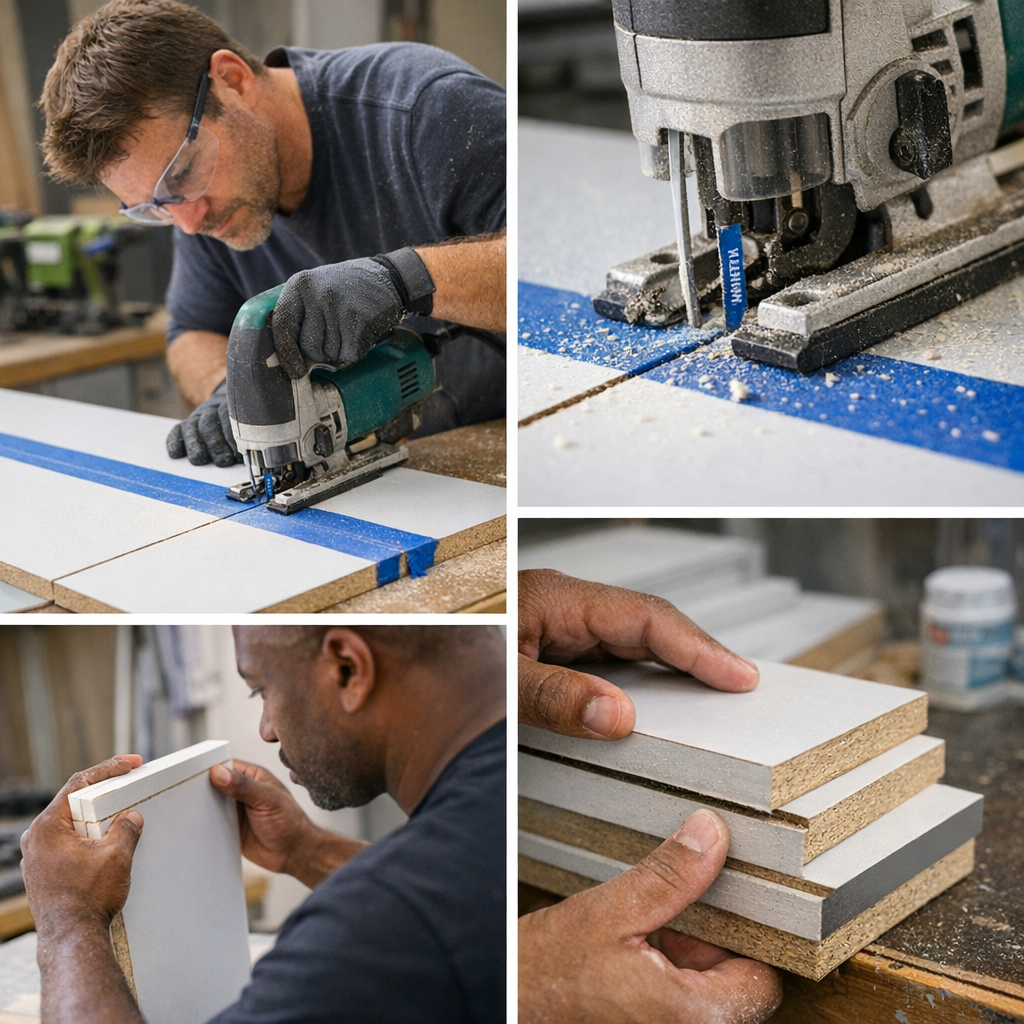
There’s a kind of satisfaction that comes from slicing clean lines through a bright sheet of laminated board. The grain, the color, even the texture—it all feels agreeable, as the saw hums gently in the air. It’s almost soothing. But there’s a catch many of us don’t see at first. The real trouble with jig saw blades on laminated boards rarely announces itself with the first cut. Everything looks neat, almost interchangeable. It often takes a few more boards, and a few more cuts, before you begin to notice what you’ve overlooked.
It’s not always immediate.
But you feel it.
Where the Problems Start Small
The first pass feels reassuring. The blade glides, sawdust collects in quiet piles, and the finished edge seems respectable enough. Most wood blades and those marked for “laminate” look similar in the toolbox. Thin steel, an easy-to-swap shank. The truth is, they start out equal. Or so it seems.
The difference arrives gradually, part by part. Chipping at the corners, seams catching on the splintered edge. When you cut one shelf, it hides. Yet as you shape more—panels for cabinets, inserts, a run of identical parts—the mistake reveals itself. Small chips at first, then misaligned stacks, and a creeping realization that sanding won’t fix it.
You don’t notice it immediately.
But the panels never quite match up.
The Subtle Behaviors of Tools and Hands
For a while, you trust the blade. Feed it through laminated melamine, and it works—until it doesn’t. Then come the micro-chips, the strange sensation in your wrist as the teeth snatch at the delicate surface. A wood blade leaves its mark, not in bold strokes, but in a language of vibration and effort. The hum gets harsher.
Switching to a blade actually designed for laminate—higher tooth count or reversed teeth—creates a different tone. The cut is quieter, more controlled. The friction lessens, the finish holds. What was once an errand for the sanding block becomes a quick, almost dismissive touch-up.
Sometimes, it’s a streak of sunlight over the bench that reveals what’s happened—a row of chewed edges that weren’t supposed to be there.
The Quiet Adjustment That Lasts All Day
There’s often a moment, halfway through, when something needs to give. Facing a stack of pieces, seeing the flaws stack up, you rethink your approach. Switching blades can feel minor, barely worth mentioning, but it changes the work’s whole texture.
I remember using a T-shank, fine-toothed blade made for laminate, paired with painter’s tape over the line. The chipping all but vanished. Each piece came off the bench ready, not just for the eye, but for fitting into its final place. The process became steadier. Grip fatigue ebbed away. It was a small tweak, an afterthought that quietly improved everything that followed.
Sometimes, what fixes the visible flaws also smooths out the unseen ones—the way you move, the pace you keep.
Laminated boards don’t always expose the blade’s shortcomings until you’ve committed. The right blade, chosen for the work, carries you quietly past the pitfalls, helping every edge fall in line with the idea you started with.
The next time you’re deep into a project, you might catch yourself wondering if a small change could make the finish last a little longer.
And sometimes, that’s reason enough to reach for something better.
These reflections came together late one afternoon, while working on a set of hallway shelves. Here’s a place to see what inspired them.