When Everyday Dust Quietly Disrupts Your Entryway Flow
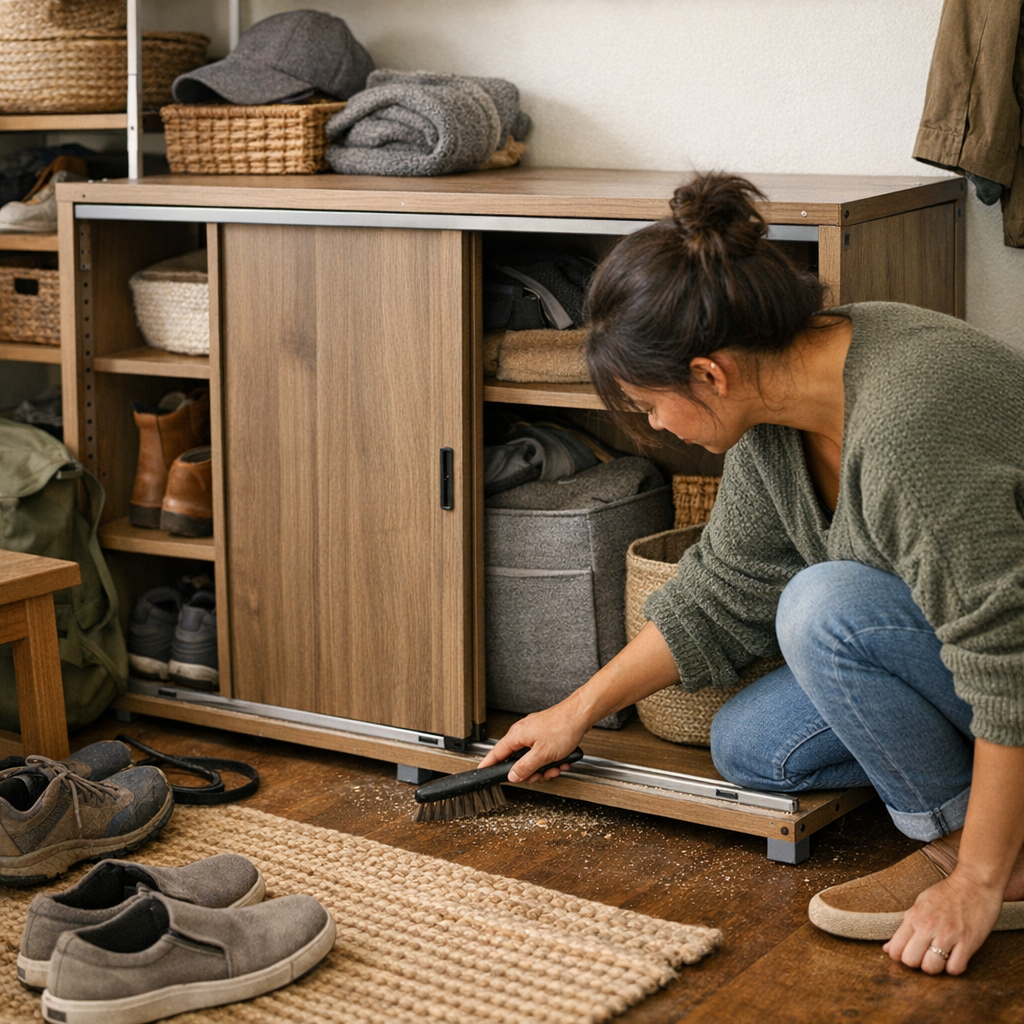
Sliding-door storage slows if tracks aren’t cleaned regularly—removing dust keeps doors moving smoothly and access reliable.
Some corners of a home seem to gather energy as much as they gather things. The entryway—where people move in and out a dozen times each day, where shoes sprawl with or without reason—holds a quiet tension between order and movement. For a while, I thought sliding-door storage might settle that tension. It offered a kind of compact relief, sleekness pressed along the hallway wall. The promise of doors that glide instead of swing felt comforting. Until you start noticing what collects underfoot.
The Way Debris Sneaks In, and Stays
You don’t notice it immediately.
The day-to-day movements blur together: boots off, keys on the ledge, jacket slipped down with a grocery bag tangled beneath. But eventually, there’s a kind of dull friction during the morning shuffle. It’s not the visible clutter—those shoes pushed into double rows, or the old soccer ball gathered where it doesn’t belong. It’s the sliding track itself, slow to move, sticky at the edges.
Something about this transition-space world means grit finds its own routine, too. Road dust rides in on shoe treads, pet fur drifts from the next room, and every new arrival pushes a little more into the mechanism that’s supposed to make things simpler. A slight grind, a moment’s block—rarely urgent, but it shifts your sense of control.
Concealing Clutter, Creating Its Own
Sliding-door cabinets look so tidy at first—flush, even, a faint promise of discipline in the busiest spot. I remember the first weeks: no more swinging doors blocking narrow passage, no bench-edge pileups. But the clean lines blurred as shoes stacked in the gap, umbrellas leaned against corners, and the sliding doors themselves slowed just as arrivals picked up speed.
It’s a different kind of mess. Instead of seeing chaos in the open, you feel it in the hesitation each time you force a stiff door along its track. The buildup hides beneath the surface, and the order you’re counting on slowly unravels without much warning.
But you feel it.
Often, it seems the most dependable part of the entry isn’t what you see but what you maintain. And that was the part I kept coming back to.
Relief In Small, Repeated Gestures
Pausing at the end of the day—when the last pair of shoes has finally been set aside—I started sliding a narrow brush along the track. Just a moment, before the lights go out, to clear what the day left behind. No elaborate effort, just a reset. It keeps the whole space from bottlenecking when everyone comes home at once.
Leaving a few inches clear along the edge, making sure there’s space to sweep debris before the pile grows—these things became as much a habit as hanging a coat or kicking off boots. The visual order is pleasant, but it’s that almost invisible daily clearing that lets everything work without complaint.
What looks organized from a distance, in the end, lives or dies by small, nearly forgotten rituals—ones that keep each path open for the next arrival.
Sometimes I look at Betweenry’s transition-space ideas when I need another quiet reset: http://www.betweenry.myshopify.com