When Everyday Messes Shape How We Live With Cats
A cat arrangement that appears tidy reveals strengths and weaknesses over time; small tweaks reduce mess and upkeep friction.
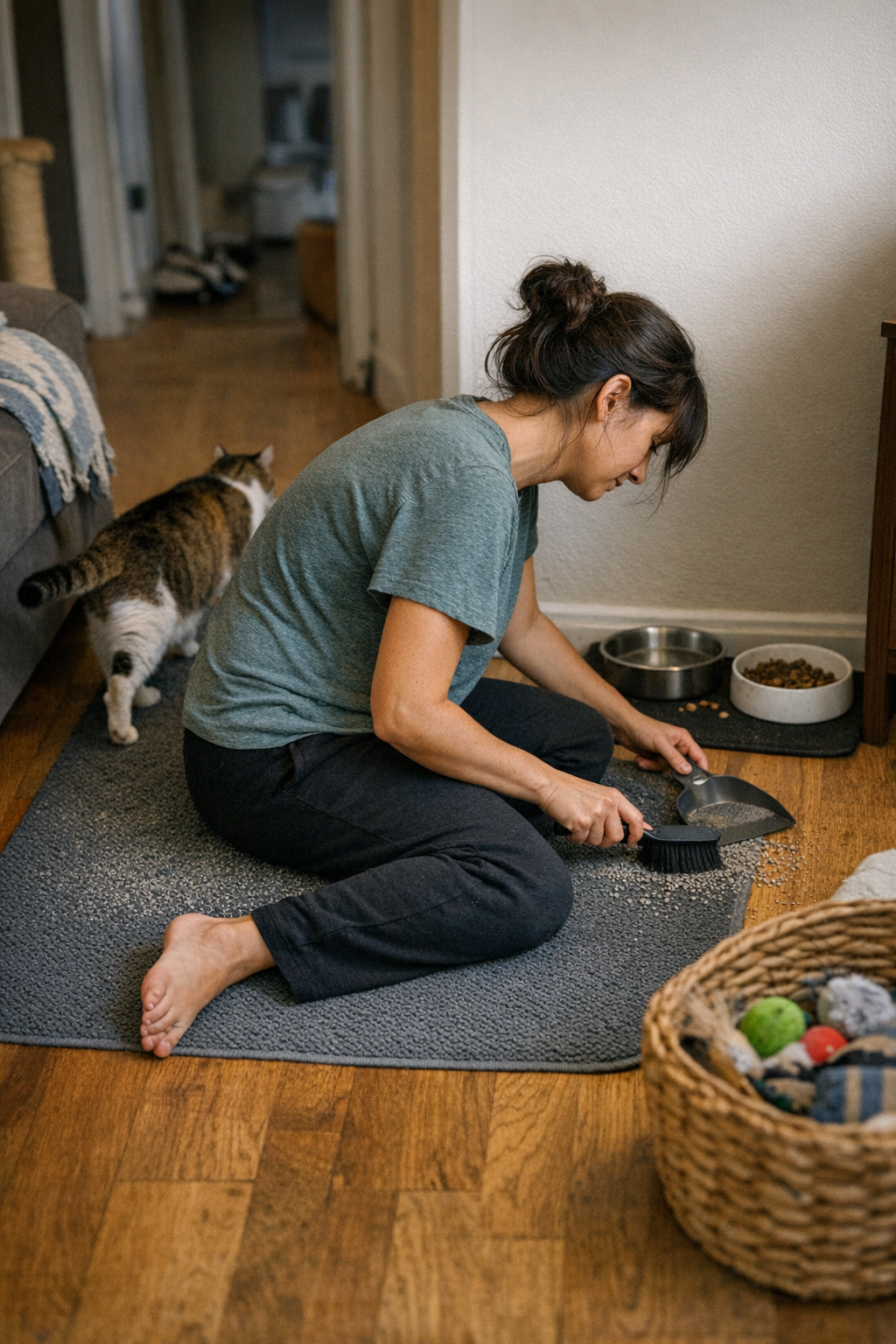
There’s a moment, sometimes easy to miss, when a freshly arranged cat space quietly demands more attention than it returns. At first, the bowls line up neatly, the mat lies flat beneath, the litter station sits just right. It looks ready—almost settled. But after a few days of daily use, that initial order softens. Water drips where the bowl laps onto the mat. A streak of litter slips just past the edge and trails toward the hallway. The clean lines start to feel less like true order and more like invitations to small, recurring disruptions.
It becomes clear after a few resets: crumbs collecting on the wrong side of the feeding mat, the extra minute spent retrieving toys stuck half under the couch again. Every fix holds for a while but quietly undoes itself by morning, waiting to be redone. The room doesn’t feel disorderly exactly, but there’s a steady drag—a friction that comes from correcting the same small details on repeat. It’s not about perfection; it’s how certain edges keep pulling your focus over and over.
When Patterns Outlast Good Intentions
The litter mat looked wide enough at first, until the third sweep revealed another arc of pellets escaping its edge. The water bowl, pushed flush to its mat, left a faint ring from slow spills—not visible in the day but stuck to a sock on a late-night refill. These were the trouble spots that kept coming back.
The patterns persist beyond each reset: fur nestling exactly where the window perch blanket crumples, toys retreating to a tight, unreachable gap, litter migrating with every broom pass. There’s a rhythm in these repetitions but also a subtle warning—that the setup isn’t fully matching the real shape of daily use. What looked like neat order hasn’t reduced your effort, only shifted it out of plain sight.
Making the Boundary Real, Not Just Present
One quiet change made a difference. Extending the litter mat just a bit farther to fully cover the typical exit zone stopped many pellet escapes. The litter’s border stayed put, and the vacuum no longer tracked the usual trail at the threshold. It wasn’t a dramatic makeover—almost invisible visually—but the improvement was clear in what no longer required attention.
There’s a steady satisfaction in spotting these weak points early and letting small adjustments handle them. The easiest fixes go unnoticed: a mat that actually fits the traffic path, a toy box placed where loose balls tend to roll, a feeding area moved off a high-traffic shortcut. Daily cleanups start to fade into background tasks, and the space settles into a quiet, workable rhythm.
Trusting the Setup to Settle the Routine
What stays isn’t the bright initial look but the trust that grows when routines no longer snag on their edges. A mat that traps the scatter, a feeding spot needing less bending, a shared indoor space where both cat and human can move freely—these adjustments take hold quietly. It’s not about a perfectly staged corner; it’s the relief of knowing the setup belongs to the real use it holds.
I still check those edges now and then, just to see if the changes stick. There’s room for the routine to feel easier and almost self-correcting. It reminds me that what matters is less about changing everything than noticing where friction keeps returning and letting the space adapt until it fits.
For anyone making a home more livable—for themselves and their cat—a few real-world adjustments are here: