When Everyday Pet Travel Starts to Feel Like a Struggle
Real-world pet travel friction shows up most during repeated short trips; seat-side kits with quick-reach sleeves reduce interruptions and ease travel.
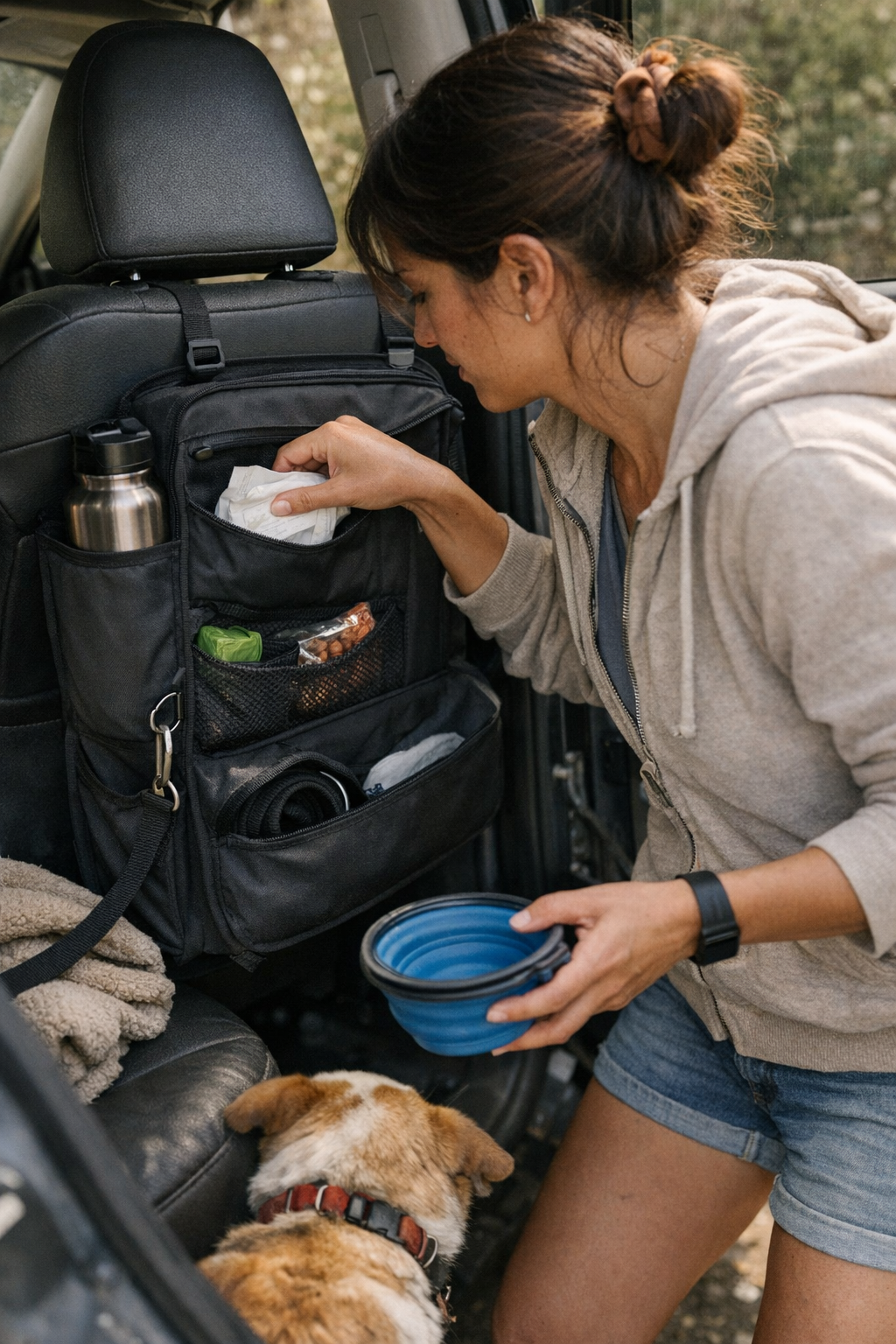
You don’t always notice the friction at first. Heading out with your pet, everything in its place—the bag zipped, compartments filled as intended. There’s a clear sense of preparedness in that first moment. But by the second car stop or the third reach for a water bowl, something subtle shifts. What once seemed neatly organized slowly becomes the very thing interrupting your movement.
After a few trips, you start to notice that wipes slide further down, the folding bowl gets buried under tangled leashes, and pulling out a treat becomes a cautious negotiation around jammed gear. Nothing is broken; it’s just that the smooth flow disappears. That carefully planned setup starts feeling precarious—one extra item tucked away, and the quick grab you relied on stalls. The real test isn’t how tidy everything looks at the start, but how quickly you can access what you need when your pet is shifting at your feet and the day feels scattered.
When “Neat” Blocks Movement
There’s a frustrating routine to reaching for something only to find it moved or blocked by another item. Pet travel gear develops its own “memory”: mid-errand, one hand holds the leash while the other roots through comfort items that now just slow you down.
That part kept showing up. Sections designed for order—deep divided pockets, zipper pouches angled oddly—end up costing precious seconds at every stop. The more I tucked things “away,” the more time I spent reassessing. A smooth start to the week tended to unravel by Thursday, as if each repeated stop exposed the real tension between looking prepared and actually being able to move freely.
You come to see the setup’s real value not in how tightly it holds on day one, but in how loosely it lets you move by the fourth or fifth trip.
A Quiet Shift in Structure
Slowly, a pattern emerged. The items I reached for most—wipes, folding bowl, waste bags—kept resurfacing, sometimes forced to share a pocket, sometimes buried beneath others. What changed wasn’t a brand-new kit, but one small swap: trading a deep “everything is hidden” compartment for a side sleeve with a single zipper, reachable one-handed even while holding the leash.
It looked unremarkable at first, but the difference kept showing up. After several trips—errands stretched out between stops, a tired pet waiting at the car door—the lack of daily reshuffling quietly became relief. The gear looked less pristine by midweek, but it worked. Single-use items were always there without digging, and reshuffling almost disappeared from the routine.
A practical takeaway: the less you stack gear in layers, the less your movement stalls. One or two exterior quick-access points for daily essentials do far more to keep the pace calm than all the initial sorting in deep compartments.
The Real Ease of Returning to Motion
Repetition teaches this well. Noticing friction grow, seeing where seat-side structure actually supports you, and where neat arrangements get in your way. Each return to the car shows if cleanup really works with one hand, if essentials are truly within reach, or if you’re still pausing to undo layers for something you needed just minutes ago.
It’s not a grand revelation—just the quiet undoing of how “organized” can become an obstacle when routines repeat. These days, some sleeves sit crooked by week’s end, and that almost feels like progress. The real relief is in not stopping to reshuffle just to keep moving—something I began to trust only after enough starts and stops to feel the difference clearly.