When Everyday Tools Start to Wear: The Hidden Story of Impact Sockets
Durability differences between impact sockets emerge after repeated use; wrong sockets chip, lose grip, and need more cleanup.
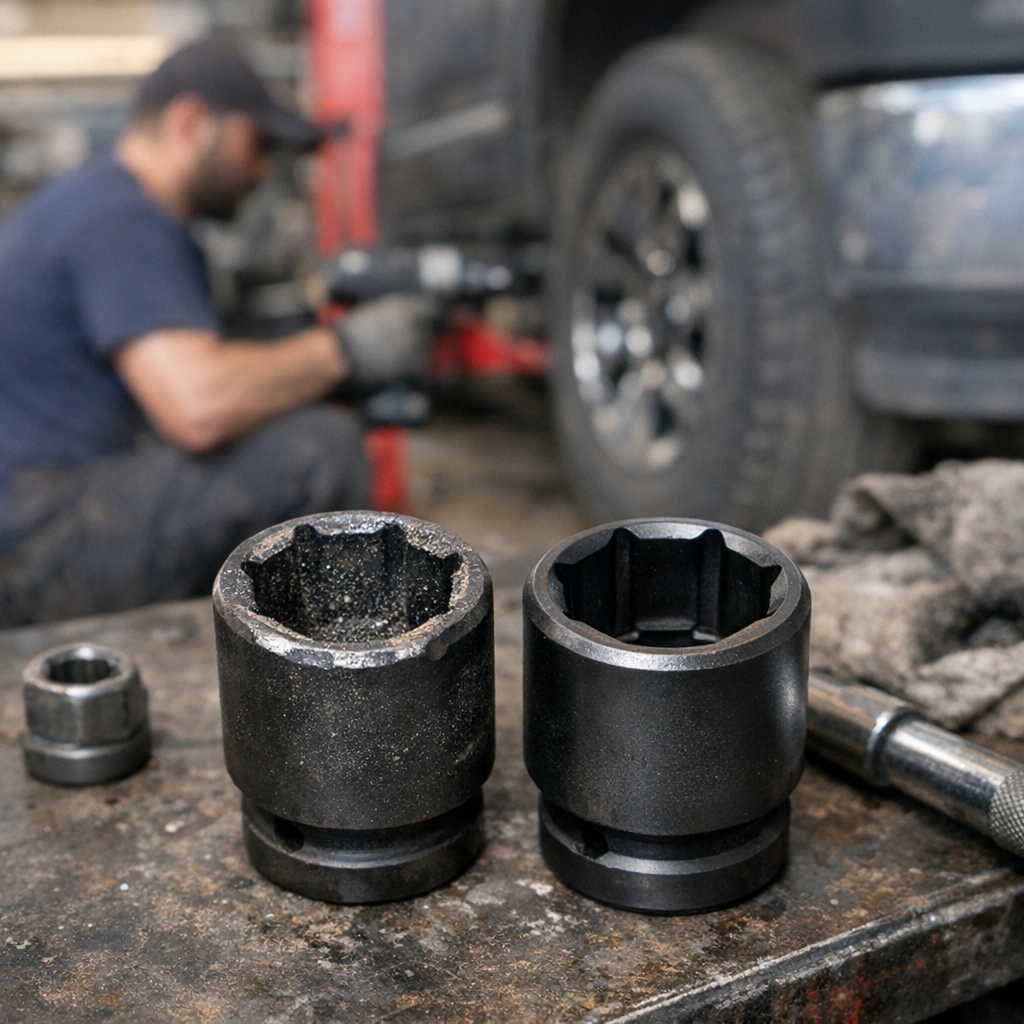
For a long time, I didn’t pay much attention to impact sockets. They looked simple—dull black finish, lightweight metallic heft. You reach for one, spin a few bolts, and the day goes on—until it doesn’t. You don’t notice when battery life dips, not at first. And you don’t notice a socket’s real quality until it lets you down in the middle of a job. It’s strange how the small details only get loud when they disrupt the flow you’d taken for granted.
The Moment Differences Become Real
At the counter or online, the choices blur. One socket looks much like the next. I’ve stood holding two, side by side—weight feels identical, black coatings promise heavy-duty work. Not much to think about. But real work exposes the truth.
You don’t notice it immediately.
Run through your first round of lug nuts and maybe everything’s fine. Maybe again and again. Then, a tiny slip. Or a speck of metallic dust on your gloves you didn’t see before. It’s easy to brush off—until the slip comes again, this time with a little more force, and the drain of trust begins.
Old tools, same motions, yet suddenly the fit isn’t tight. The socket warms in your hand. The rhythm stutters.
The Subtle Ways Quality Tells Its Story
In quieter, cumulative moments, the story unfolds. It’s not about the first bolt. It’s about the twentieth.
A lower-quality socket, you start to realize, vibrates just a bit more. Fatigue sets in quicker. Metallic residue shows up where it shouldn’t. These are warnings that rarely announce themselves loudly, yet they’re hard to ignore once you know what to look for.
Sometimes all it takes is one long afternoon, driven by repetition. The fit loosens, the workflow slows. With each stubborn fastener, your confidence in the tool quietly erodes.
There’s a ripple effect you don’t anticipate—the clean-up, the wasted seconds, the fatigue.
But you feel it.
When One Simple Change Reframes the Whole Experience
For me, figuring out what made the difference came down to a small number on a spec sheet: Rockwell hardness. Not the marketing talk—just the feel after hours of use.
It’s strange how swapping to a socket with the right hardness seemed to settle the noise. Less vibration. Hands stayed cleaner. And when a tool fits well, without drama, everything that follows feels a little smoother.
Most of the time, tools fade into the background, invisible in their reliability. It’s only when they start to break down that you realize how much they hold together for you.
There’s a quiet reassurance in having something that stays true to its shape, job after job—a kind of silent partner in the daily rhythm of work.
I find myself thinking about this every time a stubborn bolt lets go without fuss, wondering about all the unnoticed tools I’ve misjudged before.
These thoughts came together while working on a small project, and if you’re curious about the practical details, you can find them here.