When Extra Things Turn Chores Into Hassles
Over-packing an indoor cat’s zone creates extra surfaces and overlaps that slow daily maintenance; streamlining saves time and reduces friction.
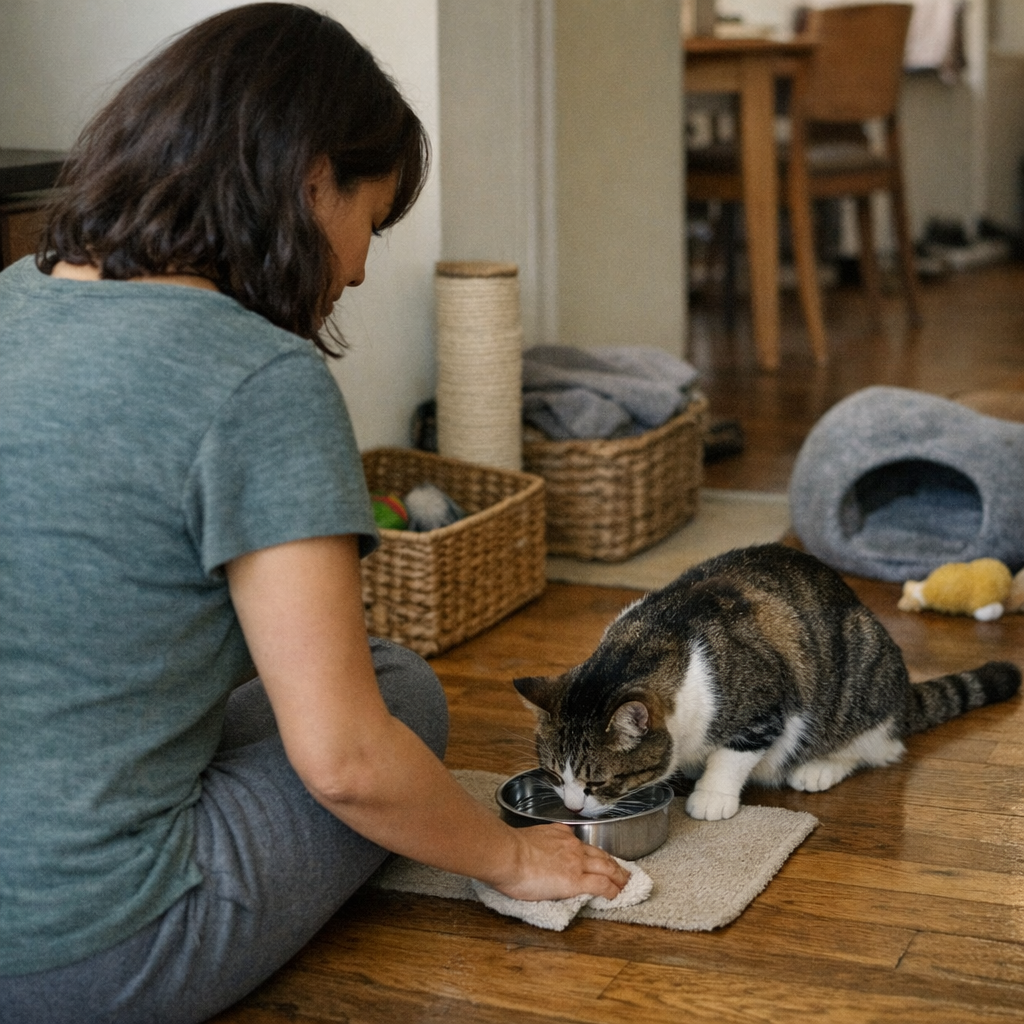
It sneaks up quietly. You think you’re making things simpler by lining up extra bowls, spreading fresh mats, or adding one more litter tray off to the side—setting everything out in advance so routines will flow smoothly. The space feels organized for a moment; everything is at hand, at a glance.
But gradually, each ordinary reset—topping off water, quick-scooping litter, tossing stray toys back in the basket—starts to hit invisible snags. The accessories get in the way of their own purpose, layer by layer. That was the part I hadn’t expected, not until I found myself hesitating before even starting the little jobs.
The Clutter You Don’t Notice at First
At first, the spread of gear around a feeding station or the litter nook looks fine. Sometimes it even feels reassuring. A second mat for drips, a lid for dry food, a backup bowl or two—these things read as “prepared.”
But the difference kept showing up. Wiping around stacked mats meant moving them before cleaning, then again to sweep the seams. Reaching under a grooming caddy or stepping around an extra litter tray that I only remembered when it blocked a closet door. Each daily chore, once quick and forgettable, stretched into nudging things aside and doubling back for the bits I’d missed.
You notice it after a few resets. The real effort isn’t in the cats—it’s in navigating your own setup.
The Way Extra Gets in the Way
There’s a certain tedium to finding a rubber ball under a blanket for the third time, or flicking water off two or three mats instead of one. The convenience flips. Overlapping mats become zones where grit hides, and more bowls just mean more vessels to clean, more places for spills to settle.
A tidy arrangement, it turns out, isn’t the same as one that’s easy to maintain daily. Rows of supplies in sight or storage tucked just out of reach demand as much attention as the cat himself. Every overlap means an extra wipe, every spare piece turns into another reset.
That was the part that kept returning—the way every “just in case” made the smallest routines a little slower, every refill or cleanup a bit more cumbersome.
The Quiet Relief of Less
One afternoon, I pared the setup down. Only the mat that fit the space, only the bowl easiest to reach from the kitchen counter. Things that actually got used stayed put; extras went into storage, ready if truly needed. Cleanup became a single, simple movement—no shifting, no pausing mid-task.
Without the clutter, the rhythm changed. Most days, one good bowl is all an indoor cat really needs; the same applies to mats, toys, and cleanup tools. When items aren’t layered or redundant, resets shrink to almost nothing. That small shift freed up more than just floor space—it put the whole room back into a pattern I didn’t have to think about.
There’s comfort in realizing the best cat zones aren’t about having everything at once but keeping just enough close at hand. The difference is immediate but stays quiet in the background—a routine that feels lighter, on both ends of the chore.
Sometimes, the simplest setup leaves the most space for both of you to move through the day. If you want to see what I mean, this is where I started: http://www.stillwhisker.myshopify.com