When Familiar Habits Quietly Shift the Day’s Rhythm
Repeated disruptions in dog routines quietly accumulate, making tasks harder. Fixing one friction point resets the feeding process and daily flow.
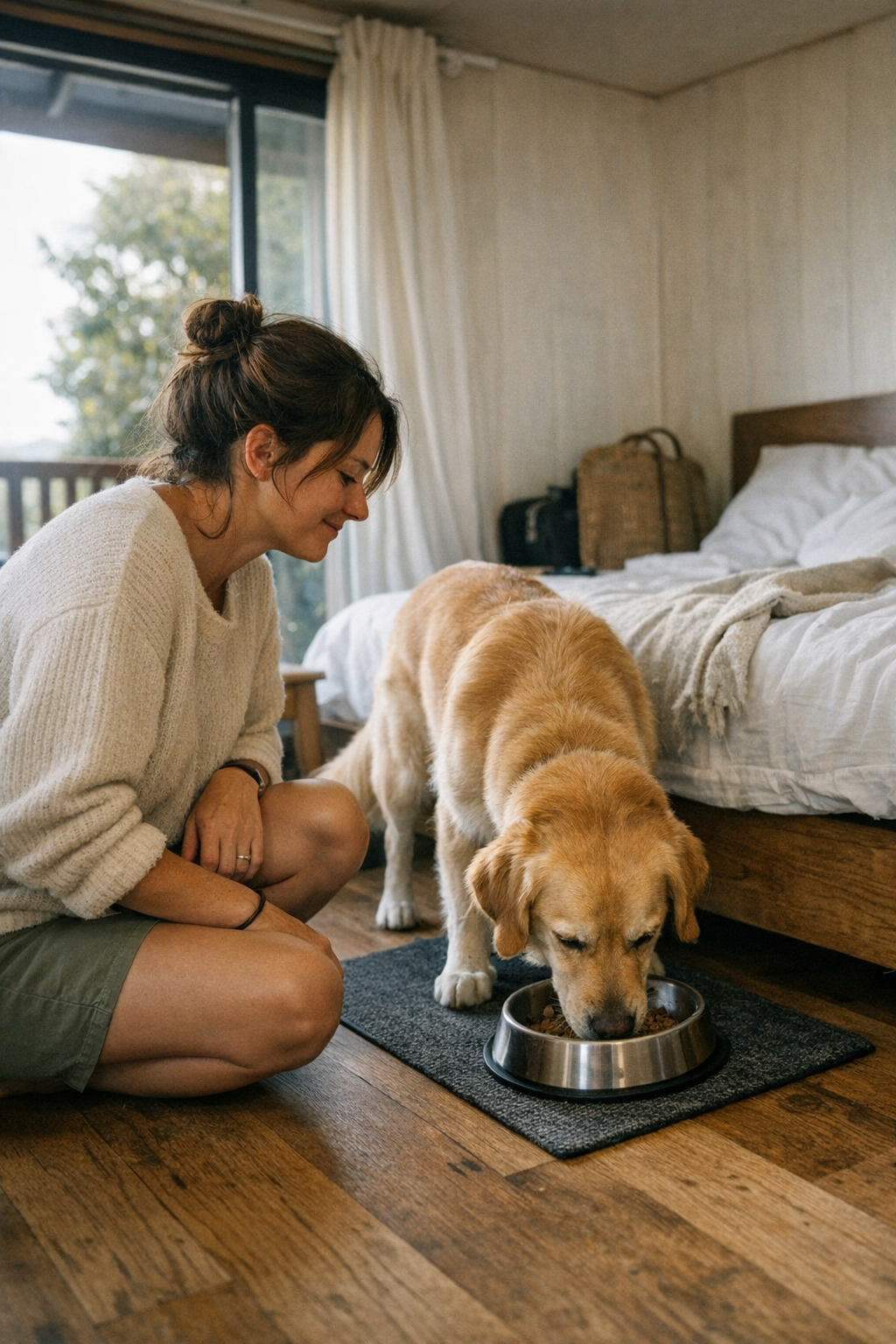
It crept up quietly, in the way small things do. Each morning, my dog would push his bowl halfway across the kitchen just to finish his breakfast, and I’d find myself scooping kibble from edges or nudging the bowl back in place with my foot. Not a crisis—barely even worth a mention. But there it was again the next morning, and the next after that, lingering at the margins of my day.
At first it felt trivial—just a bit of untidiness I cleaned up without much thought. But after enough mornings, I caught myself hesitating before pouring the food—already calculating whether I’d need to crawl under the stove again before heading out. That small hassle kept coming back: never big enough to demand a new setup, but never truly going away. The routine didn’t break; it just stretched, drawing busy hours thinner.
You notice it after a few mornings. Routines show their weak spots in the places you clean more often or move furniture around just to get past. I tried minor fixes—shifting the bowl once, tucking a towel beneath, moving the whole setup closer to the wall. Each looked neat enough, but none really settled the issue. Kibble still scattered into cracks. I still circled back, scooping food with container and scoop tucked in arm, tiptoeing around stray bits that never made it into the bowl.
The Noisy Quiet of an Almost-Right Setup
There’s something stubborn about small friction points. When I rushed through the kitchen and found another greasy smudge on the tile, I realized “almost right” could be the most frustrating kind of wrong. I started thinking about how much of my morning slipped away in those resets—a few seconds here and there, added up over days.
Most mornings, the kitchen looked clean after a quick five-minute pass, but the difference was smaller and more persistent than I expected. Feeding shifted from a simple job to a cycle: feed, nudge, wipe, repeat. The bowl might as well have been on wheels, sliding from the mat to the fridge side. My dog learned mealtime included a little chase—one neither of us enjoyed much.
It’s easy to mistake daily interruptions for part of the background noise. I told myself the dog would “grow out of it,” or maybe this was just feeding time in this house. But the pause before every meal, the sigh as kibble hit the floor, said otherwise.
The Quiet Value of a Planted Bowl
I can’t say exactly when I swapped out the mat beneath the bowl. I only remember the first morning when the bowl stayed put. No more clatter against the baseboard. No more scrambling to pick stray food from cracked grout after breakfast. It was a small change—a mat with better grip, nothing fancy.
Suddenly, the routine shrank back. My dog settled in directly, without chasing the bowl or circling. When he finished, the dish was still near where I’d left it—sometimes off by an inch, no more. Cleanup stopped trailing me into the rest of the morning. The kitchen felt less like an obstacle course. That quiet shift—small and simple—made the rest of the day’s routines feel less caught up behind me.
It’s strange what sticks with you: how the simplest adjustment can smooth a routine, how the slow friction had quietly drained time and energy from my mornings more than I’d admitted.
What Stays After the Clatter
I still notice the little moments. Bowls go down with calm confidence now, not the cautious placement they used to require. On busy days, I sometimes catch myself scanning for scattered kibble by habit—long after the mess has stopped.
When a routine runs smoothly, you don’t think about it. It folds itself away. Those mornings that used to feel slightly stretched now leave space for an extra five minutes outside with the dog, or a quieter pause at the door before heading out. That’s what I keep coming back to.
And when days get hectic, that grounded bowl stays quietly in place—an anchor I overlook until something else starts sliding.
If you want a closer look at the setups that helped me, you can find them here: http://www.dogpile.myshopify.com