When Familiar Spaces Start to Feel Like Work
The difference between routine and variety in indoor cat setups shows after repeated use; smarter tweaks reduce maintenance and stress over time.
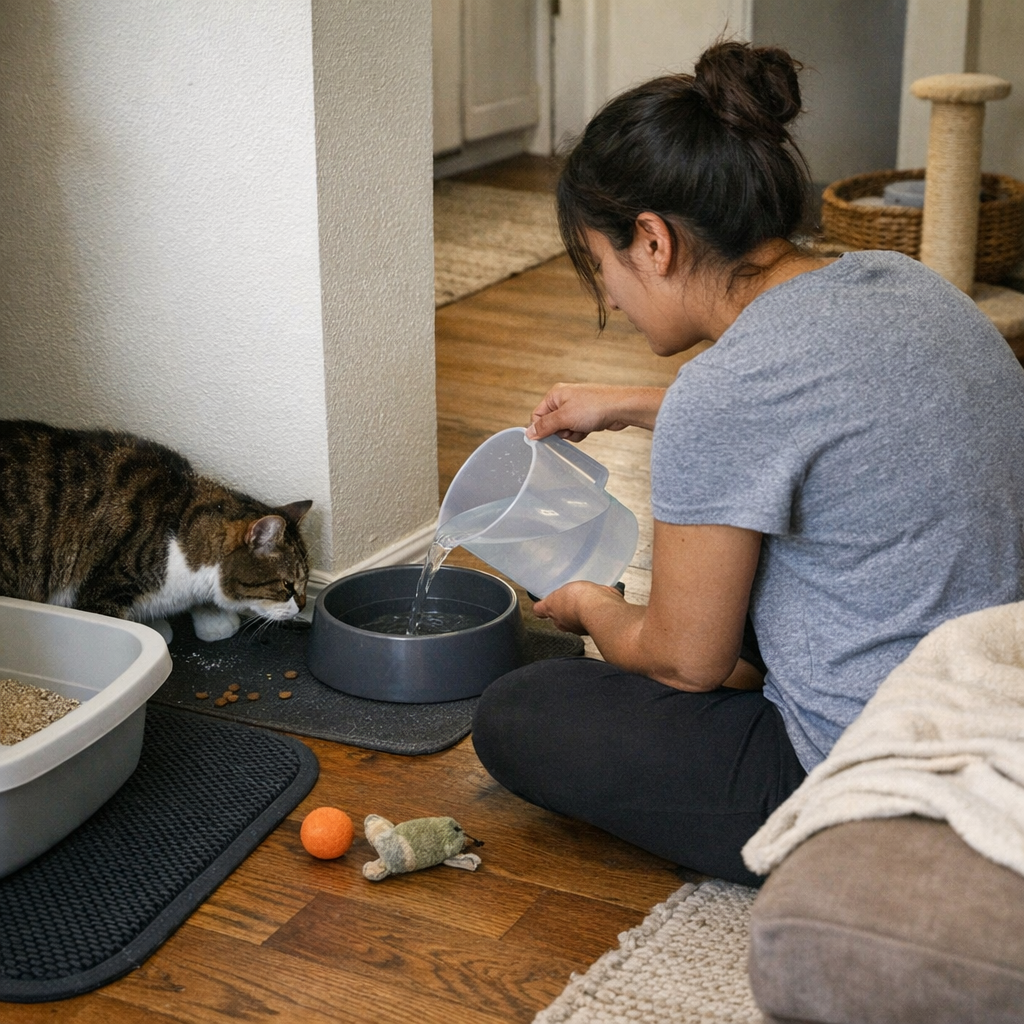
Somewhere between the fourth refill of water and the second time you bend down to wipe away a puddle you missed, a different picture of “tidy” starts to surface. On day one, it all looks calm—water bowl set at a neat angle, toys clustered near the scratcher, a litter mat framing one logical spot in the corner. Then the routines settle in. You refill a bowl in passing; a toy disappears under the couch; crumbs hide under the edge of the nearest mat. For a moment, everything seems fine. But after a week, it isn’t just your cat’s habits that reveal a pattern—your own small resets begin pulsing through the room, subtle but persistent.
Where Calm Meets Catch-Up
A room can look pleasing for the first day or two, almost staged, before the cycles of real life get enough grip to scatter things out of place. You only notice after a few resets. Feeding feels steady until you find yourself nudging a bowl back with your foot or adjusting that mat for the third time in a morning. Disorder creeps back faster than you remember tidying.
It looked fine at first. The sense of calm fades when a water bowl runs dry by mid-afternoon, or a cluster of litter granules escapes beyond the mat’s border. The realization settles in with each small interruption—these setups don’t just have to look ordered; they need to hold up through daily movement.
Trouble at the Edges
I kept thinking the right mat or blanket could contain everything. It wasn’t until morning routines were disrupted—sidestepping a toy blocking a narrow walkway, or crouching lower to avoid crumbs near the food bowl before rushing out—that the tradeoff became clear. The smooth surface of the setup covered a string of micro-fixes: a towel fetched to dry spillover, a half-minute pause to brush stray litter that always slipped past the edge.
That was what kept returning. Mess doesn’t stay within the spots you’ve marked for it. Within a few days, cleanup creeps beyond the edge of even the neatest mat, or a rest corner starts demanding extra work to stay presentable. Each fix buys a little calm, but the friction always creeps back.
Small Shifts, Real Improvements
The difference wasn’t dramatic, but it kept appearing. Moving the feeding mat just a little further into open space cut down breakfast splashes; a deeper water bowl slowed the midday “last drops” check; a denser, heavier mat near the litter box held stray pieces tight enough that I could skip most nightly sweeping. A corner doesn’t have to be pristine—it just needs to stop leaking work into the rest of the room.
One practical idea stayed with me: fixes that survive daily routine, not just daily cleanup, quietly lower the cost of sharing a space. The setups you stop thinking about end up mattering most.
There are more small patterns here if you want to look a little closer: stillwhisker.myshopify.com