When Familiar Tools Start to Falter at Day’s End
Neglecting subtle battery and charger differences causes tool drag, finish faults, and rework. Checking voltage after heavy use spots failing units early.
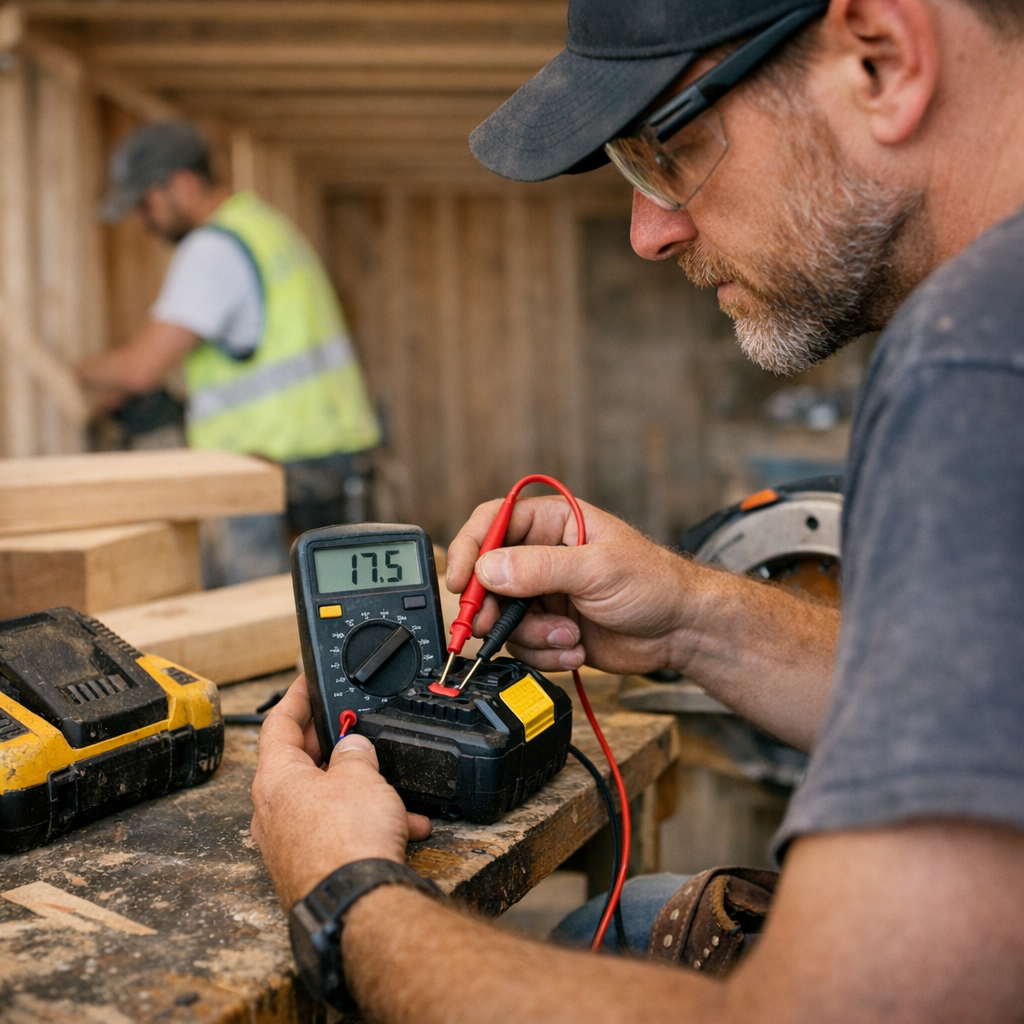
There’s a moment, somewhere in the middle of a task, when the rhythm breaks. Not a dramatic breakdown—just a quiet drag. Power tool batteries, at first, seem indistinguishable. Lined up, charged, clipped in. They work—or at least, they appear to. It’s not until you’re deep into a job, maybe hours in, that differences begin to make themselves known. You don’t notice it immediately. But you feel it.
Appearances That Deceive
At the outset, every battery and charger promises the same reliability. Crisp indicator lights, snug fittings, nothing visibly amiss. It’s easy to trust these signals. Still, something subtle shifts as the hours collect. The power isn’t quite what it once was. A saw that once glided through boards starts to hesitate; a clean line now leaves behind a gentle fray. What’s tricky is that the signs only become clear when the work becomes real—when you ask a little more of your tools.
Where the Real Differences Show Up
There’s a kind of knowledge that only comes after repeated use. Picture a job site with the day’s tools laid out, everything set for a clean run. Then, after a few passes, one tool falters. The sound drops, the material resists. You might not spot it at first. But soon, corrections start piling up—extra sanding, re-cuts, wasted time. The issue isn’t always with your work; sometimes, it’s the battery carrying just a little less charge than promised. Over time, small power losses turn into real fatigue.
Learning to Listen for the Signs
The turning point, for me, was paying attention after work, not just during it. Recording the output voltage of each battery—quietly, at the end of the day—showed me which ones had already started to drift. Ones falling below a certain number found their way out of rotation, retiring before their decline ate up another afternoon. Oddly enough, this single habit made the whole process smoother; fewer tools stuttered, more jobs finished on time. It’s not about chasing perfection, just listening a little more closely. Sometimes, the difference between a good evening and a long one is noticing voltage drop before it becomes something bigger.
Sometimes I catch myself remembering the early years—when batteries were just batteries, and every tool felt new. These days, I pay a little more attention before the work begins, and a little more still when it ends.
These reflections surfaced while sorting out a quiet issue on my own bench. If you’re curious, here’s where it started to click.