When Fewer Toys Make a Home Feel Lived In
Limiting the number of cat toys out reduces clutter, daily cleanup, and distractions, making spaces easier to navigate and maintain over time.
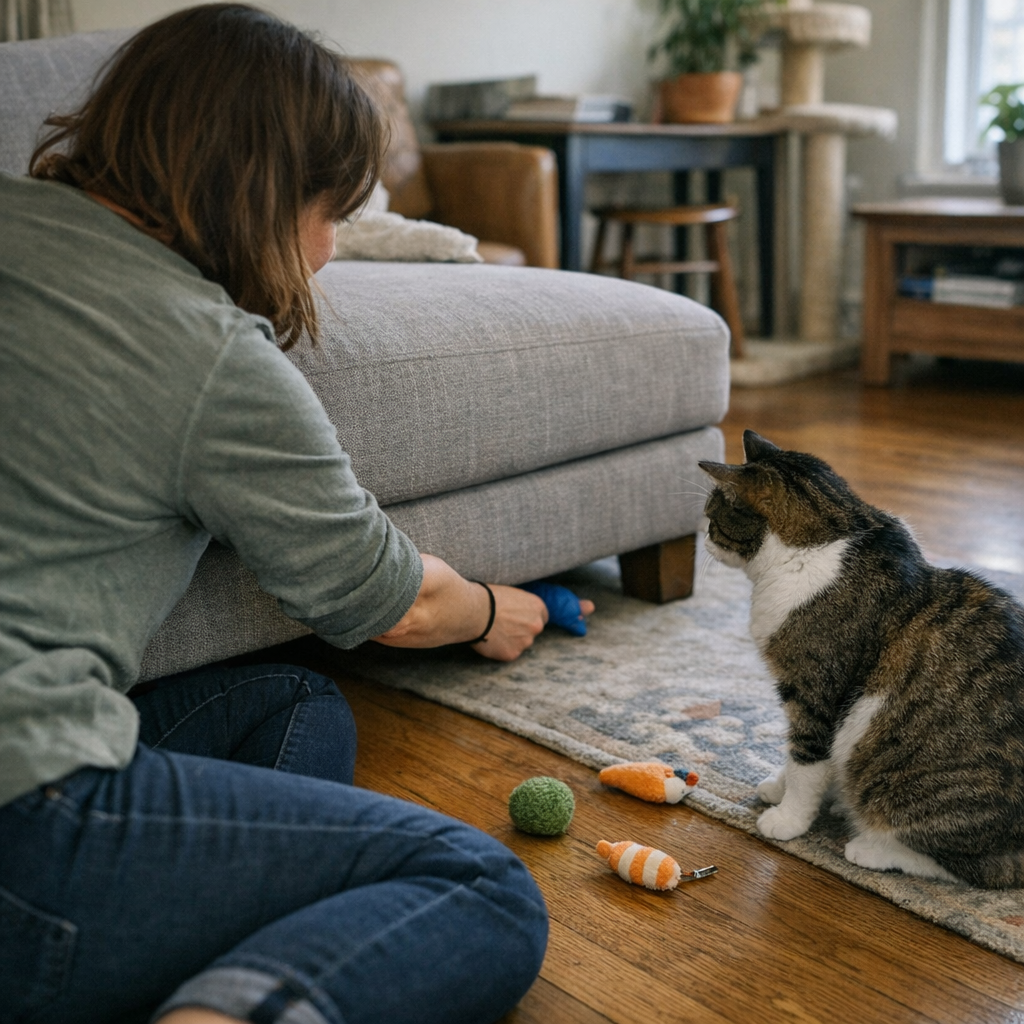
It starts as a familiar background—just a couple of felt mice beside the water bowl, a ball or two along the hall near the rest corner. The accumulation is easy to ignore at first, but something nags when your foot nudges a squeaker wedged under the couch yet again. Over time, an indoor cat’s toy spread becomes its own kind of signal, not just of play but of how routines tangle with the room: feeding spots, water setups, litter-adjacent arrangements, and the shared spaces cats and people both move through. No one plans for the constant pickup. But the moment you realize the toys don’t just fill corners—they start shaping how you move and live around rest corners, scratching zones, and grooming-adjacent storage—that’s when the topic feels worth returning to.
A Quiet Drift Through the Day
The intention is always tidy: toys stacked in a basket or container near the feeding area, surfaces cleared before the day settles in. But it doesn’t last long. One play session before breakfast, and there’s a trail from the rest corner to the pantry or water bowl; by afternoon, the living room retells the day’s activity in scattered plush and plastic. After a few resets, you notice even a well-chosen lineup slides out of place, multiply scattered. Cleanup feels like chasing signals that never quite stay put, with toys slowly carrying over into the litter-adjacent area or near grooming spots. That was the part that kept returning—they drift back into life no matter the original plan.
How Clutter Shapes Routines
Over time, it’s not just about which toys the cat prefers. It’s the small reroutes—stepping over a tunnel during a slower water refill, stooping for the crinkle ball while wiping a spill on the feeding mat, spotting the same mouse pop up again right when you thought you were done resetting the litter area. Each pause is small, but together they add up to a minor second job tied to comfort-versus-upkeep tension. It looked fine at first, with comfortable setups and easy access, but the difference kept showing up in daily life: how often you paused to clear a walkway, how quickly a room started feeling muddled after what should have been a full reset of the toy basket, feeding sets, or scratch areas. Living with cats inside, especially when sharing spaces, it’s surprising how the steady friction from scattered toys outpaces almost any other pet task, slowing resets or lingering with residue that keeps returning.
The Quiet Advantage of Fewer Choices
Letting only the most-used toys stay out was a gentle reset. One or two visible choices—rotated every now and then—quietly reduced the pauses, the under-table reach, and the path blocked five times a day by yesterday’s amusements. Cleanup wasn’t erased, but it got briefer and less like redoing yesterday’s work or chasing hidden-storage inconvenience. Sometimes you spot the old blue mouse peeking from beneath the couch and mark it as the right time to swap it out. The difference isn’t dramatic, but it accumulates—a bit less friction, a bit more shared quiet. It’s easier to spot when a toy really matters or when it’s just another thing in the way of smooth feeding resets, litter cleanup, or grooming-adjacent handling.
Small changes—or even just trimming the visible pile—have a way of making shared space fall back into place with less work. There’s more room to move, less to reset, and fewer slowdowns from scattered toy carryover. You start noticing the parts of the day that feel lighter, even when routines barely shift.
If you’re curious how these tiny household tweaks set the rhythm of indoor cat life, it’s a world StillWhisker keeps circling back to: http://www.stillwhisker.myshopify.com