When Flexibility Fails: Finding Order in Everyday Workshop Chaos
Fixed roles reduce clutter and wasted movement in workshop storage, unlike flexible setups that cause reshuffling and slow workflow over time.
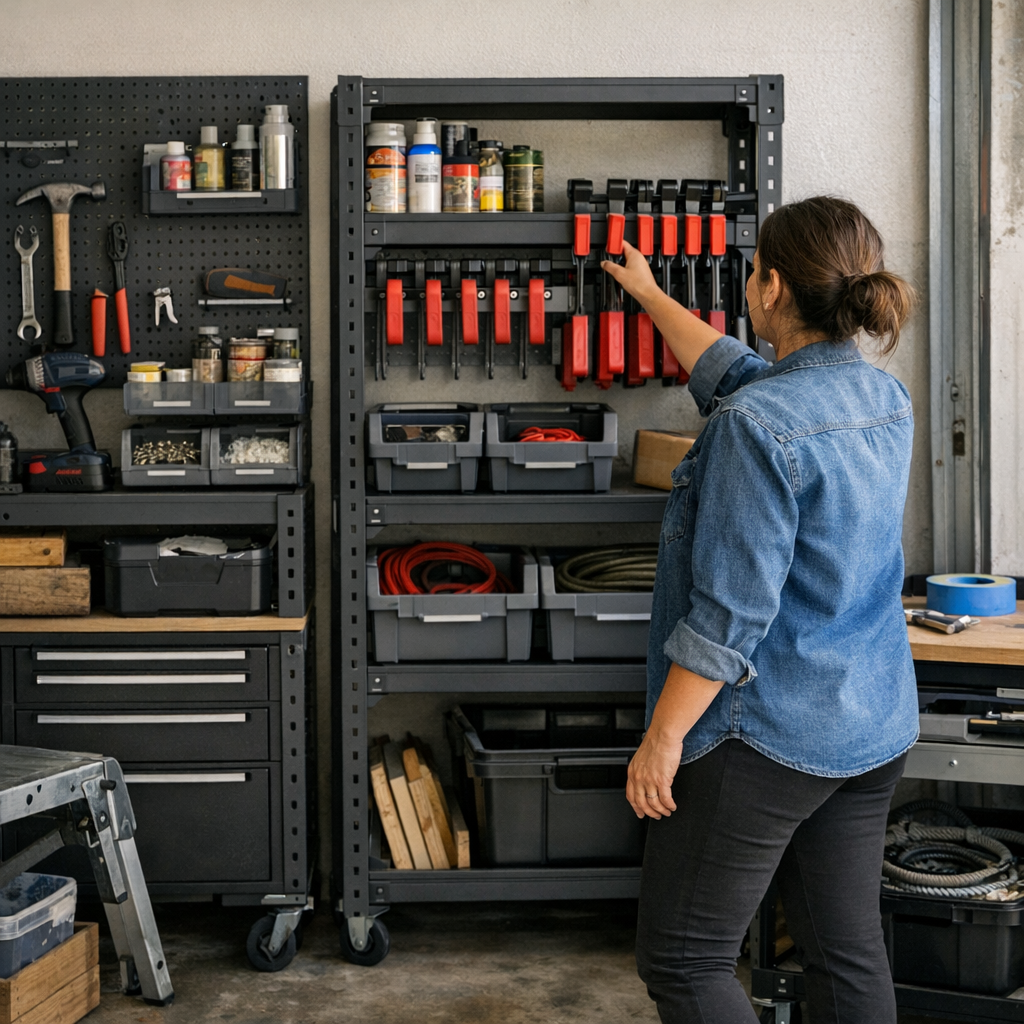
On the first day, setting up a workshop feels full of promise. Tools are lined up. Shelves stand empty, ready to be filled. Each bin or cart seems like it will make daily messes flow away just a little easier.
But that’s not usually how it goes—not for long, anyway.
Most of us set up garages or workspaces chasing the idea of flexibility. Modular bins, pegboards, rolling carts—all designed to adapt. It’s a comforting sight: a place for everything, and everything within reach.
But each return trip tells a different story. Bins fill and shift. Items wander. That reassuring flexibility starts to dissolve. You don’t notice it immediately.
But you feel it.
The Illusion of Flexible Order
At first, moving things around feels empowering. There’s room for change and creativity. Today’s project can look quite different from tomorrow’s. There’s even a calm satisfaction in snapping a photo of a freshly arranged pegboard.
Yet over time, items begin to blur together. Drivers end up with clamps. Tape measures land wherever there's space. A system built on flexibility quickly starts to feel random.
You wonder where the flow went. A cart that once felt agile suddenly becomes just another place to search. The difference between “organized” and “easy to use” slowly becomes obvious—and not in the way the glossy setup promised.
Why Predictability Matters More Than Neatness
There’s a small but important difference between a tidy workspace and a reliable one.
I’ve seen this in my own garage. On “reset days,” the original plan looks perfect: shelves labeled, bins open, all ready to adapt. But during the quiet momentum of a busy afternoon, order slips. Pliers can’t find their spot because glue lives there now; overflow collects in corners.
Returning things to their places turns into a puzzle instead of a habit. Each micro-decision—put this here, that there—adds friction. There’s a hidden cost in searching, shuffling, and second-guessing where items belong.
You don’t notice at first. But after several real work sessions, the extra time lost and small hesitations add up. The clearest spaces weren’t the most flexible—they were the most predictable.
When Fixed Roles Start to Feel Like Freedom
So I tried something different. Not a major overhaul, just a subtle shift: I gave certain tools—like clamps and drivers—a permanent home. Labels. Corners that weren’t allowed to shift.
Setting this up took ten minutes and some patience. But suddenly, resets became almost mindless. No more silent moments standing in the center, scanning for a place to put something down.
Oddly, having less choice made each reset faster and simpler. There’s comfort in not having to think about where things go—not just the relief of order but the gentle return of rhythm.
This wasn’t about neatness. In fact, the workshop didn’t look all that different. But moving through it felt different. Flow returned. Slowly, it became clear that what seemed limiting at first actually set the stage for every future project to start clean.
We don’t always notice the little frictions until we step back and watch them repeat. Sometimes clarity sneaks in quietly—like a labeled shelf that continues to deliver small moments of calm long after the urge to reorganize has faded.
These quiet lessons shaped my thinking while tinkering with tools in my own small workshop.