When Garage Order Fades Into Everyday Chaos
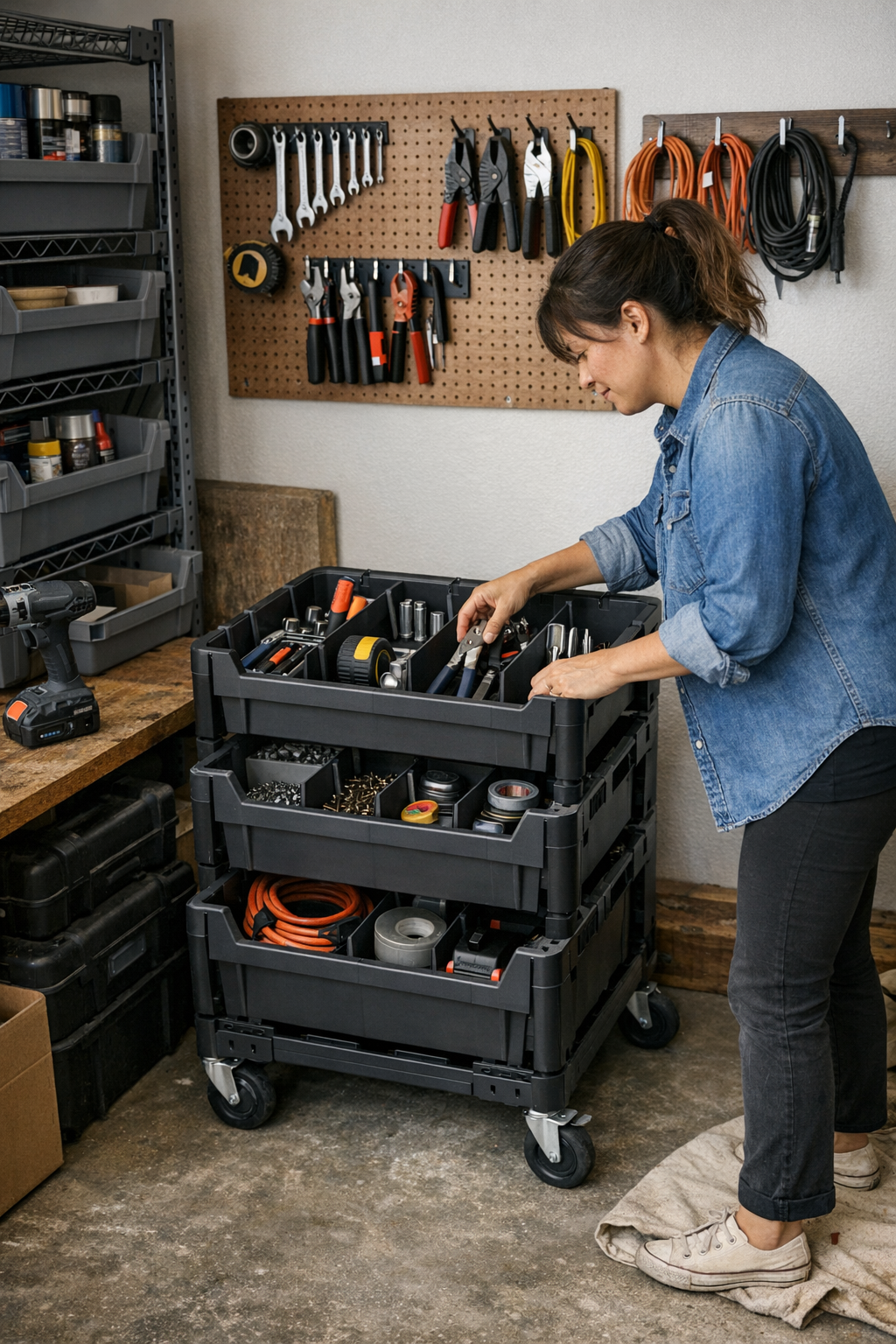
Clear, physical boundaries in modular storage keep categories separate, reduce reshuffling, and ensure reliable organization over time.
It’s easy to feel accomplished after installing modular shelving or lining up tidy rows of bins in the garage. Everything has its place, labeled and neat, creating an order that promises readiness for the next project. But even the best layouts can unravel—not through a sudden event, but slowly, almost without notice.
The Quiet Drift of Everyday Use
At first, you rarely notice the small shifts. A bin meant for screws gathers a stray washer. A hammer ends up on a shelf with paint cans. These tiny migrations feel no big deal.
But days turn into weeks, and the lines blur. What started as a clear system loses its sharpness. Tools wander between trays; extension cords tangle with jumper cables; you pick up a box only to find it heavier with forgotten items. This pattern seeps into daily use, turning what once was effortless into extra shuffling, second-guessing, and frustrating slowdowns.
You don’t see it immediately, but you feel it.
The Difference Boundaries Make
One afternoon, I watched this happen in my own crowded garage. I’d organized everything on a rolling cart, stacking shelves and bins close to maximize space. By the second week, categories blurred: small tools slipped out of place, electrical cords crossed spaces, a loose handle jammed the wheel. Resetting required emptying entire trays just to retrieve a single item.
So I tried something simple: dividers. Not a major overhaul—just a boundary between types. A hand-width of space between bins, an extra hook on the board, a clear start and stop on each shelf. Suddenly, things settled. The wrench returned to its home without nudging other hardware. Tools stopped crossing paths. Even after a busy day, putting things away felt easier—almost automatic.
It sounds subtle, almost trivial. But when the barrier holds firm, so does the flow.
Order That Endures
Order doesn’t dissolve through chaos but through the slow fading of boundaries. The neat look alone isn’t enough; it’s the underlying structure that quietly determines whether things still work a month down the line.
Strong boundaries mean less time searching, fewer snarled cords, and easier resets without conscious effort. What started as a quick experiment in my garage ended up saving more time than expected—and brought a calmness I hadn’t anticipated.
The right divider does more than separate things. It softens the routine, keeps invisible lines visible, and creates quiet space for work to start without friction.
Sometimes, good organization is mostly about holding the drift at bay. The rest is watching how things settle.
These thoughts came together while reworking my own setup—details here if you’re curious.