When Gloves Make All the Difference in Metalwork Precision
Choosing gloves with proper grip and fit prevents bit walking on metal, reducing drift, rework, and fatigue for cleaner, safer drilling.
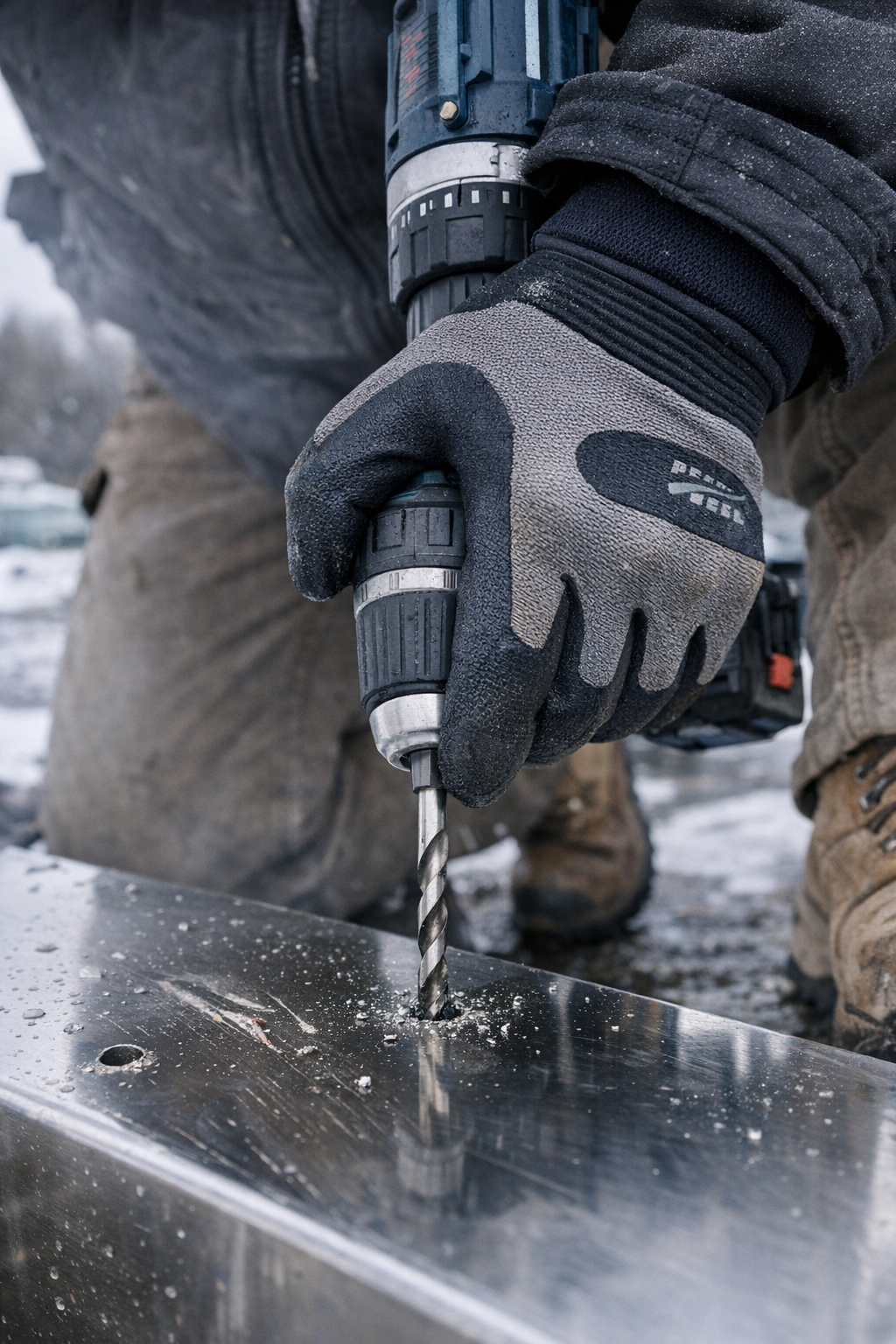
There’s a moment — mid-task, mind focused — when things just go sideways. A drill bit, steady in your hand, feels like it’s about to bite into metal. Then it slips, skating off its mark, leaving behind a scratch where intention had been. You don’t notice it immediately, but you feel it.
Bit walking on metal has a way of breaking your rhythm. It’s easy to blame technique or a worn tool, yet often, the real culprit is less visible: the choice of gloves or that slight give between grip and steel. We don’t think much about personal protective equipment — until the result stares back at us in a jagged, off-center hole.
It’s the sort of detail that hides in plain sight, quietly influencing how each attempt unfolds.
The Invisible Influence of Grip
On the store shelf, gloves look almost identical. Promises of dexterity and protection stretch across the labels, but their real difference appears in the middle of the workday. One palm cushions and holds steady; another slips, flexes, just enough for the drill bit to wander.
You won’t see it in the first cut. Sometimes not even the second. But after a string of holes, hands growing tired and metal losing its texture under a drift of oil or condensation, it becomes clear. The material and fit of the glove quietly decide whether the drill stays rooted or slides off target.
There’s a familiar scene: field work in the cold, gloves just a little too smooth. The bit hovers in its mark and — almost imperceptibly — flicks half a millimeter sideways. The result isn’t dramatic, but it lingers, a wobbly edge that slows everything that follows.
Small Adjustments, Real Differences
You try a different pair — nitrile over the palm, thickness just right. The friction does its quiet work. No squeak, no slip. Even on slick, oiled steel, the difference is there: hands aren’t straining, the drill’s vibration no longer makes the tool drift. There’s less work compensating, less fatigue by day’s end.
It’s strange how much those small margins matter. Not just in the measurement of a clean, round hole, but in the steady feeling that follows hour after hour. When the equipment aligns with your motion, things feel lighter. The hands do less wrestling; the tool feels less like an opponent.
This isn’t something you notice unless you change things up. But once you do, the absence of struggle makes its presence felt.
What Slips Between Our Attention
There’s a quiet truth here: the most impactful problems rarely announce themselves. Bit walking may begin as a technical footnote, but it grows into the invisible cost of fatigue, wasted effort, and frustration that lingers at the edge of the workday.
It becomes easy to accept slips and offsets as just part of the job. But sometimes, a simple switch — a better-fitting glove, a surface that holds true — quietly reclaims a sense of control. Precision feels less like a battle.
Maybe that’s why the smallest details matter most: not for what they fix immediately, but for how they keep the flow unbroken. In the end, the difference between a job well done and one filled with setbacks may be the stuff we almost didn’t notice.
These thoughts came together while working through a string of stubborn drill holes one winter morning, gloves changed mid-task.