When Grooming Becomes a Quiet Ritual at Home
Realigning grooming posture quickly cut down stray fur, cleanup, and cat avoidance, creating a cooperative routine that lasts beyond first use.
Grooming an indoor cat should be simple—just a brush, a towel, and the soft patience of routine. But after enough repeats, small frictions build up. What looked like a decent setup turned stubborn: fur ending up in the wrong corner after every session, knees angled awkwardly in the walkway, tools slipping just out of reach, and the cat suddenly deciding to find somewhere else to be. It didn’t feel dramatic, just steady. The order unraveled quietly, session by session, until “routine” started meaning “reset.”
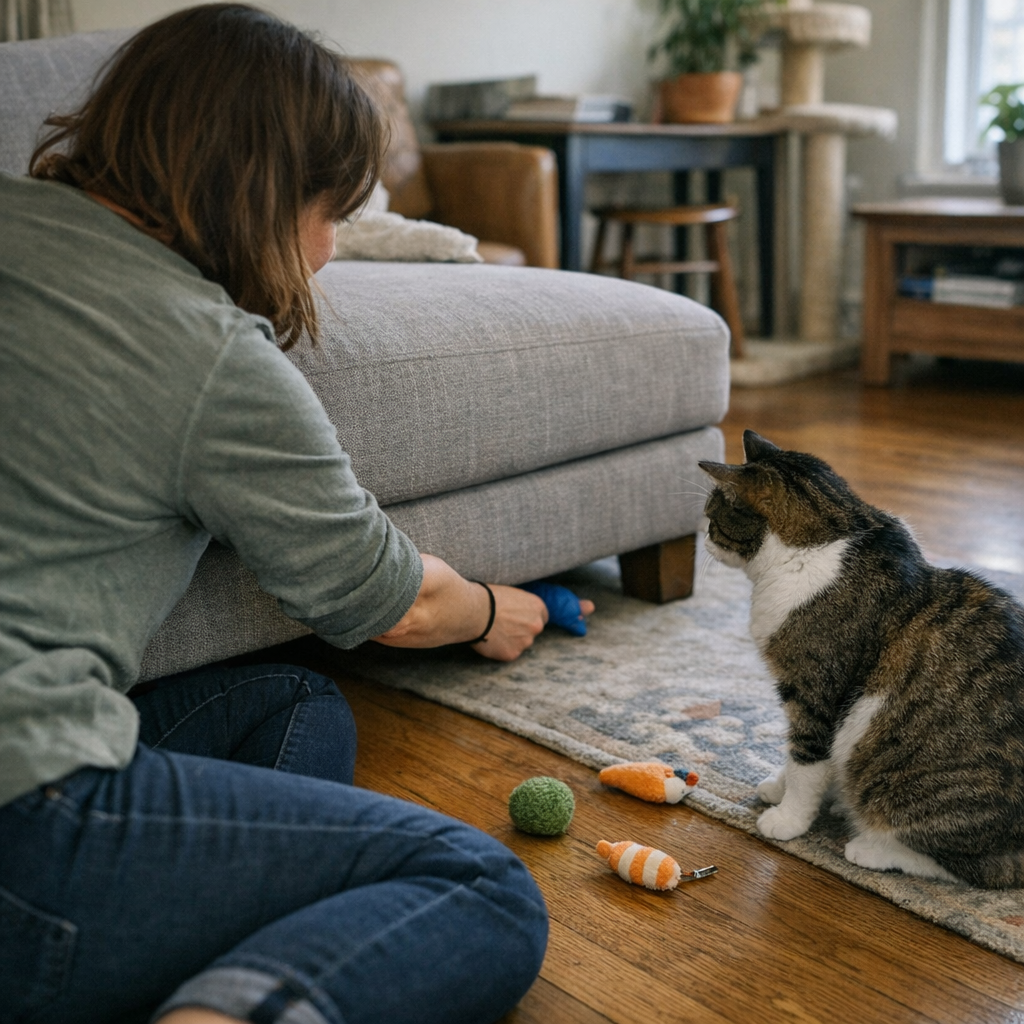
You notice it after a few rounds with the same setup. At first, the scene is contained: mat laid down, tools at hand, hair brushed into a neat pile. But old strategies begin to leak. By the third session, fur skirts the towel’s edge—drifting under the couch or into beds you thought were safe. The brush rolls off the coffee table. Your posture tightens without you noticing, until the cat’s patience fades, and she hovers just out of reach. That was the part that kept recurring.
Mess creeps past the “grooming zone” when the setup isn’t designed for repeated use. Tools migrate toward the feeding mat. Stray fluff shows up in the water dish. Resetting turns from a quick sweep into an all-room effort—bits of gear, fur, reminders that your system, for all its neatness in the moment, isn’t actually containing anything past the first ten minutes. Noticing this wasn’t a sudden realization. It just settled in, slowly.
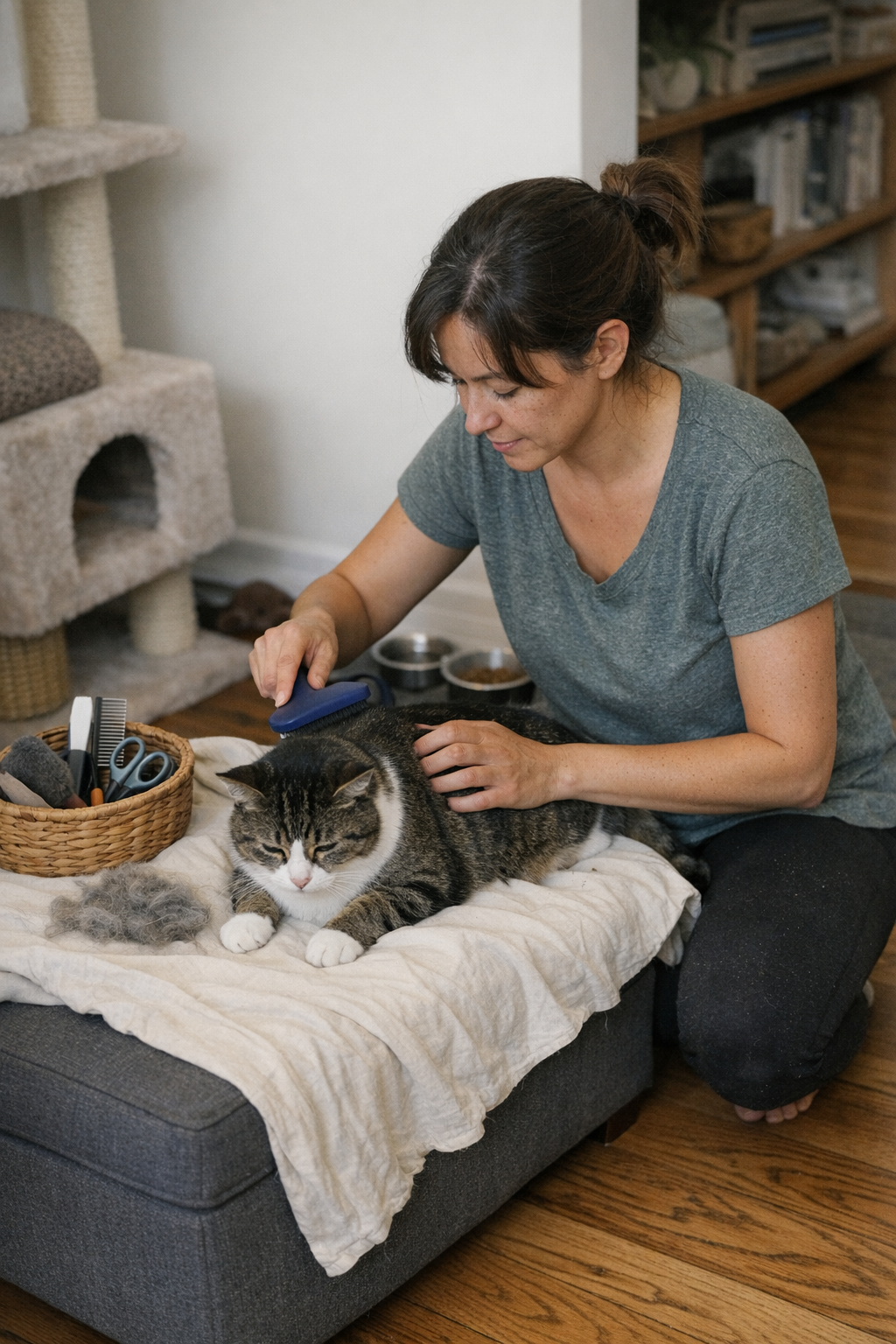
One afternoon, I pulled a stubborn brush from beneath a chair for the third time in a week. That’s when I decided to move grooming to a firm-sided ottoman—one edge reserved for tools, a washed old sheet tucked deep around the base, everything anchored. Now, fur stops at the boundary. Brushing and cleanup stay quiet—no more fur sliding into the next room, no more extra sweeping near the food area. The cat comes closer, waiting calmly without flinching. With cleanup contained, resets take less than a minute. The tidy look of the room finally matched how it felt to live in it.
The small discomforts—the shift of a knee, chasing missing tools, the cat’s slow retreat—don’t announce themselves as problems. They just accumulate, showing up as a little more work, a little less presence. Redrawing the boundary from “anywhere with space” to one defined, physical spot shifted things. It looked fine at first, but the difference kept showing up.
For me, that was the quiet change: a grooming space that no longer drifted into every corner of the home, just a task that fit and ended exactly where it started. If that sort of containment feels overdue, it’s probably worth the smallest adjustment—or even just an old ottoman. Some details, quietly improved, stay fixed, and the rest settles in behind them.
On days when this realization repeats, I sometimes revisit it here.