When Hallway Storage Meets Everyday Flow
Placing a console cabinet in the entry path with divided compartments reduces hallway clutter by fitting storage into daily movement.
There’s something persistent about hallway clutter. You can tidy it up on a Saturday morning, close the doors of a polished cabinet, and still notice new piles forming—shoes, bags, stray envelopes—without a clear invitation. Over time, I started noticing the rhythm less in the items themselves and more in the space around them. That’s when I realized the real work of storage isn’t just about what fits inside, but how it keeps pace with the daily flow of coming and going.
You don’t notice this immediately. The hallway console feels like it should solve the problem, standing ready with compartments and clean lines. But by evening, or midweek, signs of life start to collect again along the floor’s edge or on top of the cabinet. Shoes gather at the shortest distance from the door, mail piles up near its lockable drawer—close, but not quite inside. The growing clutter is more a factor of routine than physical space.
When the Flow Doesn’t Click
I kept rearranging things for months before I paid attention to how movement shaped the mess. Cabinets placed even a stride from the main entry felt invisible when arms were full—groceries in one hand, keys in the other, someone calling from another room. Putting things away became a conscious, extra action at the end of the day.
That was the part I kept coming back to. The intention of “a place for everything” faded when the cabinet required a lean or turn to access. The clutter would start again—slowly at first, then all at once after a long week.
A narrow, neatly closed cabinet brought calm for a moment, but after two days it became just another surface to bypass.
How Items Drift and Categories Blur
What stood out was how quickly categories blended together. Shoes meant for the bottom shelf ended up next to bags; keys rested wherever a hand found space; school letters stacked beside coats rather than inside drawers.
The pattern was clear: people put things down, not away. Disorganization didn’t explode; it crept in, inch by inch through hesitation or habit. Deep, divided cabinet spaces encouraged items to hide and blend until retrieval became a small project. The tension wasn’t immediate, but lived in the slow clumping of categories.
You feel it, even if you can’t name it. Resetting takes longer after a week or two of just “making do.”
Edge-of-Stride Storage
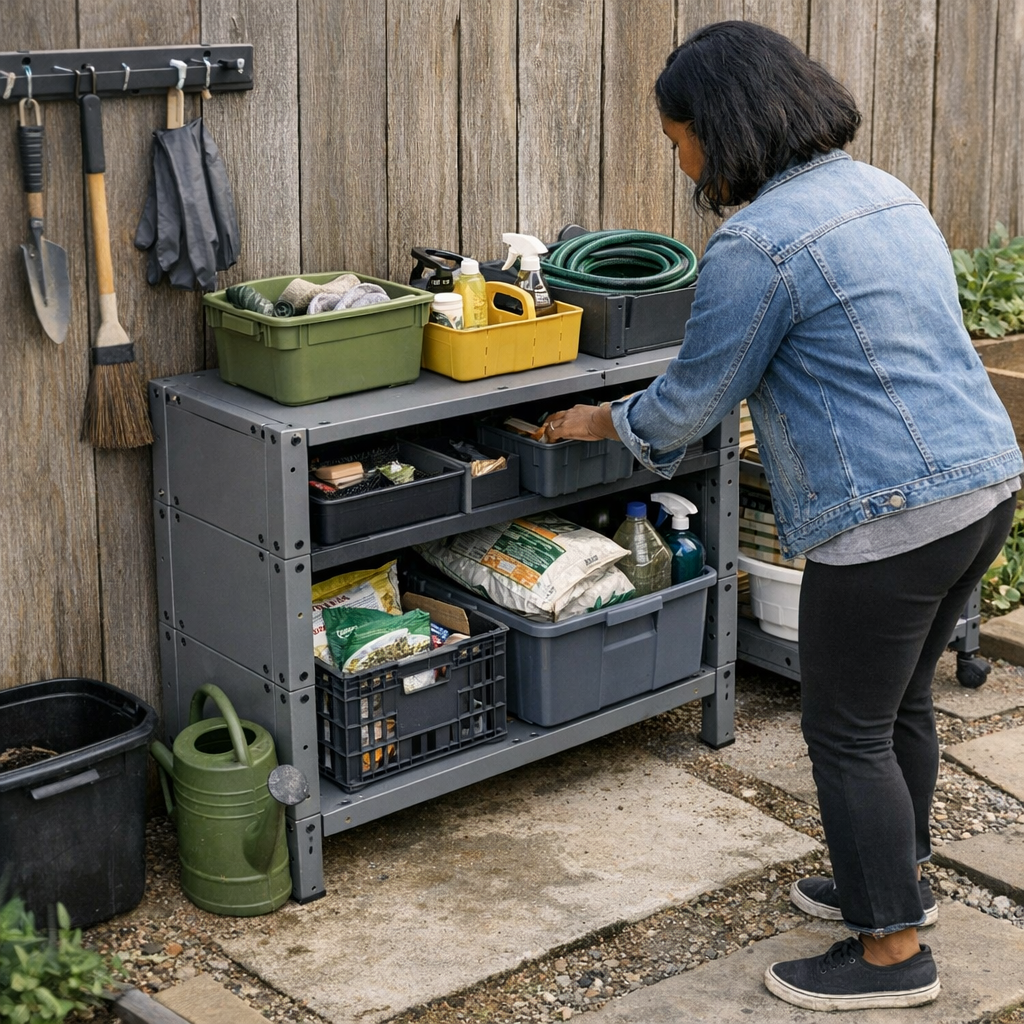
The shift came when I moved the console cabinet directly to where the shoes always landed. Inside, I swapped deep shelves for shallow trays—one each for keys, small mail, and flat shoes—just wide enough for a quick reach on the way in or out.
Suddenly, the mental burden of resetting almost disappeared. Nothing needed to be stacked or wedged; each item landed within a natural, easy arm’s reach, even in a hurry. The trick wasn’t clever organization or rigid rules, but a simple match between movement and container—storage stayed useful by riding the line between use and return, never asking for an extra pause or detour.
It’s quiet, but you notice it most at the end of a busy week: walking through the hallway doesn’t slow you down, even when life piles on.
If this way of thinking about storage fits something you’ve seen at home, there are more lived-in ideas to explore quietly here: gridry.myshopify.com