When Heat Builds Up in the Workshop
Overheating in long cuts causes drift, burning, and rough finishes; using titanium-coated bits, slower speed, and frequent chip clearing keeps temperatures low and reduces cleanup.
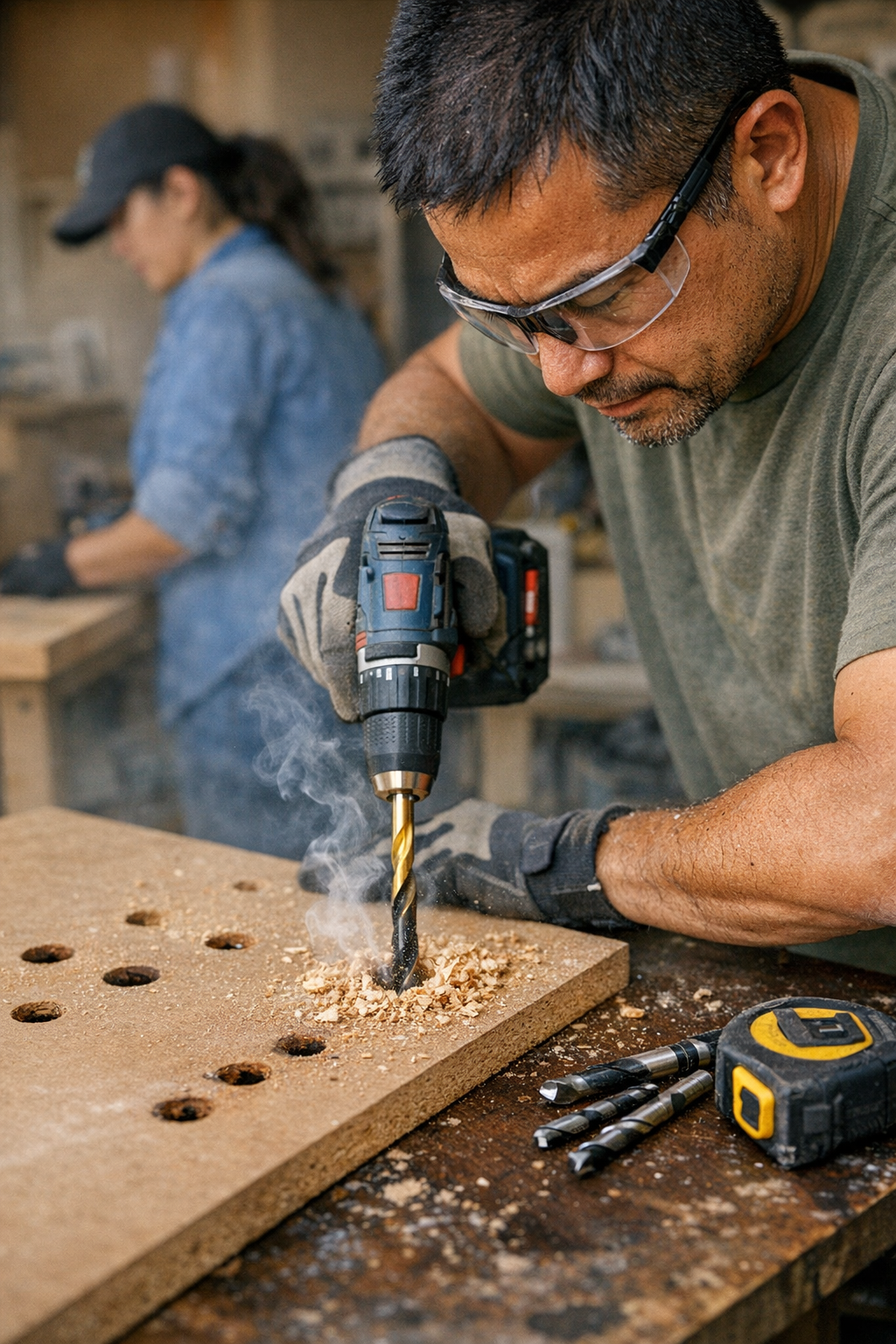
Sometimes, you hardly notice the choices that shape your day—until they quietly push back. Using the wrong drill bit seems trivial at first. The first few holes are clean enough, the work routine steady and familiar. But as time goes on, details you never thought about begin to matter. The simple act of drilling transforms, becoming something you have to fight against instead of a task that moves with you.
You don’t notice it immediately.
But you feel it.
It’s not just about tool choice. It’s about what happens when work starts asking more from us, again and again, in the same way. The right drill bit, the right pace—suddenly, these aren’t just technicalities. They’re the small hinges the whole project turns on.
The Moment Things Change
The real difference doesn’t show up in the first few turns of the bit. For a handful of holes, anything feels possible; even a dull bit makes its mark.
But pass a certain threshold—ten, twenty cuts into dense wood, or another round of pressing the same pattern into MDF—and something shifts. Resistance creeps in. A faint scorched smell, a sticky edge to your work. It’s easy to keep going, to push that bit harder, but there’s a cost: rough surfaces, uneven seams, a little more time lost after each pass.
I’ve watched this unfold on busy days—my momentum stalling, tiny signs of heat and drift appearing after repetition sets in. That’s when work asks you to notice, to care about the details that never mattered before.
Subtle Signs and Small Corrections
Pause for a moment and touch the bit (once it’s safe). Feel how warmth builds, far more on some days than others. Glazed marks along the edge, or a sour whiff of burnt fiber—small things, but they mark the border between a process under control and one sliding slowly off.
Even when bits look identical in the box, on longer jobs, their differences become obvious. Some clear thick chips, their coating staying cool to the touch; others squeal and dust, leaving edges hot and raw. Over dozens of holes, the wrong bit starts to drift, forcing you to work harder just to keep the project aligned.
Shifting to a better bit, one designed for steady, cool operation, doesn’t feel dramatic. It’s a quiet relief—the kind you don’t mention unless you’ve spent hours at the bench, learning to recognize the sound of a clean cut.
The Slow Accumulation
If you keep going with what isn’t working, it’s tempting to ignore small changes. Maybe a smoky tang in the shop air; maybe it takes more effort to push down for each hole. It’s subtle, but soon enough you’re spending time sanding out scorch marks or chasing slight mismatches left behind by heat-dulled steel.
There’s no big lesson here, just a slow realization: in steady, repeating work, the little signals matter. Early course corrections save far more time than they steal. Practicing a gentle pause—clearing away dust, feeling if heat is building—these are the kinds of adjustments that quietly make everything align a bit better.
It’s a minor thing, choosing a bit with the right geometry or coating. But after enough repetition, the minor things reveal just how much they matter.
I found these thoughts appearing quietly, almost unnoticed, during hours spent at the workbench experimenting for a new side project with Shopify.