When Hidden Clutter Changes How We Use Our Shelves
A clean shelf means little if lighting and supports hide clutter, disrupting routines and wasting time; front-focused light and cable control help.
It was subtle at first. Even after tidying all the shelves and running a narrow LED strip neatly along the back, the routine still felt awkward. The kitchen counter looked sorted every morning, but small delays—searching for the can opener, pulling the coffee tin forward for a better look—never quite went away.
You don’t notice it immediately, but you feel it. Light, or the lack of it, can make order temporary.
Where Shadows Start to Collect
A shelf can look perfectly organized until you start living with it day to day. At my desk, a box of charging cords slipped back into shadow with surprising speed; labels became guesses, and even the charger’s plug hid itself between unused adapters.
It turns out the lighting hugging the back of the shelf—so clean and almost invisible—misses the places my hands reach most. Bins migrate forward, out of the pool of light. I’d catch myself reaching by memory instead of sight.
That was the part I kept coming back to. For all the work that went into those tidy lines, the real mess always seemed to grow where the shadows lived.
Cables and Brackets in the Way
Then there are all the support pieces meant to keep things under control: the low-profile brackets, the adhesive cable guides. Even these can turn unruly in normal use. In the laundry zone, a sagging wire slipped just enough to snag the corner of a basket.
Some issues only become obvious after a week or two. A bracket placed for symmetry instead of function lets a cable swing across the work surface. A small thing, but each time I nudged it aside to fold a T-shirt or recharge a flashlight, I noticed my grip getting tighter.
Glare, too—just a slight reflection bouncing off a damp counter—draws attention more than the work itself. I found myself repositioning the lamp again and again each morning.
Less “Perfect,” More Usable
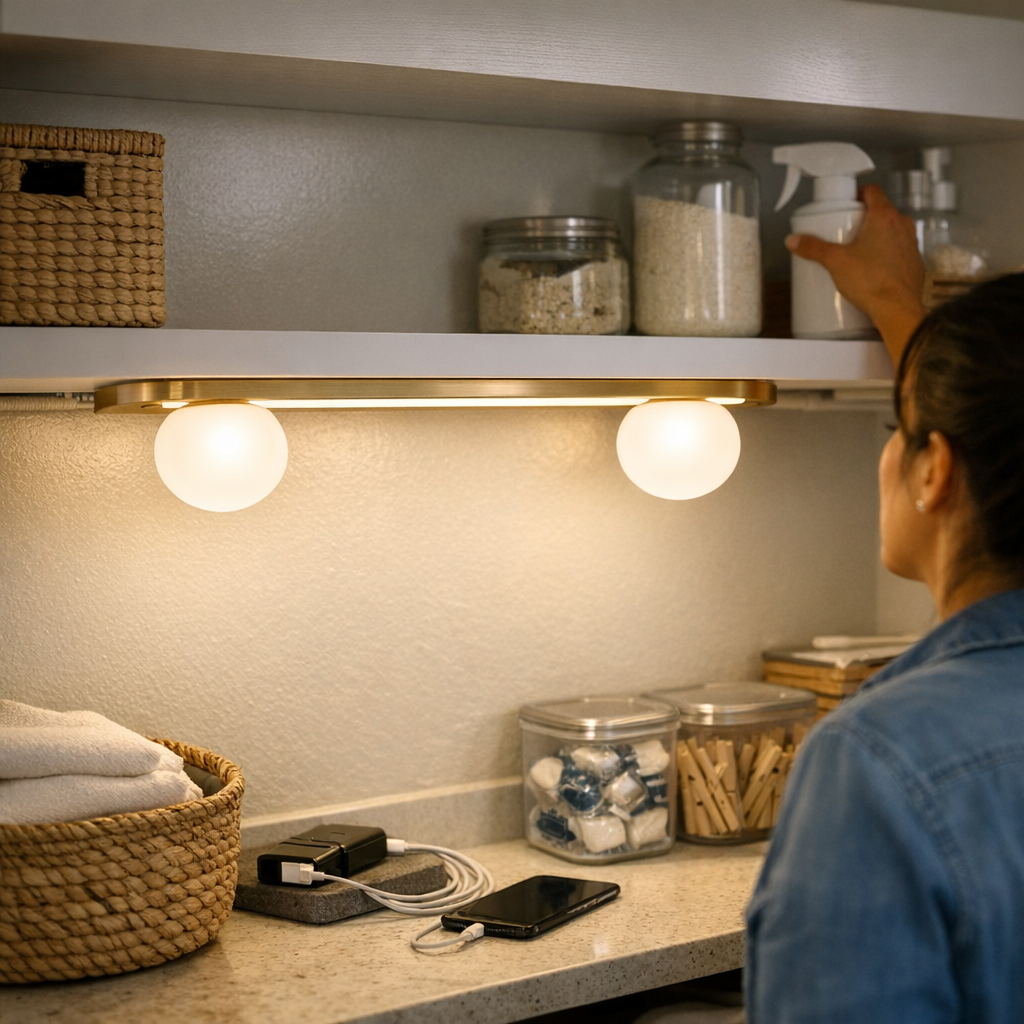
One quiet afternoon, I shifted a flat light bar closer to the shelf front. Suddenly, the whole counter felt different. Light angled down, shadows thinned out, and the worn-out tape label on the tea jar could be read without moving anything aside.
The bracket was there, barely more than a silhouette. The cables, clipped and snug, followed along almost invisibly. But in use, the surface was simply easier—fewer things got lost, and reaching for a jar or a charger became as quick as looking.
The change wasn’t dramatic from the outside, but the shelf began to stay genuinely clear, not just uncluttered. And that little difference kept showing up every day.
Lighting and support can look resolved yet still feel unfinished. Letting a fixture claim a bit more space—while keeping lines tidy and cables out of the way—can quietly reshape how a room is used, not just how it appears.
If you're ever curious about the technical side of these setups, the collection here is quietly thorough: View the full collection