When Hidden Spaces Hide More Than They Help
Passenger mess comes from lacking visible, easy-access storage, causing clutter and slow access during regular use. Matching storage to habits keeps order.
At first, I thought I could out-organize the mess by simply hiding it away—tucking phone cords into armrests, sliding receipts into narrow console slots, and stuffing packs of gum into glove boxes already filled with things I barely remembered owning. On the surface, the car looked orderly enough. But after a few days, I kept noticing the same patterns: chargers slipping onto the floor, wrappers collecting at my feet, notepads wedged between seats. Just when I needed to grab something, I realized what seems like control can actually become a kind of slow, growing friction.
You notice it after a few trips. The order you created in a single afternoon starts breaking down, piece by piece. The cupholder overflows, center console lids fill with items you don’t even use, and small essentials drift back into everyday view without a clear place to land. That recurring problem was what stuck with me.
The Difference Between Hidden and Handy
Closed storage creates a calm surface, but in practice, it keeps you searching. Every return to the car—especially after quick errands or messy school runs—adds small extra steps: lifting lids, hunting for chargers, sweeping dog treats or coins from beneath seats. It looked fine at first, but the difference kept showing up.
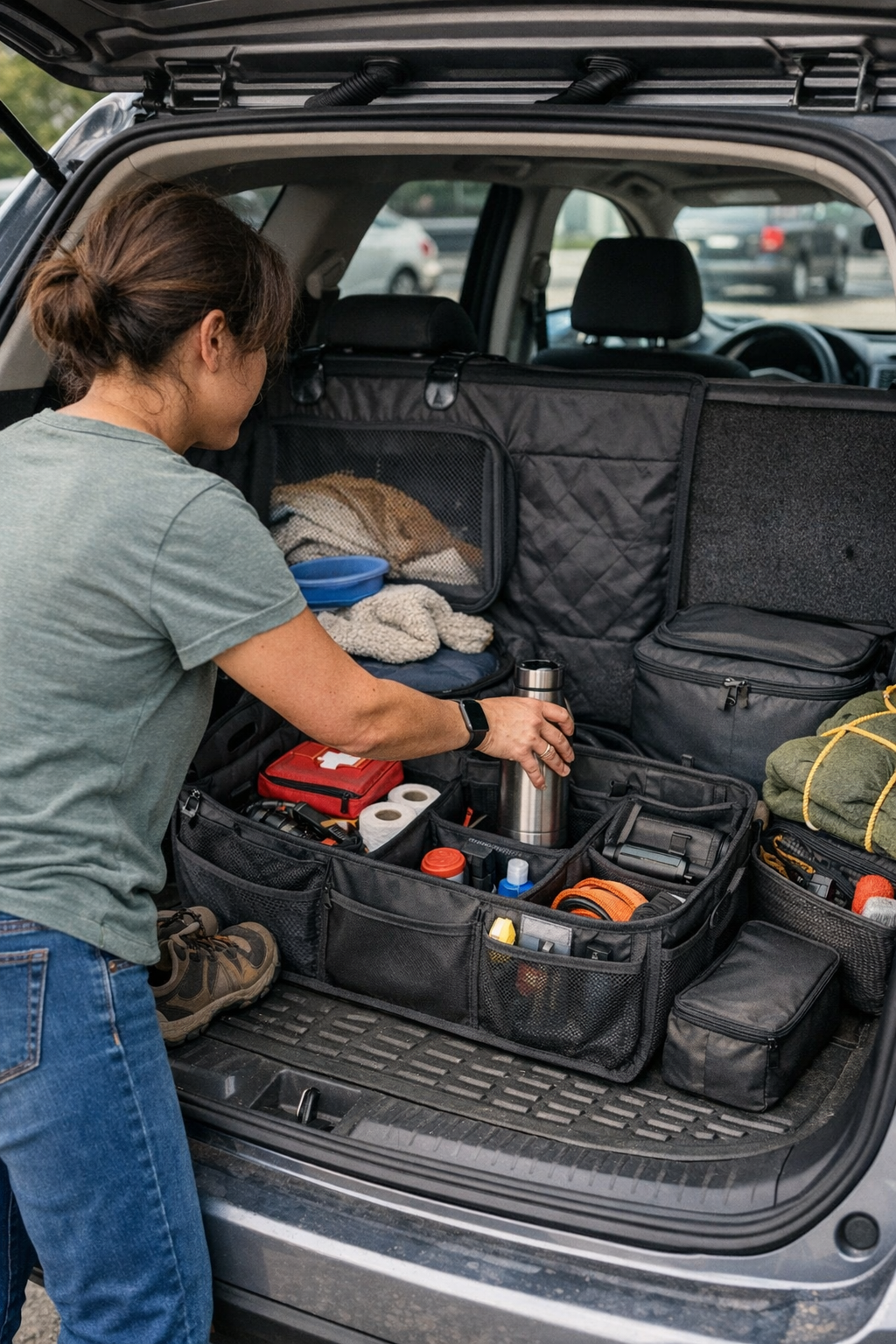
That’s when I started leaving the highest-use basics right where I could see and reach them. A low tray between seats replaced the deep, covered bin. The three-foot charging cord and the small notebook I use every day had their own visible spot—no more fishing, no more mess trickling down to the floor at every stop. It wasn’t about adding storage; it was about shifting storage into the path of everyday routines.
Repeated Use Reveals the Weak Spots
A clean car at the start of the week rarely survives until Friday as you hope. Hidden nooks—slender door pockets, trunks with sliding floor mats—begin to let loose items drift. Wrappers, chargers, and small packages always end up in the same awkward spots, no matter how carefully you organize at the moment.
Clutter returns in easy-to-reach but poorly structured areas, taking up time and attention repeatedly. But once the essentials had a visible, functional home, cleanup got easier on its own. Each routine—stepping in, recharging a phone, tossing away a snack wrapper—became less messy. The car didn’t just look better. It stayed usable and ready for repeat use.
When Setup Follows Routine, Things Settle In
Having a clear, dedicated spot for a few high-touch items quietly reshaped the entire car routine. I noticed that whatever I reached for most—the charger, the notepad—ended up in the same place every time. This made both driving and cleaning feel lighter. Instead of losing small essentials in hidden bins or panicking when I reached for what wasn’t there, I always knew where the basics settled.
This small change—a visible, reachable home for key items—did more than control clutter. It lowered the effort required, so every errand and return felt less like work. Maybe that’s what makes a car setup work over time: how easily it disappears into your routine, letting you get on with your day.
If you find yourself thinking about this every time you reach for something in the car, you might want to see what’s possible here: DriveWellSupply