When Hidden Storage Interrupts the Flow of Work
A hidden storage run helps if easy to access during daily resets; extra reach or pauses cause friction and clutter, reducing desk clarity.
I Thought Hidden Desk Storage Was the Answer. Here’s What Actually Stayed With Me
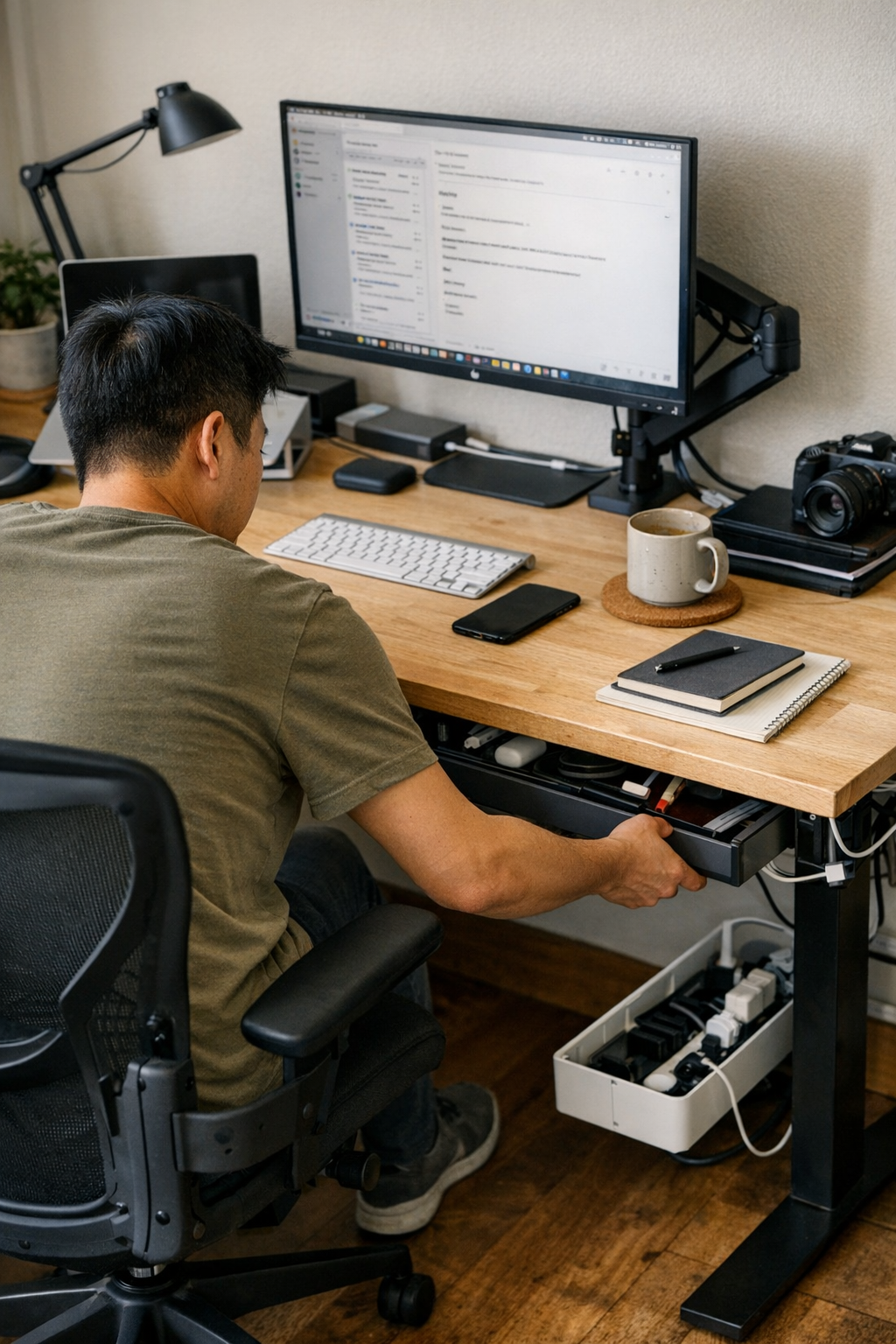
It’s easy to assume that a tidy, clear desk will make everything easier. For a while, I tried to believe in that: drawers under the desk, a cable tray hidden from sight—the kind of setup you’d photograph on a good day, surface smooth and bare. There was relief in that brief, visual calm when you step back and notice nothing out of place. It looked fine at first.
But the difference kept showing up.
The Quiet Tradeoff Behind a Clean Desk
You notice it after a few days. The moment isn’t dramatic—just a small pause when you go to reach for something you’ve stowed away for neatness. Instead of grabbing a charger, I’d find myself sliding back in my chair, crouching awkwardly, sometimes moving things out of the way. Putting a notebook back meant pausing to find space under the desk. These small extra steps added up, turning what should be a quick reset into a tiny project every time.
The drawers and cable boxes did keep things hidden. But in actual use, it was different. The soft hesitation before putting things away, the reach to tuck a cable back into its tray, the extra step of moving around the chair—all these started to shape how I used the space. It’s not something seen in neat desk setup photos.
When the Routine Doesn’t Fit the Design
Most delays didn’t bother me much at first. I’d tell myself the desk was still “organized”—but something small nagged. Cables routed out of sight made every device swap harder. Drawer units that kept the surface spare forced an awkward reach each time I needed to switch tasks or even plug in headphones.
It felt like if I had to move my chair or bend down every time, maybe the solution was solving only half the problem. Things looked sorted, but the quick, routine movements of the workday weren’t matching the arrangement.
That was the part that stayed with me. The longer I used the setup, the more little things accumulated out of view—simply because returning them took too much effort by the tenth or twentieth time.
Returning the Desk to Real Use
After a few months, I started moving the things I actually needed closer to where I sat—cables accessible by hand, the main notebook above the drawer, small items in a surface tray clearly visible. Resets got easier. I wasn’t holding my breath to keep the space tidy, and the feeling of a clean desk came more from being able to start again quickly after stopping.
I realized it isn’t about keeping everything invisible, but about making sure what you reach for fits into your routine without friction. If access requires too many motions, things inevitably get left out until hiding them becomes another kind of mess.
Desk order, I think, is less about what stays out of sight and more about how simply the desk resets itself after use. Clarity arrived in the routine, not in the picture.
Sometimes, a little more visible storage goes further than the best-hidden solution—the trick is knowing which part of the setup really gets used, and keeping that within natural reach. The rest follows.
For anyone thinking through a new setup, you might find more practical details at http://www.workbasic.myshopify.com