When Home Feels Smaller After Long Journeys
A carry-on can look orderly but cause delays when essentials are buried; isolating key items reduces access struggles and travel interruption.
You only notice how your carry-on really works after a stretch of airports and half-awake mornings. It’s quiet—how small decisions about where things go keep echoing back, especially when you’re shuffling trays or trying to grab a charger with people behind you. The early sense of order from careful packing unspools, not in anything dramatic, but through small stalling moments. The bag still looks tidy, but you start feeling it resist you, piece by piece.
You see it after transitions—a pocket that bulges the wrong way, or a document you thought was handy that now requires half-unpacking the main compartment. What had seemed organized at first gently shifts into friction: nested pouches, doubled-up corners, a toiletry zip blocking access to headphones. It’s not a mess, but every retrieval is just awkward enough that you notice. That’s the realization that kept circling back: structure is only useful when you’re moving, not when you’re staring at everything neatly packed on your bed.
False Calm of Outer Order
Before the trip begins, there’s almost a sense of comfort standing over an arranged bag. Tech cords coiled up, passports stacked, everything zipped and flush. But as soon as you’re wedged in a crowded row or leaning over for an ID at security, the system starts to pull apart—quietly. An organizer that needs two zippers open at once, a pocket now blocked by your own jacket, pouches stacked in the wrong sequence for how you actually move.
It looked fine at first.
The inconvenience isn’t obvious, because the outside still seems controlled. That’s the thing: outer calm hides the beginnings of disruption. Every quick access becomes a negotiation. Each time, your rhythm is just a little more interrupted.
Where the Real Slowdown Hides
After a few layovers, the same small frustration repeats. You try to slide out your passport, but it’s wedged behind something you needed once and never put back right. A cable falls out. Toiletries get mixed with chargers. You fix it, but only halfway, promising you’ll sort it properly at the next stop. But the difference kept showing up—retrieval wasn’t getting any easier. It’s these repeated interruptions that turn order into a subtle burden.
The small, recurring effort to dig, repack, or reorganize starts to change how the trip feels. It’s not the extra weight, but that feeling of always negotiating with your own luggage. Access becomes a task when it should be an afterthought.
The Quiet Shift That Helped
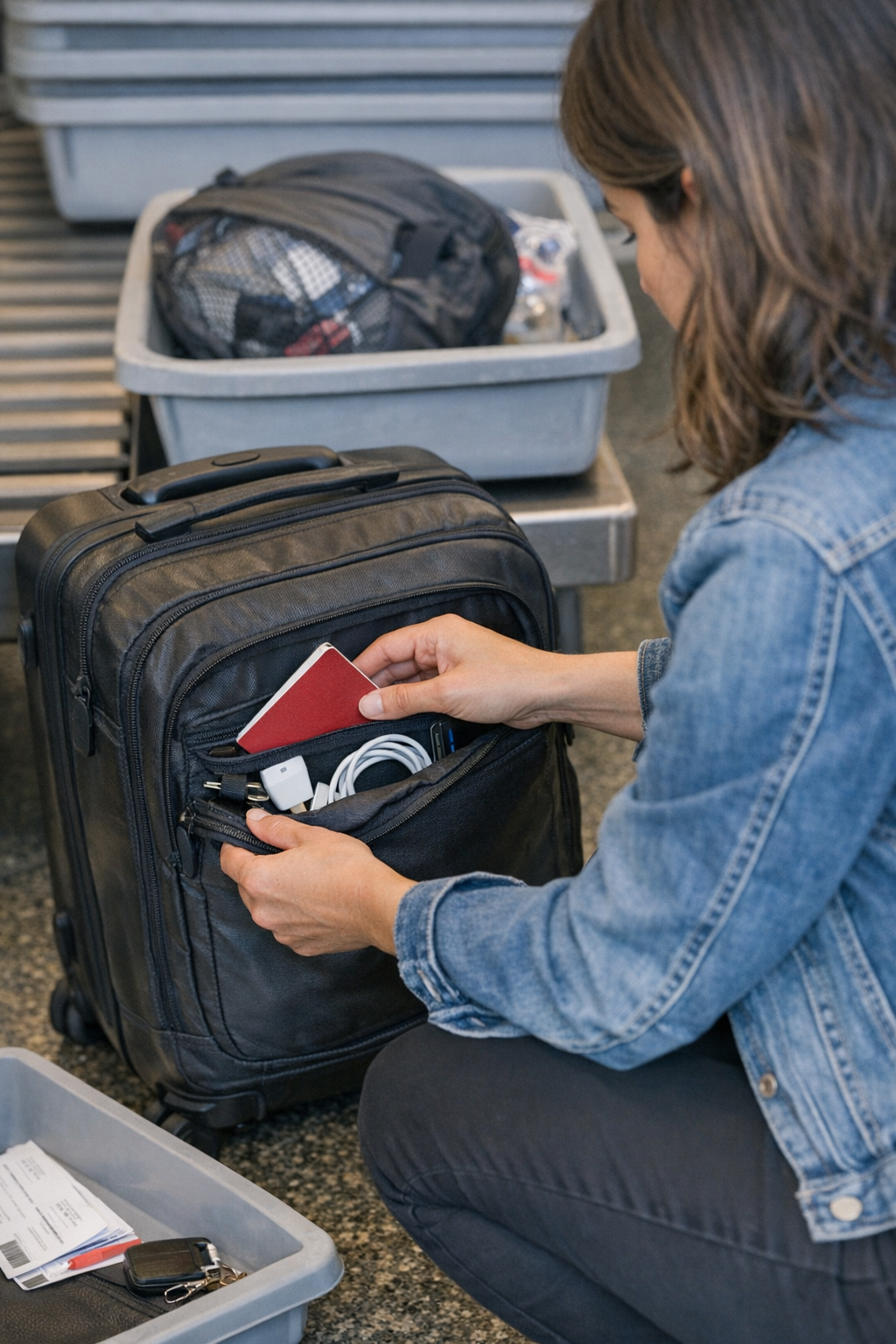
There was a point—maybe after watching someone else breeze through with everything in reach, or after another round of repacking on a tray—when I tried moving every in-transit essential to a dedicated outer pocket: passport, charger, the one doc I always need on short notice. It sounds too simple, but not stacking anything—just a single, shallow spot for repeated grabs—softened that tension almost immediately.
No more moving things to get to other things. A cable comes out. A passport drops back in. The rest of the bag stays undisturbed. The real result was less about looking organized, more about staying fluid in every line, seat, or sudden gate change.
Maybe this is what a carry-on is supposed to do—not look tidy in airport light, but quietly reduce the effort you never notice until it’s gone.
If you want to see how others are setting up for repeated use, this place has a quiet catalogue: http://www.carryonsupply.myshopify.com