When Labels Don’t Match Daily Habits at Home
Closet setups relying on strict labels fail as routines blur categories; flexible zones matching use make organization simpler and longer-lasting.
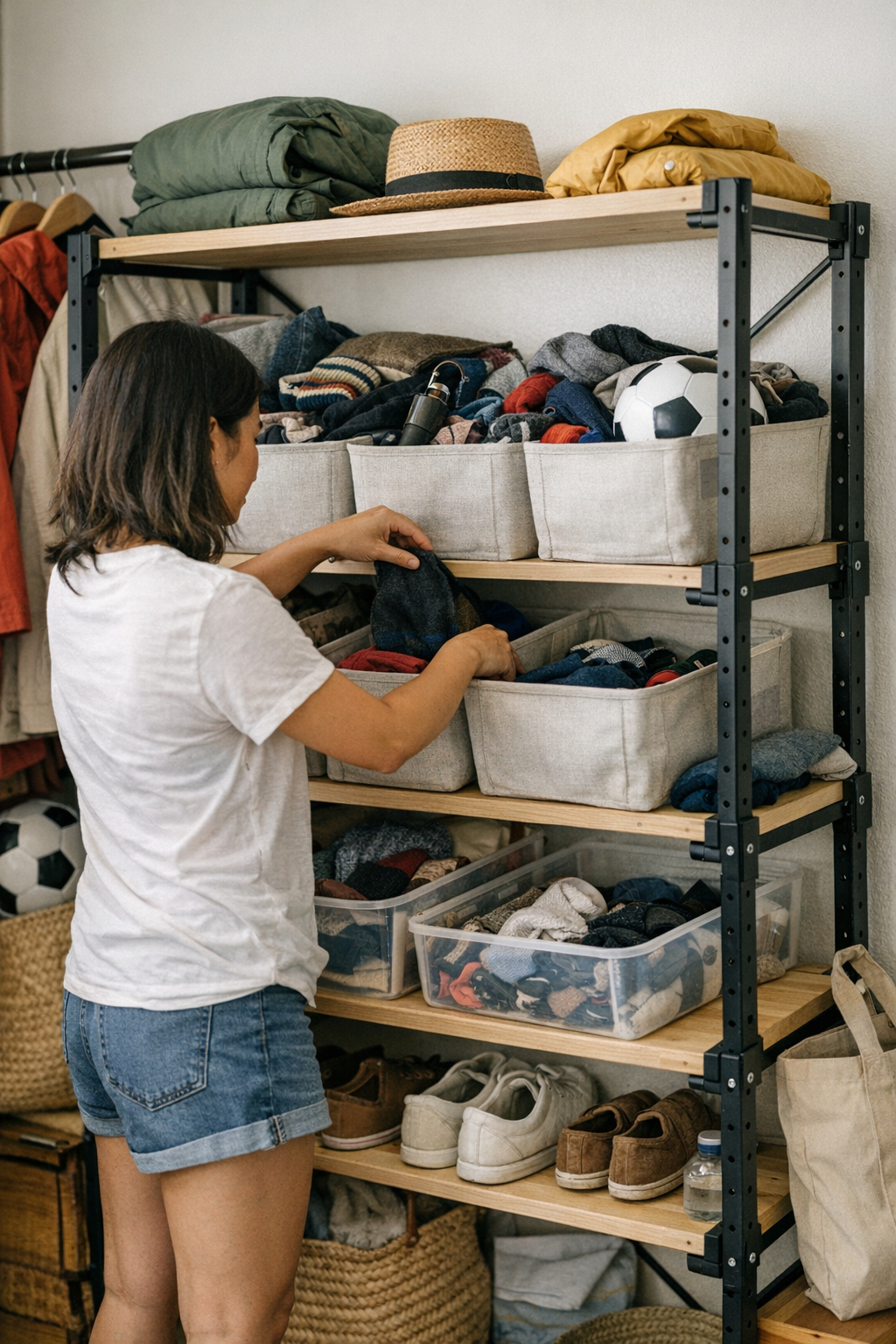
There’s a special comfort in sorting things into neatly labeled bins. The world feels a little more manageable when “Socks,” “Sweaters,” or “Workout Gear” each have a home. Looking at a closet lined with crisp labels, it’s easy to believe you’ve solved the mess for good.
But order isn’t always what we imagine—not after life happens.
The first few days bring a gentle sense of satisfaction. Each label promises a little more control. But as routines settle in, the cracks begin to show—not with dramatic chaos, but with tiny missteps. A scarf finds its way into the “Hats” bin, pajamas sneak into “Gym Clothes,” and suddenly what seemed tidy requires more effort than before. Most of us don’t notice the shift immediately. But you feel it.
Labels Are Like Promises: Easy to Break in the Rush
There’s something respectable about lining up storage bins and giving each a name. It’s a kind of hopefulness—that this time, life will cooperate.
But real days rarely ask for your permission.
On a rushed Monday, the logic of labels is no match for the logic of urgency. You reach for socks but grab a bundle of scarves instead. Someone else in the house shuffles through to find an umbrella and leaves behind a coat, a lunchbox, and a pair of gloves—each in all the wrong places.
The routine keeps blurring the edges. What once felt like simple labels now adds friction to mornings and slows things down just when you need speed.
When Organization Fights Against Life
If you live with others, the problem becomes even more obvious.
Picture a family morning: a closet reshuffled as everyone races out the door. Labels vanish beneath real behavior. A soccer jersey lands where winter coats live; the “Rain” bin collects everything but rain gear. After a while, opening a bin is a gamble—you discover mixed-up heaps, not order.
The closet might look peaceful when the doors are closed. But open it during a busy week, and the system reveals its weakness: order that can’t recover by itself.
You notice it in small ways. You spend an extra minute hunting for socks. The end-of-week clean-up takes longer than it should. Or there’s a quiet pause, standing there, weighing whether to untangle the mess or just give up for now.
Finding Order That Survives Real Life
Real organization feels different. I only realized this after quietly adapting—shifting from rigid categories to a system that flexes with daily life.
The practical change was almost invisible: open bins for things handled nearly every day. A gap here, an easy reach there. Instead of policing socks into exact boxes, I watched where they naturally landed. The system started fitting to habits, not hopes.
One week in, weekends became easier. There were still socks and scarves everywhere, but they could be put away without conflict. The reset was faster—less sorting, less hesitation. When effort drops with each cycle, that’s the sign something’s truly working.
Sometimes, that’s all you need—a space that embraces your habits instead of fighting them.
I think about this small shift whenever I find myself hesitating at a closet door.
These quiet improvements grew out of trial, error, and a few rushed mornings—shared here while reflecting on patient changes, inspired by past afternoons spent organizing a lived-in space.