When Less Storage Means More Space to Breathe
Choosing less storage improves movement, organization, and resets by reducing blocked paths and overflow in tight workshop spaces.
There’s a certain satisfaction in thinking you’ve solved clutter with a new shelf or storage cart. For a moment, the mess yields to order. Surfaces clear, supplies find new homes, and what used to sprawl now stands contained—at least on paper.
But it doesn’t take long for that feeling to shift.
Clutter Wears a Different Mask
It’s easy to believe that another bin or rack will fix everything. The first day, the changes look promising—a garage feels almost curated, tools lined up, the rush of putting things in their place.
You don’t notice it immediately.
But you feel it.
Soon enough, that “one more” storage module becomes something to work around. A path narrows. Hooks and handles stack too close for comfort. In the small, lived-in moments—the toolbox in one hand, a board balanced on the other—this friction makes itself known. The line between organized and chaotic quietly blurs, usually where movement matters most.
Living With the System Tells the Truth
The real test of any setup isn’t unveiling it; it’s living with it. Over time, you see which units serve a purpose and which simply stand in the way. A shelf that filled a gap now blocks the cabinet. A cart that once felt handy demands side-steps or claims a corner that never stays tidy.
I’ve found myself reshuffling, shifting, and occasionally apologizing to the door for bumping yet another storage piece out of the way. Each tweak brings new perspective—a reminder that “more” isn’t always a fix. Sometimes, it just adds more work.
There’s a rhythm in resetting a workspace, and nothing slows it like obstacles that weren’t there before. Movement should feel automatic, almost invisible. When it doesn’t, you notice—subtly, then all at once.
Efficiency Happens in the Spaces Between
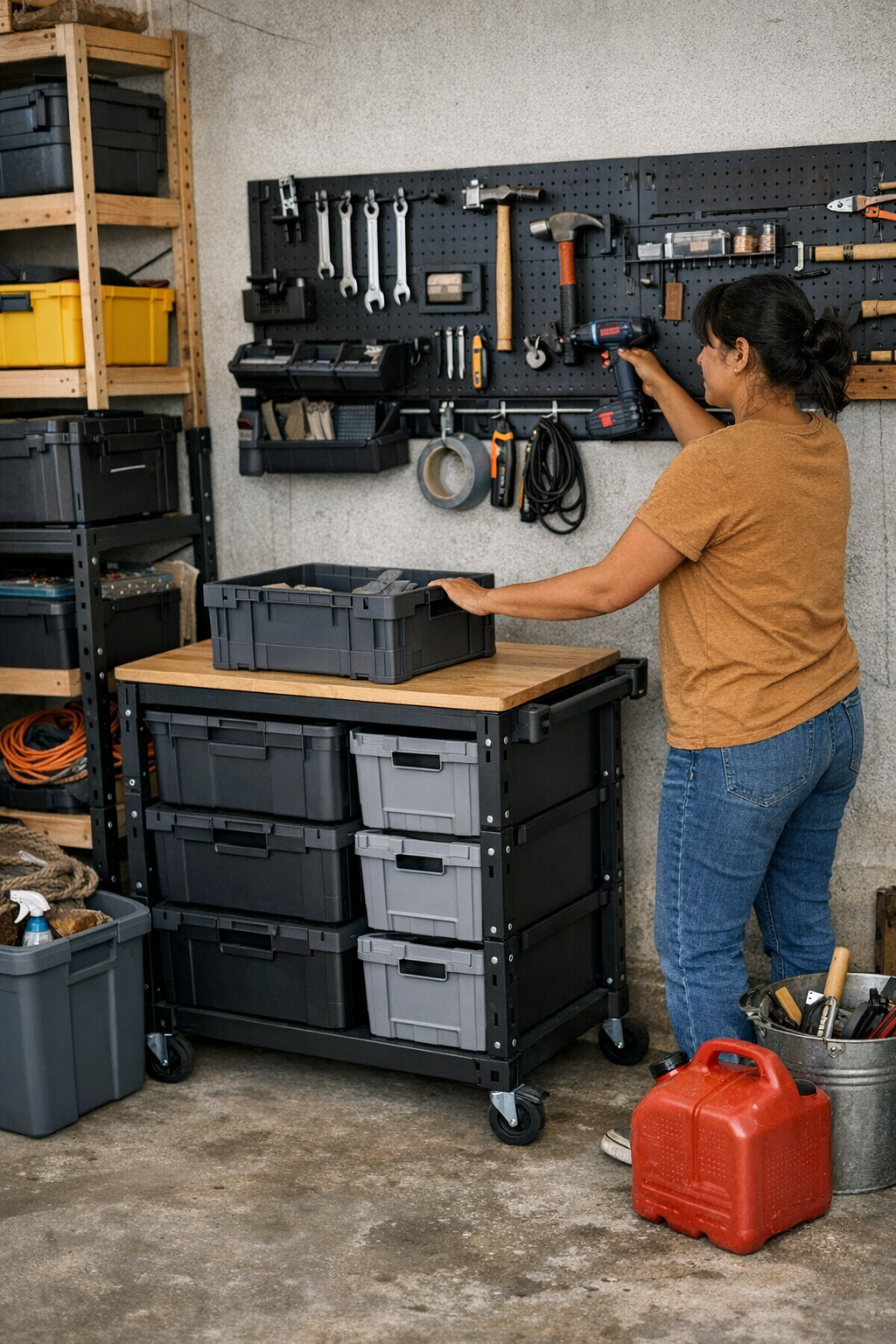
My own garage, tight as it is, showed how much difference a single piece can make. Adding a rolling shelf seemed reasonable, but real life disagreed. Suddenly, routines stretched: opening cabinets, returning tools—all became a careful dance around something that “helped” only in theory.
One evening, I removed the shelf and moved a basket down by a hook. The result: every tool could come home in one smooth motion. The work zone wasn’t emptier, just freer. Clean-up lost its friction. Paths felt obvious again.
There’s a quiet lesson here. Organization isn’t about squeezing in more—it’s about what you leave open. Good flow is felt, not just seen. Instead of hunting for surfaces, I valued the unblocked floor and the ease of a single reach.
Sometimes, trimming back creates the breathing room that lets spaces—and people—work a little better.
All of this became clear while rearranging my own little workshop, which you can glimpse here.