When Light Fails: The Quiet Risk in Everyday Steps
Lighting for stairs and halls must control shadows and improve visibility; wall and task lights fill gaps ceiling fixtures miss, enhancing safety.
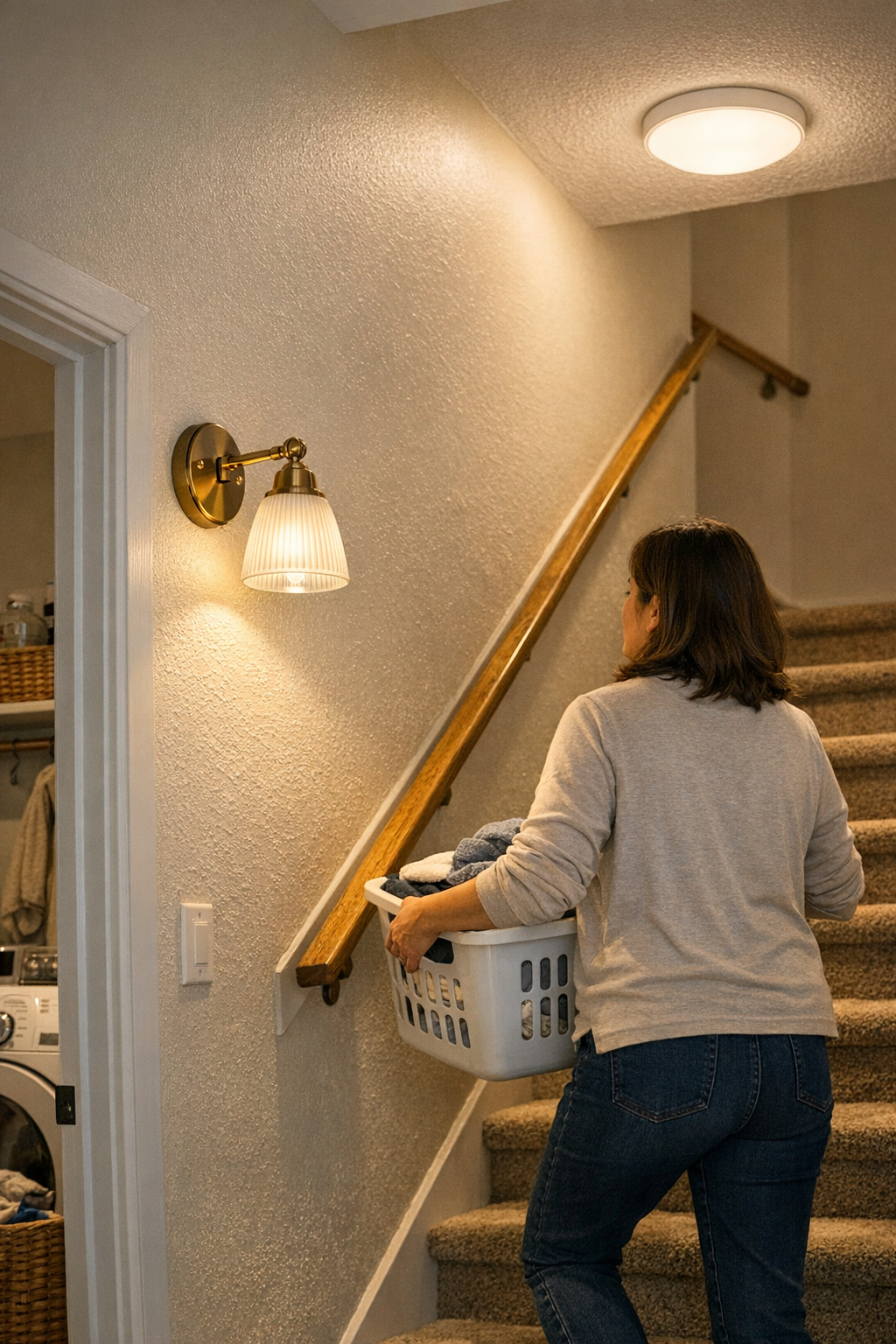
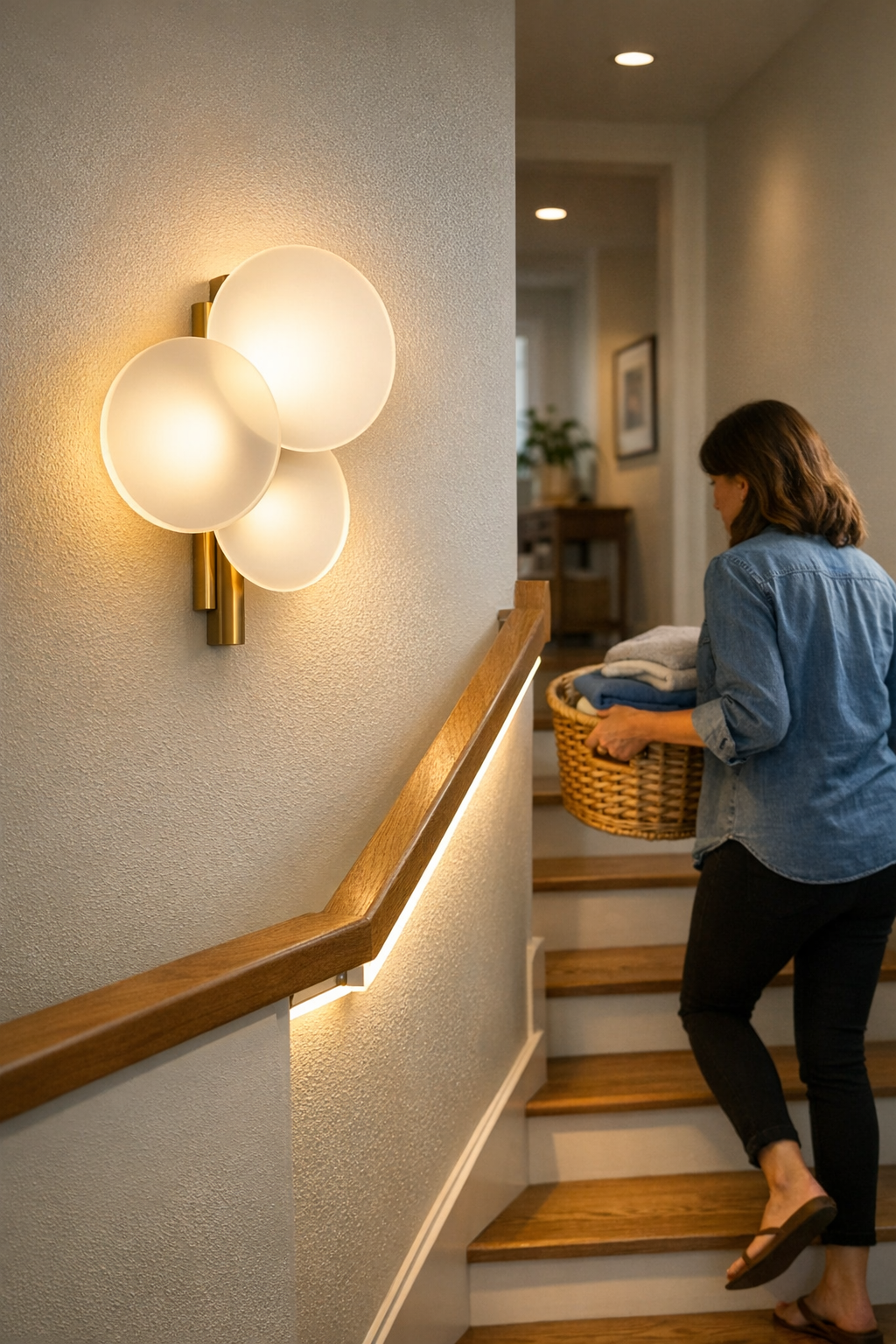
It rarely happens all at once. Most of the time, the gap between “bright enough” and truly safe lighting only stands out the moment you hesitate—halfway down the stairs, or with laundry shifting in your arms. What surprises me isn’t just one dim bulb, but how shadows find their way into small corners: a tread that vanishes in twilight, a handrail that slips from view if you’re carrying something bulky or if the air is damp. The room looks bright, but the edge disappears. That was the part I kept coming back to.
Where Routine Movement Breaks Down
You don’t notice it immediately. The shape of a stairway, the daily trip through a hallway—at first, light seems to fill the space. But with each pass, certain places insist on their own personality. A flush mount or semi-flush mount ceiling fixture may cover the main area overhead, but steps and handrails often fall just outside its effective reach, spilling into uncertainty. Glare bounces off glossy walls, and the landing that should feel steady suddenly asks for a slower step.
Moments collect: arms full of towels, turning and feeling the step shift out of sight, the subtle friction of always needing to double-check where your foot lands. Over time, the space changes—not in how it looks, but in how you move through it.
Shadows Arrive Quieter Than You Think
There’s a particular spot—just where the stair meets the laundry room—where I first noticed it. On foggy mornings or late at night, the flush mount ceiling light convinced me everything was visible. But something always slipped away at the edges: a rail turned gray, the nearest step too dark, especially when humidity clung to the air. Damp-rated fixtures matter here, but placement is just as crucial.
Giving up that sense of sure-footedness wasn’t dramatic. But it was real. When a wall sconce was installed at eye level, set level with the top rail instead of overhead, treads and handholds lined up again, lit in a way that met you exactly where movement relied on it most. It wasn’t about flooding the space with more light, but about layering it—balancing glare and shadow so steps and rails stayed clearly visible. My steps felt smoother. Hesitation faded, just a little.
Why Layered Light Quietly Matters
The pattern repeats itself in every lived-in corner. Mixing a careful wall sconce with a lower-profile ceiling fixture eases the strain on both—fewer blind spots, less glare bouncing in the wrong direction. Some problems resist measurement; this one shows up in how daily routines change. The urge to slow down or check each step lessens, and what once felt cluttered by shadows quietly clarifies.
You don’t always realize how much a missing patch of light influences your path until routine movement feels steady again. The solution wasn’t about making spaces look brighter, but about making them reliably easy to use every time—whether it’s stairway lighting, hallway and corridor lighting, or damp-rated fixtures in a laundry corner.
If you want to keep thinking about how light shapes the routines we move through, there’s something low-key to see here: http://www.lighthelper.myshopify.com