When Light Fixtures Meet Everyday Life’s Quiet Challenges
Glass diffuser longevity depends on matching mounting style and placement to room use, preventing stress and minimizing cracks or moisture issues.
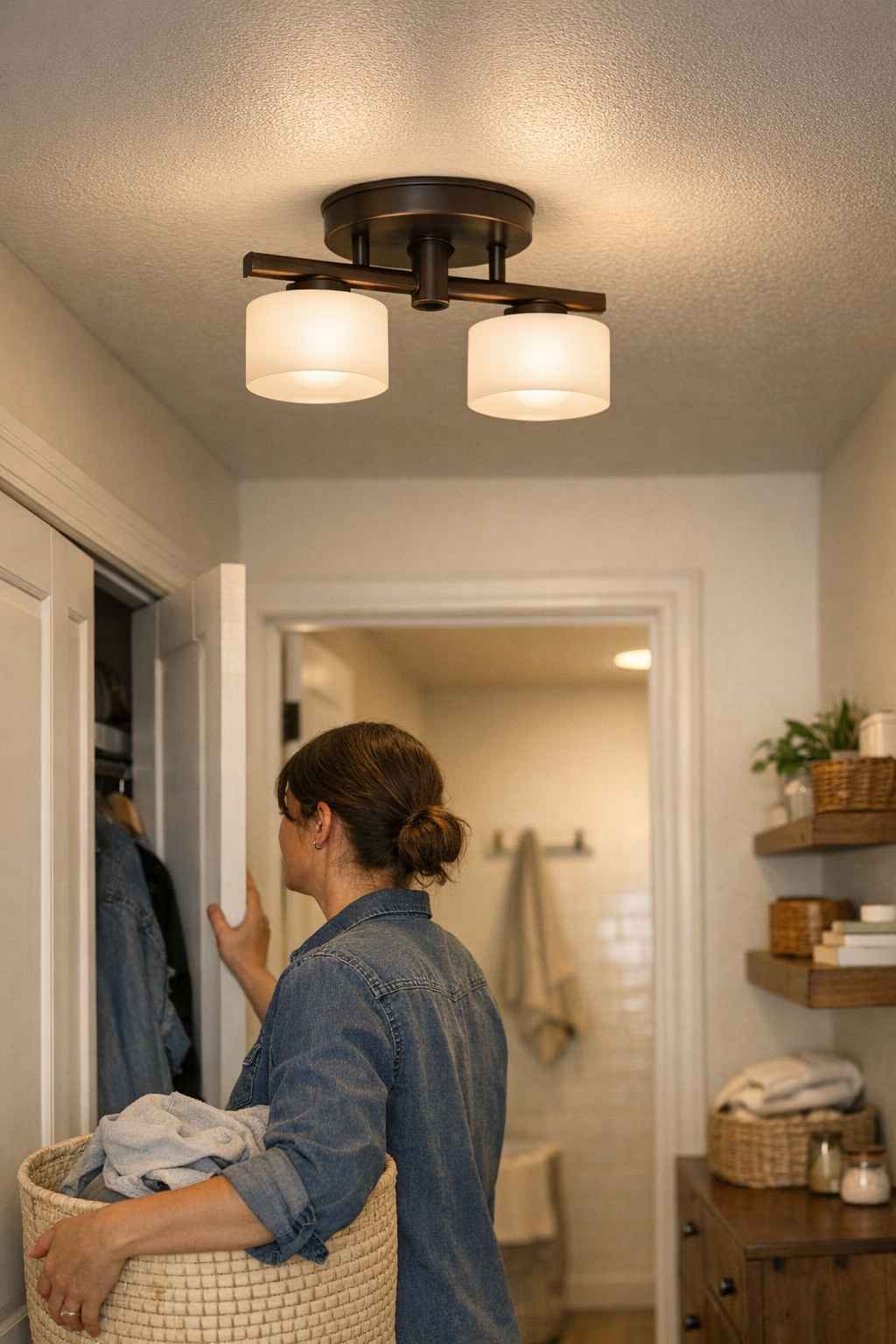
It’s quiet, the way small things wear out. No sudden crash, no accident you actually witness—just a slow drift from something that seemed solid into a daily nuisance. I didn’t set out to think about ceiling lights or their fixtures. Yet somehow it was always the same flush mount in the hallway, the same thin cracks beginning at the rim, the same faint haze on the glass where the light used to be clearest.
You don’t notice it immediately. But you feel it.
The Unseen Stresses
A glass diffuser doesn’t crack overnight. It’s a gradual accumulation—a door eased open a little too close, a laundry basket nudging the fixture above, even shifting air after a hot shower next door. In the rhythm of moving through the house, these moments disappear. What’s one more reach, one more missed step in a hallway?
The surface stays calm, hiding what’s building beneath. Light keeps pouring out as if nothing is changing, even after the first faint line etches along the edge. Some part of me trusted that if it looked fine, it would stay that way.
But there’s always a point where the damage reveals itself—a new glare spot after hurried cleaning, or subtle dullness where the glass is thinnest, changing how the light spreads, creating uneven brightness and soft dark edges.
Space, Flow, and Why It Matters More Than Style
It may seem strange that a fixture’s placement affects its longevity. Traditional logic says flush mounts look neat and unobtrusive, tucked right up to the ceiling. But after enough mornings standing in the same narrow hallway, you learn which corners get grazed, which paths are busiest, and where steam or humidity from the bathroom next door leaves persistent marks.
The parts that crack aren’t always in the places I expected.
One morning, after replacing the same glass diffuser a third time, I realized that the promise of “out of the way” only holds true when it’s truly out of frequent use. Shifting a fixture a few inches away from the swing of a door, or moving from a flush mount to a semi-flush mount that allows more clearance, changed the room’s flow. It wasn’t just easier to move through, but also easier to maintain—allowing better light distribution and reducing damaging contact.
The fixtures that held up best were the ones positioned just outside the busiest paths, the spots that gave room for daily activity without constant impact. This practical placement preserved the integrity of the glass and maintained consistent lighting without added glare or patchy dim areas in the hallway.
When Light Quietly Fits the Space
Looking back, most of the hassle could have been avoided by considering real movement patterns, not just ceiling height or fixture style. Laundry baskets, quick turns, reaching for coats in the entryway—all leave wear marks that photos and catalogs never show.
The clean, diffuse shine of an unworn glass diffuser doesn’t just brighten a room—it balances glare control and task-surface clarity, maintaining smooth light across stair turns, cabinet runs, or laundry corners. When the fixture’s position aligns with daily routines, the lighting stays reliable, with shadows and dark edges minimized.
Sometimes the change reveals itself quietly on an ordinary afternoon: no loose glass after cleaning, no wondering if this will be the last replacement for a while. It’s less about lighting looking perfect, and more about the fixture staying resilient under repeated use—providing consistent, even, and comfortable light in corridors, stairways, and utility spaces.
That practical balance between space, flow, and fixture type was the part I kept coming back to.
For anyone drawn to the quieter side of indoor lighting, there’s always more to consider at LightHelper.