When Lighting Shifts: The Quiet Impact of Unseen Support
Trusting a stud finder ensures fixtures stay level and secure, preventing droop, glare, and disruptions caused by drywall-only mounts.
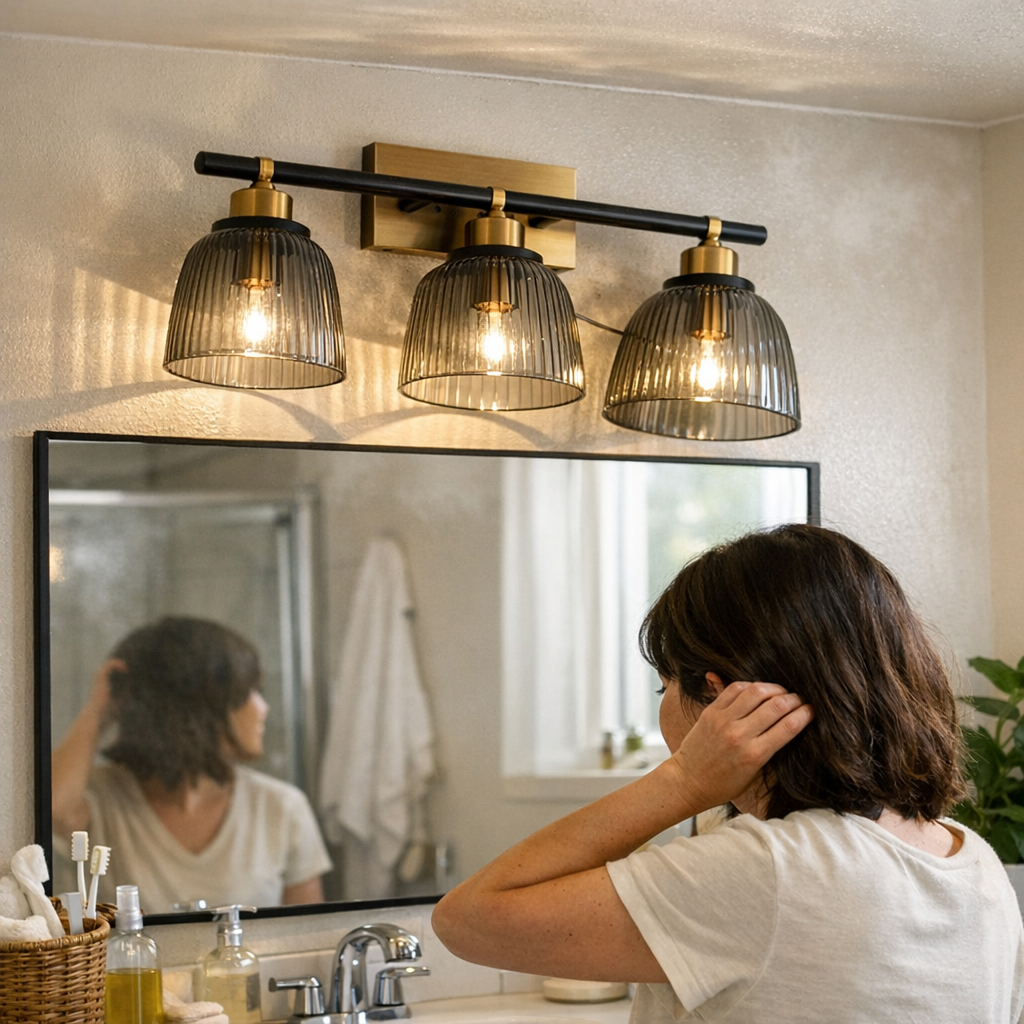
Some realizations only settle in after the daily repetition of home routines. I remember the gentle clatter as I brushed my teeth, or the subtle tilt of a laundry-room light when I reached up to change a bulb—at first, small details you notice and then forget. But over weeks, my attention kept returning to the fixtures themselves. Something shifted each time I passed through a hallway or tried to shave by the vanity mirror. It wasn’t just about brightness anymore. It was about how the light seemed to stop holding steady.
You Don’t Notice It Immediately
Flush and semi-flush ceiling lights, wall sconces, hardwired vanity and mirror lighting, bathroom-rated fixtures, and damp-rated fixtures—they are installed to stay quietly in place while providing steady, even illumination. Yet drywall alone doesn’t offer enough support. The wobble creeps in slowly: a ceiling fixture that drifts with every bump, a vanity light angling its glow unevenly after a few humid nights.
You don’t notice it immediately.
But you feel it.
I started to recognize this as I moved through the same spaces repeatedly, especially in areas where lighting does more than just exist—hallways, bathrooms, stairways, laundry and utility rooms. When a fixture wobbles or flexes, the room’s rhythm breaks down. Something as simple as walking up narrow stairs at night or grabbing laundry from a shelf becomes less clear and comfortable than it should be.
Shadow Lines and Quiet Annoyances
It’s a sneaky issue—the drifting shadows across a mirror, glare thrown by a tilted flush mount, small but persistent disruptions that multiply within familiar routines. My bathroom mirror, for example, showed uneven light along my face, with deeper shadows than before and less balanced illumination. Reaching under a cabinet in the laundry room meant darker edges and distracting contrasts where lighting once helped keep surfaces clear.
That imbalance kept drawing my attention back.
I was surprised at how easily the daily invisibility of good lighting could be lost. Anchoring a fixture securely into a wall stud—just one structural choice, even if slightly less convenient or not perfectly flush—changed everything quietly but decisively. The bulb stopped glaring in my eyes when I turned into the hallway. No more flex when I wiped down an under-cabinet light or cleaned a wall sconce. The change was subtle, but the frustration vanished.
Light That Holds, Light That Lets Go
The fix itself was small: find and mount into a stud before installing the next linear fixture, vanity light, or flush mount ceiling light. That smallest habit made movement smoother, lighting more consistent. Rooms felt brighter in the way only truly stable light can—when you don’t have to think about shifting fixtures throwing uneven shadows or uncomfortable glare.
Light that stays put, doing exactly what it’s designed to do, helps every routine slip by a little easier—whether it’s turning a stairway corner, sorting laundry under damp-rated fixtures, or shaving by a mirror with properly balanced task lighting. I still find myself reaching for the stud finder now, not out of worry, but because I remember how much the instability once cost me in every step and glance.
There’s a quiet comfort in lighting that stays where you put it.
For anyone interested, there’s more about this sort of lighting stability here: http://www.lighthelper.myshopify.com