When Lights Clash: Finding Calm in a Busy Living Room
When linear and panel ceiling lights compete, glare and uneven lighting cause discomfort; choosing one main light with targeted support fixes this.
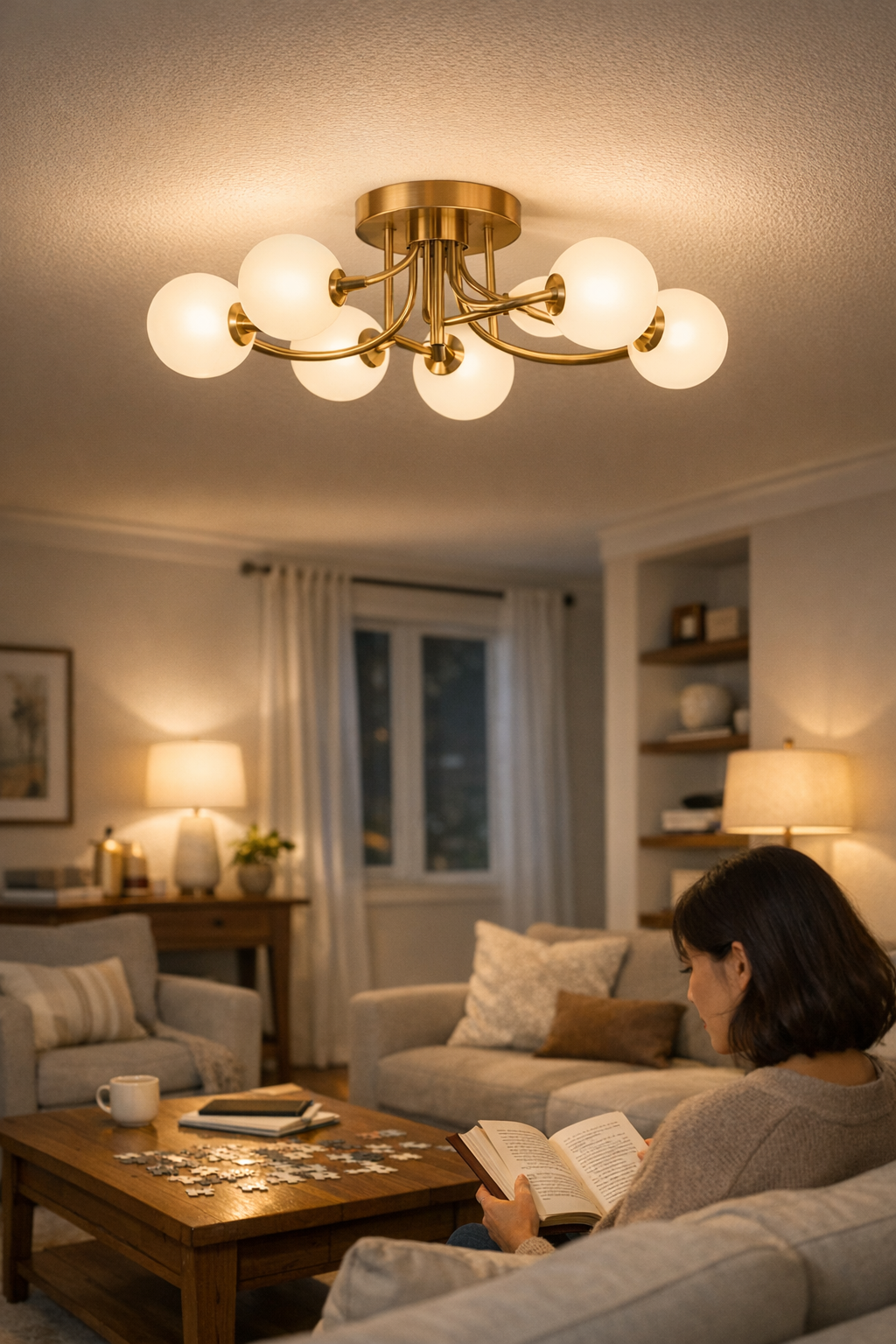
It started as a quiet curiosity—one of those details you only notice after settling into a new evening routine. The living room, freshly set up with ceiling panel and linear LED lights, looked crisp and thoughtfully arranged at first. Everything seemed in place, right down to the neatly tucked cable lines and the even symmetry overhead. Yet after a handful of nights, with people passing through, the difference between “well-lit” and “livable” began to show itself in small but persistent ways.
One Room, Two Lights, Two Experiences
You don’t notice it immediately. The blend of panel and linear ceiling lights promises flexible lighting: ambient light to fill the whole space evenly, paired with sharper beams aimed for reading, games, or whatever feels important that night. But as people settle in, the separation between the two light sources becomes visible on the floor—glare sharply focused on the coffee table, dull spots under the outer chairs, and oddly stretched brightness along walking paths. The room feels divided, almost architecturally, into sections defined by these layered light patches.
The awkward thing is how quickly you adapt—and then wish you didn’t have to. Sliding a lamp mid-game, nudging a chair to avoid glare or sink into the shadows, or letting a dim corner quietly collect unopened mail. No one says much, but everyone moves differently. It’s not a question of style or aesthetics. The space just doesn’t feel fluid, with each patch of light holding its own separate schedule.
Edges, Routines, and the Everyday Adjustments
At a glance, the setup still looks tidy—clean light lines, discreet mounting brackets, and cables corralled with a certain quiet satisfaction. But the feeling is fractured. You settle in to read and find one shoulder brightly lit like a stage, while the edge of the magazine blurs into shadow. Someone else drifts behind the sofa, stepping into a bright strip of light for a moment only to disappear into softness again. These edges aren’t about aesthetics so much as practical issues: spots where your habits shift without conscious thought.
This was the part I kept returning to. The room demanded workarounds—lamps added hurriedly, cords snaking across likely footpaths, seats quietly avoided after dark. Even a tidy ceiling setup can’t fix the discomfort when two light sources never fully agree on how the space should feel as it gets used.
Simplifying for Real Use
There was a quiet relief in scaling back. One broad ceiling panel light, even and stable, kept the whole room comfortably lit for most activities. Adding a single floor lamp, pointed carefully to the reading spot where someone always ends up, softened the sharp edges that had once competed for attention. Tidying leftover cords with one well-placed bracket, running cables out of sight, made the room feel less like a puzzle to be solved and more like a space to be lived in.
There’s no grand revelation here. More a slow realization that some lighting setups, even those that look sharp at first glance, only reveal their rhythms through repeated use. The most comfortable rooms, in the end, are the ones where small adjustments finally stop.
For those curious about quieter ways to keep lighting flexible, there are options like these.