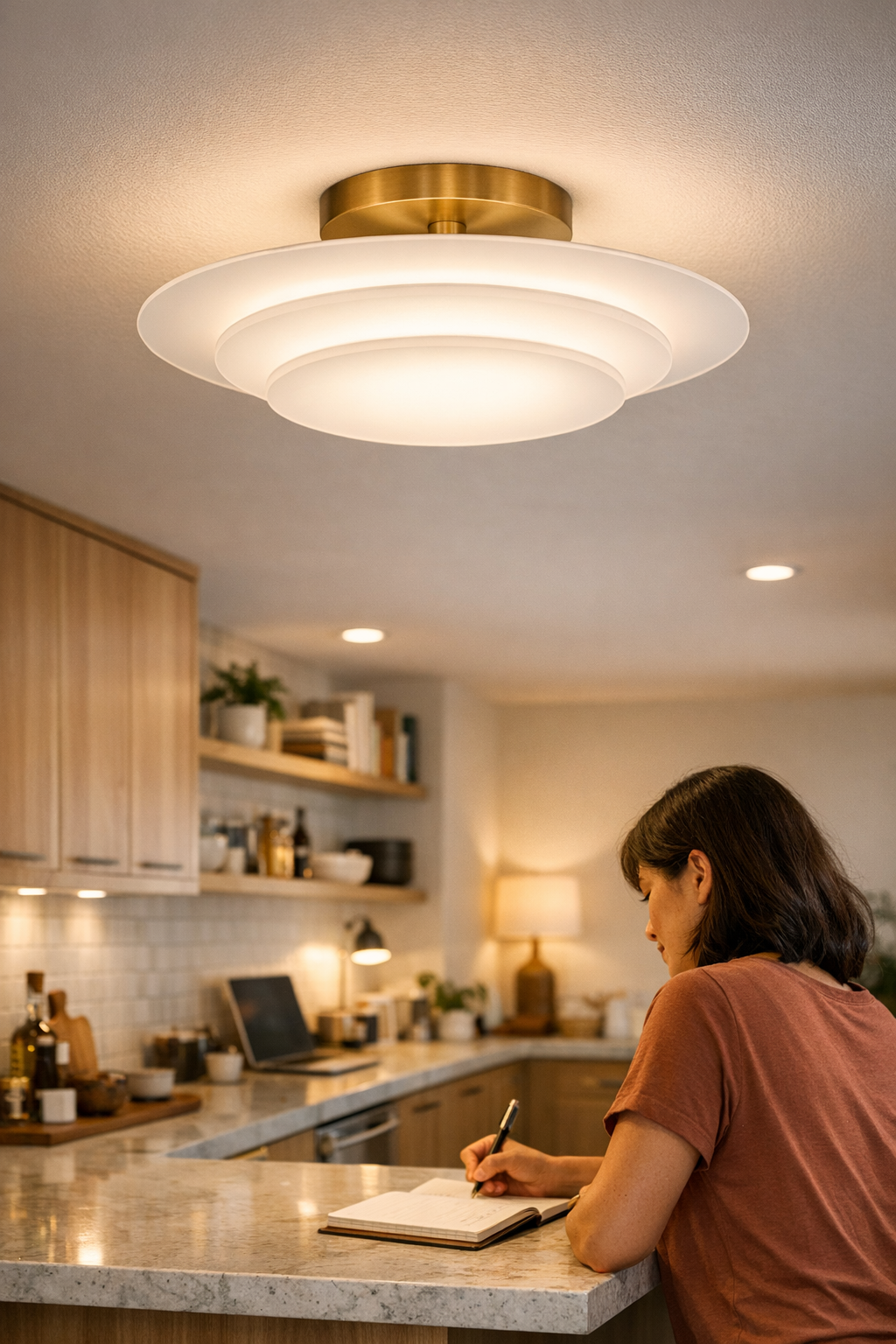
When Lights Shift: The Quiet Strain Behind Home Fixtures
When ceiling or wall lights flex, minor flaws worsen with use—sag, shadow shifts, and wiring strain. Secure fixtures to solid joists.
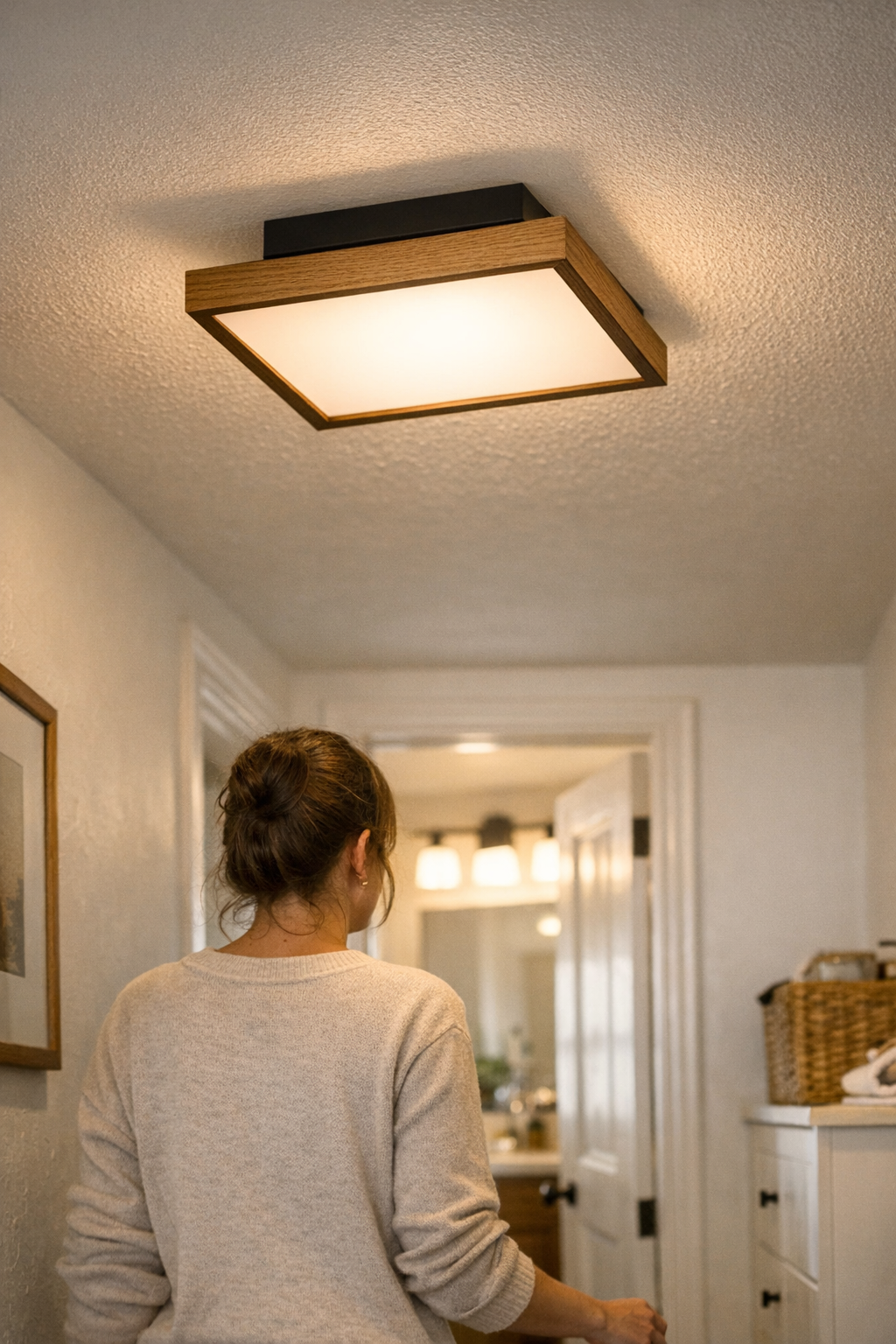
It’s a quiet realization that sneaks in during everyday routines. You might walk beneath a newly installed flush mount ceiling light or glance into a bathroom mirror lit by a vanity fixture, pausing for just a second. The fixture seemed fine at first, solid in its place, casting the kind of brightness you expected when everything was new. But then something shifts—sometimes so slowly it barely registers. A shadow leans the wrong way, or a fixture base lifts almost imperceptibly from the plaster above it.
Living with indoor lighting—especially in critical areas like entryway ceiling mounts, bathroom-rated mirror lighting, narrow stairway sconces, or under-cabinet task lights—can turn small installation details into bigger distractions over time. I started to notice an odd tilt during dusting, uneven light spread across floorboards, or faint creaks when a fixture moved with the slightest nudge. These didn’t feel significant at first, until over time, they quietly did.
The Change You Don’t See Right Away
At first, the new semi-flush mount or wall sconce still brightens the hallway on late evenings and keeps the kitchen counter visible when reaching for items under cabinetry. For the first few days, it’s just steady light—consistent, easy, expected.
But daily routines add up. Air moves when doors close, footsteps make joists hum, and sometimes you catch the edge of a fixture while cleaning or carrying laundry through a narrow corridor or utility room. That’s when the wrong kind of movement becomes apparent: a slight give in the metal, a seam that shouldn’t be visible, a spread of light growing lopsided—almost unconsciously pulling your eye and compromising clear visibility along stair turns or work surfaces.
That was the part I kept coming back to. At first, it was easy to blame a dusty bulb or a smudge on the glass—anything but the fixture’s mounting and structure itself.
The Feeling of a Room that’s Almost Right
It only takes a little wobble for a room’s lighting to feel unsettled. In my hallway, an older semi-flush ceiling light looked sturdy at first, resting on its bracket with a snug fit. I didn’t think much about what was behind it—the joist layout, the patchwork of old plaster, or the use of a wall anchor and some patience instead of securing directly into a joist.
Weeks passed, and the fixture began drifting, just slightly. The light cast arcs across the ceiling and added shadow pockets on the floorboards, making nighttime navigation feel uneven. When cleaning the glass, the base creaked faintly against the plaster—a subtle sound, but enough to feel off-balance. The fixture didn’t just look wrong; it felt unstable, affecting the room’s overall perception of even, glare-controlled illumination.
But you feel this subtle shift.
The Quiet Shift that Keeps Everything in Place
Eventually, I unscrewed the entire fixture, peering into the ceiling cavity to look for a more solid mounting point. That moment brought a simple realization: there’s a big difference between a fixture that looks secure and one that actually holds firm through every footstep, every door swing, and every routine use of the space.
I moved the bracket to attach directly into a joist. It wasn’t dramatic—no instant transformation or grand reveal—but after that, the fixture’s flex was gone. The light remained steady through hallway routines, shadows stayed consistent without drifting, and the fixture no longer demanded attention. There was no new gap at the seam, no uneasy movement; just reliable, stable lighting.
These small details accumulate quietly in the lived-in corners of a home.
Some days, I find myself thinking that lighting isn’t just about the bulb or the design of the fixture. It’s about where it rests, how firmly it’s attached, and the silent but crucial difference that makes fixed lighting feel genuinely reliable—whether it’s damp-rated bathroom fixtures, under-cabinet fixed task lights, or hardwired wall sconces for entryways and stairways.
It’s the kind of insight that grows as the room lives its routines.