When Loose Fixtures Disrupt Everyday Light and Life
Using random screws for lighting causes misalignment and shadows; matched screws ensure stable, even lighting and less maintenance.
The feeling started small and ordinary—just a half-second pause under a hallway light that didn’t seem quite right. At first, I brushed it off as shadows stretching farther than they should, or maybe the ceiling settling old age into the corners. I kept skipping over it, though I passed under that glow dozens of times a day: carrying laundry, tracing the stairs by memory, sometimes squinting in the bathroom mirror. You’d expect a problem with a ceiling fixture to become obvious right away, but it creeps up more quietly than that.
Swapping in whatever spare screws I had on hand seemed harmless when the fixture first went up. But the problems don’t wait long to show. Loose hardware, a mismatch in length or thread—what’s overlooked on day one becomes impossible to ignore after a week of flicking the switch, wiping dust, or shuffling baskets from room to room.
The Drift You Don’t Notice (Until You Do)
There’s a subtle way that lighting tells you something isn’t working. At first, the fixture looks steady enough. But over time, soft shadows creep where brightness should land clear, or the line of a ceiling mount just barely leans. You don’t notice it immediately.
But you feel it.
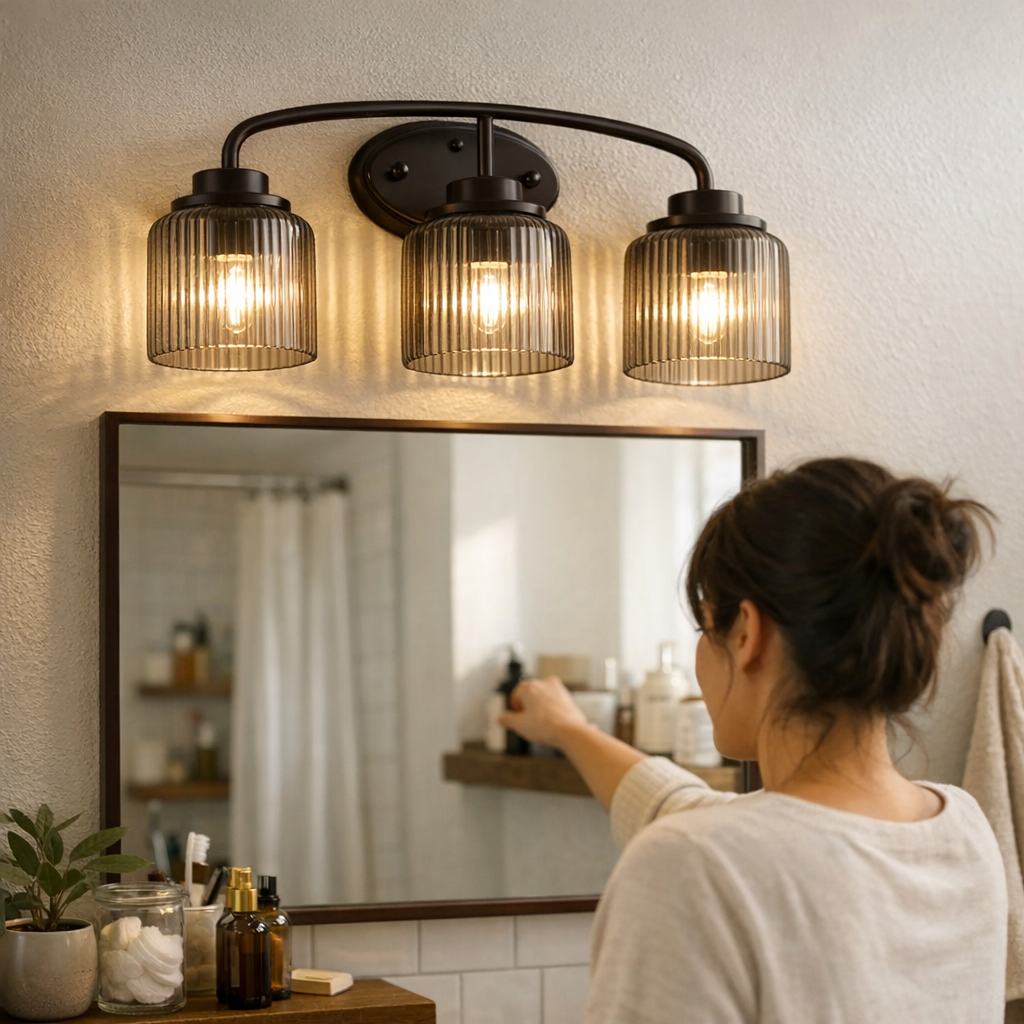
I caught myself tilting my head at the vanity mirror, wondering why a shadow fell harder on one side. The fixture above—rigged hastily with leftover screws—had started to slide off true. A single bump from a laundry basket was enough to push a hallway sconce out of center. It’s the kind of thing you live with for a while without realizing how often you make tiny compensations to keep visibility balanced and glare in check.
Where Weakness Shows Up First
In spaces you move through repeatedly—hallways, entryways, stairwells—the little flaws appear sooner. In rooms where lighting isn’t just decoration but crucial for safety and task clarity, even a small shift matters. Each pass under a flush mount ceiling light or a wall sconce, or every quick glance in mirror wall lighting, seemed to loosen the fixture’s grip. Slowly, wobble sets in, mounting plates pull away from drywall, shadows shift just enough to bother when you need consistent illumination.
That was the part I kept coming back to. It’s not the look, but the feeling of a room quietly losing its sense of ease and certainty in its lighting.
One afternoon, as I wiped down the bathroom sink, a hardwired wall sconce flexed away from the tile. The screw had missed the stud, biting just into plaster. It had felt solid on day one—until the daily routines revealed how thin that confidence was under repeated use, like in laundry and utility rooms where fixtures face damp conditions and frequent motion.
The Difference Between “Looks Fine” and “Stays Fixed”
At some point, I stopped settling for whatever hardware was within arm’s reach. Reading the fixture’s instructions carefully, matching screw length and anchor type to real wall or ceiling conditions—not just “close enough”—made all the difference. There was nothing dramatic or clever about it.
But once everything was right for the fixture type—whether a semi-flush mount ceiling light in a narrow corridor, or bathroom-rated vanity lighting—the light stopped drifting and shadows held steady. The hallway sconce endured night after night of casual nudges. The vanity light above the mirror no longer left part of my face out of frame or cast uneven dark edges. The adjustment became invisible—no more realignment, no more catching a fixture about to lose its hold.
It was strangely freeing, not to have to think about the light anymore. The space worked; I could just move through it, no extra fuss. Simple, solid, almost forgettable when the light holds steady, without glare or fluctuating shadow lines across work surfaces or stair turns.
On days like these, I find myself quietly grateful for the rooms that ask nothing in return—and if you’re still quietly chasing down a fixture that won’t stay put, there are a handful of ideas collected here: http://www.lighthelper.myshopify.com