When Low Energy Meets Closet Chaos
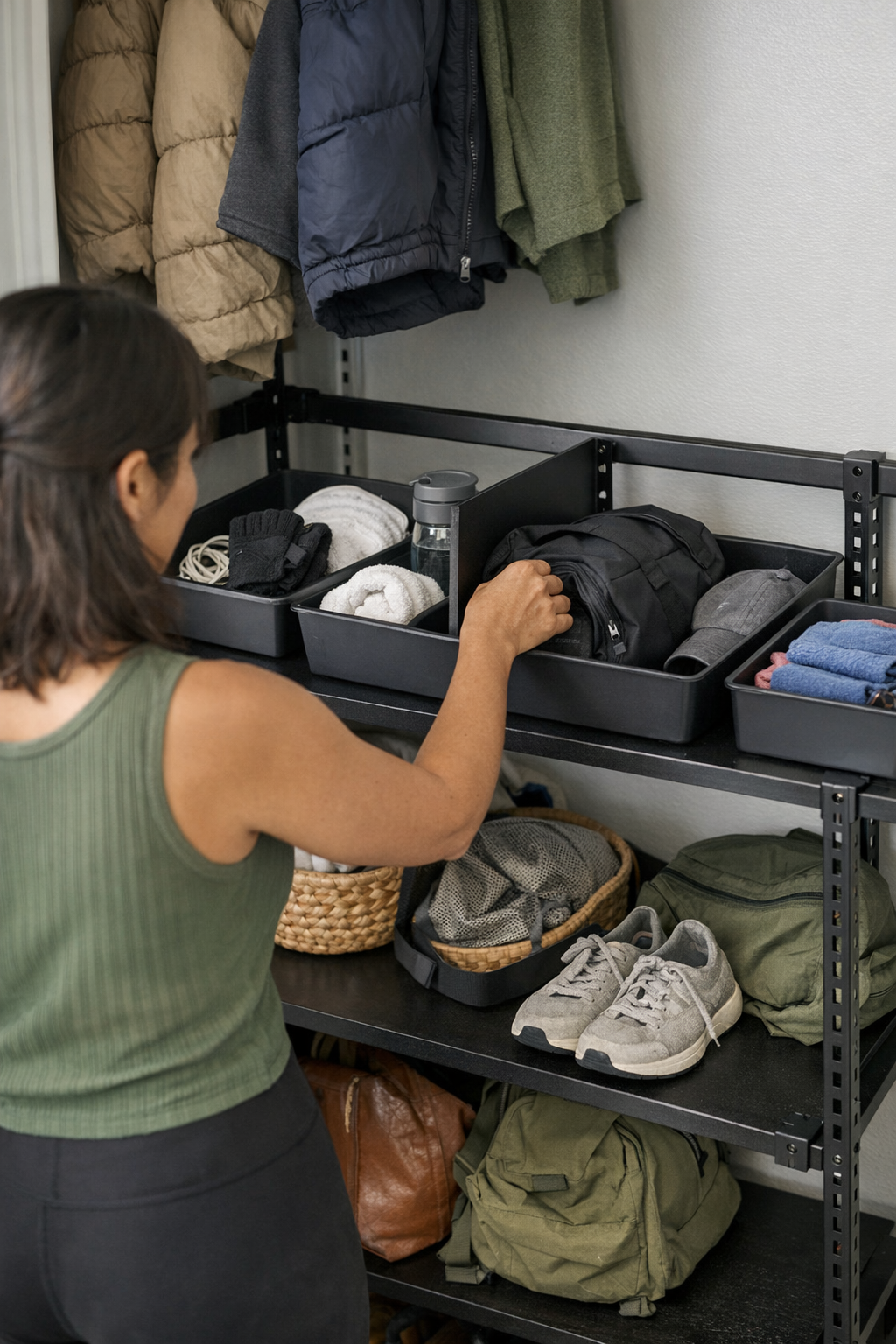
When routines break down, closets with dividers or bins stay organized longer, cutting clutter and making access quick even when tired.
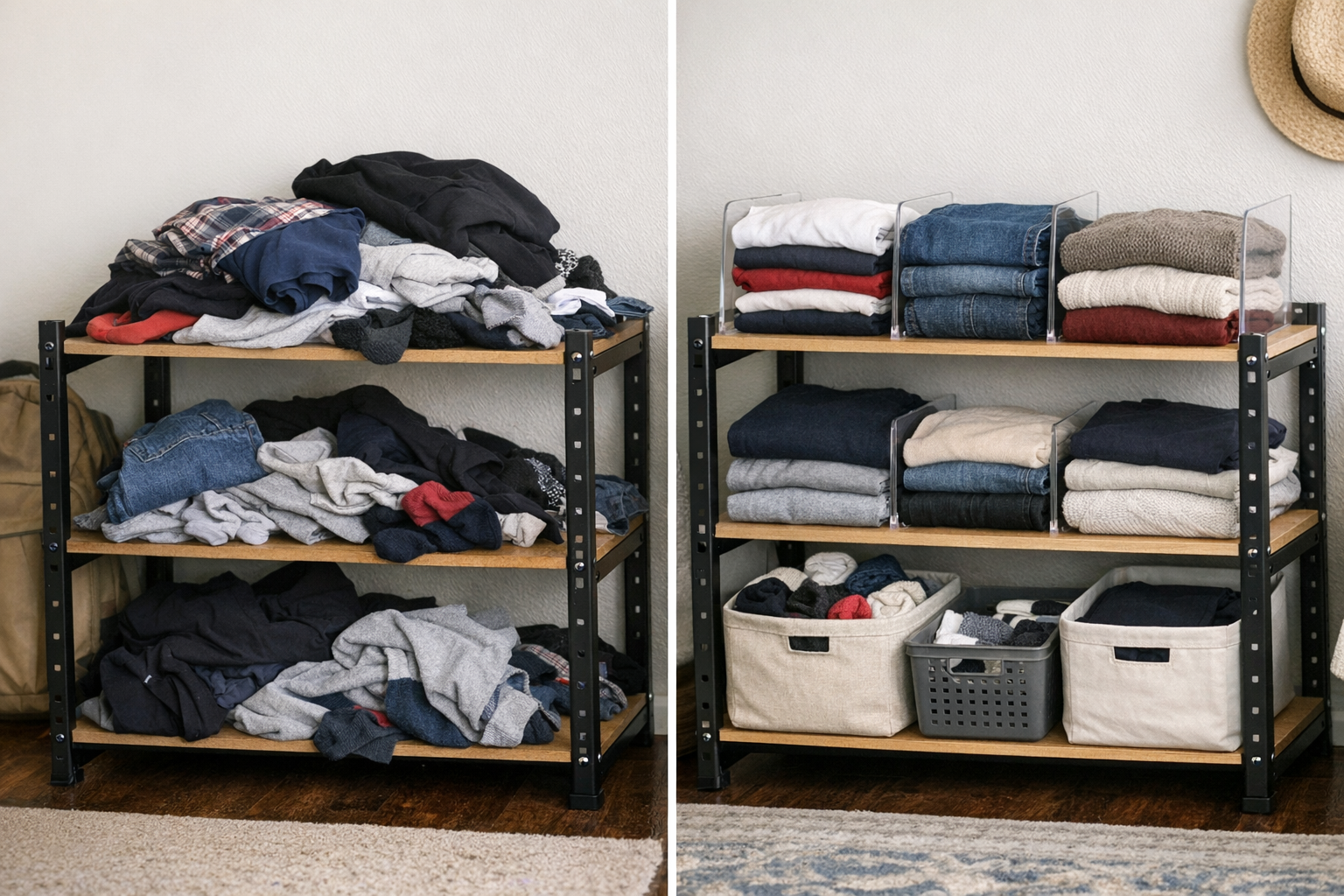
We usually don’t pay much attention to closet organization until a small annoyance slows down a morning routine or a favorite shirt seems to vanish into the mess. It’s a slow frustration, easy to ignore when things first look tidy but much harder to miss on low-energy days when you reach for something and find only a pile where there used to be order. The way a closet is set up, often with open shelves or bins, doesn’t seem like it should make such a difference. Yet over weeks, that difference quietly shapes the start and end of our days.
The Slow Decline of the Neat Stack
Most of us have stood in front of shelves that started out perfect. Sweaters and shirts folded, stacks upright, everything seemingly in its place. In the beginning, it feels satisfying to look at.
But shelves are honest in a quiet way.
One rushed morning later, a shirt is half-hanging off its pile. By midweek, socks find their way into a stack of pants. Grabbing one item nudges another out of line. It’s subtle at first, almost unnoticeable. But you feel it—the irritation of searching for that one thing, the sigh as another pile slides toward the edge. This slow collapse shows up most on days when you have the least energy to deal with it.
The Hidden Weight of Broken Routines
You notice the true cost of a disorganized closet when routines break down. On a tired evening, you want to put something away quickly. Instead, you’re reshuffling, re-stacking, chasing a fallen shirt to the back of the shelf.
It’s a gentle kind of chaos.
Without clear zones—bins, dividers, or any structure—the closet asks more of you. Each small effort adds up quietly. What should be a five-second job turns into a small battle, especially when you’re least ready for it. The clutter doesn’t just take up space; it strains your patience, little by little.
Small Changes That Guide, Not Demand
I still remember trying slim dividers on one stubborn shelf. Suddenly, the wide wasteland split into neat lanes: one for pants, another for tees, a third just for socks. Instead of thinking about organizing, I just moved. No more double-checking if things drifted, no more rescuing lost shirts by Friday.
That’s the refresh moment—a system gently steering things back into place, even when you’re not at your best.
Maybe there’s no perfect arrangement, just one that works with you, quietly smoothing the day’s rough edges. The best changes often aren’t loud or obvious. They simply ask less of you and offer a little more space to breathe.
The real impact of storage only becomes clear with time. Sometimes I think about how these small shifts make life easier—one less problem to solve, one less pile to fix.
If you want to see how subtle changes can matter more than expected, I reflected on these ideas while working on this personal project.