When Missing Tools Stall the Day’s Work
Effective tool tracking uses barcode systems to reduce missing gear and delays, keeping crews moving when sites grow or shifts overlap.
When the Tools Disappear (And Why It Matters More Than People Think)
I never really thought much about tool tracking until the job suddenly slowed to a crawl.
It usually sneaks up on you. You’re on a job site. Half the crew is in motion, tools trading hands, the steady rhythm of tasks clicking along. Then, out of nowhere, someone asks, “Has anyone seen the multitool?” The room tenses. The moment drags. Maybe it’s in a van, maybe someone pocketed it by mistake. The search begins, and the momentum quietly slips away.
Some interruptions barely register. It's only when the cost is measured—not just in money, but in frustration and lost hours—that you start to notice how inventory tracking really shapes the day.
Paper Trails and Missed Moments
Most jobs start simple. A clipboard. A pen. Maybe a spreadsheet on someone’s laptop opened next to a half-empty coffee mug. It's enough when the team is small and everyone recognizes each other’s handwriting.
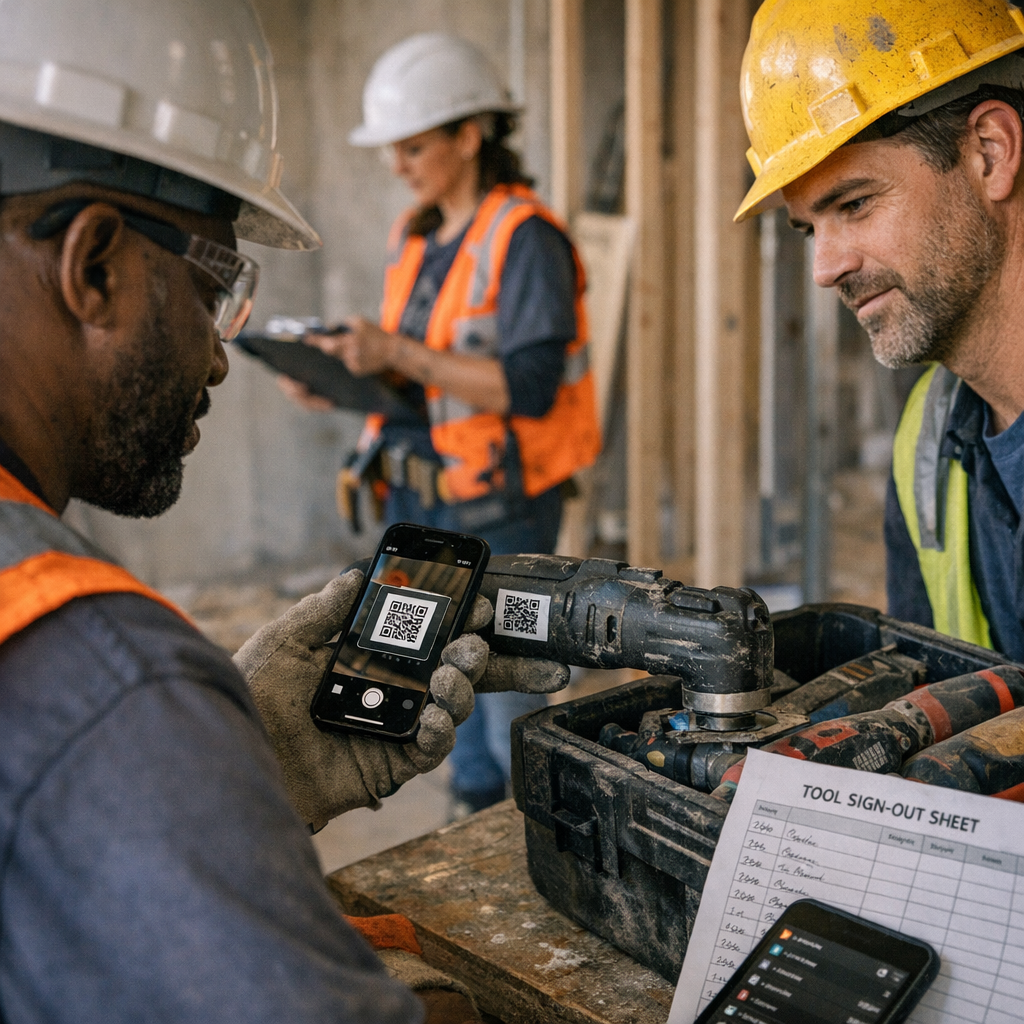
But as more trades cycle through, the neatness fades fast. Someone scrawls a signature, another forgets what time they signed out the oscillating multitool. One missed line can mean an unexpected stop while a dozen people wait.
You don’t notice it immediately.
But you feel it. The handwritten list that seemed harmless at the start of the week now hides the clues you need. Names blur, times overlap, responsibility vanishes.
When Bottlenecks Become Habit
There’s a routine when this happens—backs tracked, conversations replayed, frustration building over something so basic. It's rarely about the multitool itself. It's about what goes missing with it: trust, tempo, attention.
Team size grows, pressure mounts, and old systems buckle in small but persistent ways. That cheap pad and the memory of who borrowed what can only carry so far. Once the workday runs up against overlapping shifts, the friction starts adding up—lost tools turn into lost hours.
One afternoon, two teams needed the same tool for opposite corners of the site. Both said they returned it. The log couldn’t say otherwise. For a moment, everyone stood still, staring at the same paper, trying to reconstruct what happened.
A Small Shift That Changes the Day
Switching to a barcode app wasn’t flashy. In fact, it felt unremarkable at first. A sticker here, a quick scan there, nothing revolutionary. But a week later, the number of “Where’d it go?” moments quietly faded. Unreadable signatures didn’t matter. The system, imperfect as it was, caught most of the drop-offs before they became headaches.
There are still glitches—batteries die, people forget to scan, WiFi cuts out in the metal-clad basement. But the difference showed up in smaller arguments, in jobs that finished an hour earlier, in a bit more patience at the end of a long shift.
Maybe that's the real practical gain—less energy spent searching and more left for the work itself.
Somewhere in a quiet room, the logbook gathers dust, and the days settle into a rhythm that feels just a little bit lighter.
These realizations surfaced while working the late shift with a half-charged phone and an unexpected sense of relief. Read more.