When Night Interruptions Quiet the Household
Night restlessness in small homes often traces back to overlooked routine mismatches—adjusting these cuts disruptions, aiding smoother rest.
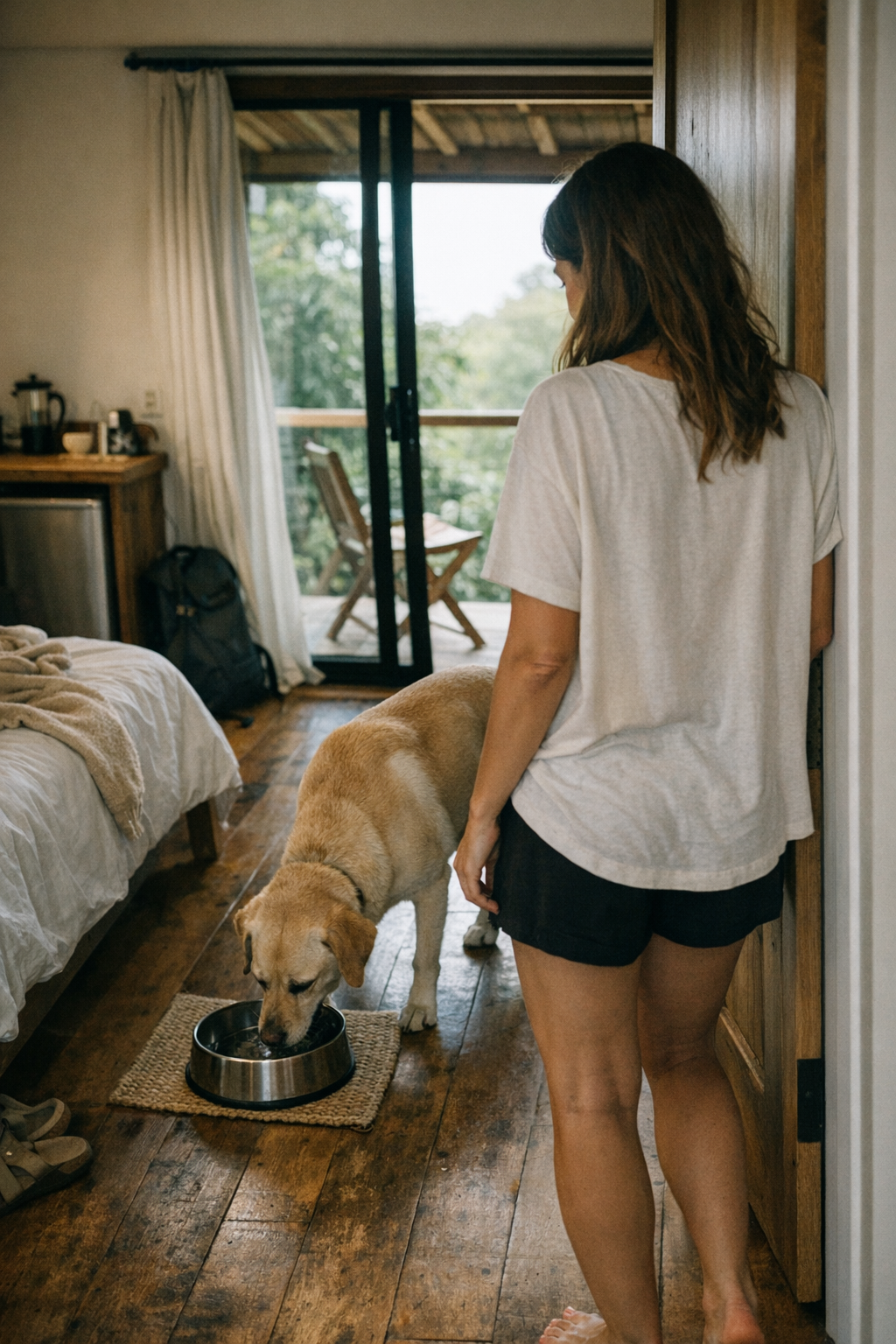
There’s a particular sound that’s easy to overlook at first—the steady shuffle of dog paws on the floor by the doorway, always late at night. At first, I thought it was nothing; just a restless spot, maybe an itch, something passing. But after enough nights, that soft pacing starts to creep into your sleep. Not all at once—a few times a week, then more often. Suddenly, it threads through your mornings too, pulling the whole day a bit sideways.
This wasn’t the version of dog life I pictured when I moved into a smaller home. It seemed simple—bed here, bowls there—but little obstacles showed up fast. The water bowl never felt quite right after dark, and no matter how many times I moved it back to the same corner, my dog kept rising, drifting over, circling back, sometimes pausing near the door like she was waiting for it to open. If I stayed awake, her movement would coax me up too, as if my own rest depended on following hers. It wasn’t just the sleep loss; it was how one tiny disruption grew bigger by repeating.
How Small Details Start to Outweigh the Big Ones
You notice it after a few mornings: a bowl moved a foot further away, a door not fully closed, and suddenly routine feels heavy. Not dramatic, just slower, with a shape you didn’t expect when the setup looked fine the night before. I found myself tiptoeing around scattered toys more often, shuffling my feet to avoid the half-closed crate. The space was tidy but not easy, and every reset took a little longer than it should on quiet mornings.
The change didn’t come with a new system or any expensive fix, just an uncomfortable realization: the parts of our setup pulling things off track weren’t obvious messes at all. If anything, they passed as acceptable—nothing obviously wrong until you counted how often we stumbled over the same hurdles each day. It was a difference that showed up in smaller ways than I expected, measured in moments—for me, waiting for the kettle to boil while I retucked water bowls again, or smoothing out the rest corner that never kept her settled at night.
When Routine Isn’t Enough
It looked fine at first. Dog beds arranged for softness, bowls in a tidy semicircle, resting corners wiped down and refreshed after every walk. The parts I’d chosen for comfort were there, just not in sync. I caught my dog pausing, indecisive, before settling—her body pointed toward the hallway, sometimes shifting spots two or three times before lying down. Even on good nights, she’d wake, check the bowl, nose the door, then come back to circle her bed and try again. That part kept returning.
Somewhere in that repetition, I noticed my own response—a bit less patience for cleanup in the morning, more missed signals at breakfast, a sense of chasing a rhythm that wouldn’t hold. It crept into the mornings: walk delays while I readjusted the door, a little more disarray in the kitchen. My routine felt “off” in the way only repeated friction makes obvious.
A Small Switch That Shifted the Pattern
It was moving the bowl, not by much—barely a handspan from my dog’s main sleeping spot at night—and closing the bedroom door completely after the last trip out. No fanfare. Just a small practical nudge: something my dog could reach without uncertainty, somewhere she could settle. I’d been missing it, thinking the restlessness was just part of nighttime dog life. When the bowl was within an easy turn of her head and the door wasn’t tempting half-awake checks, she stopped getting up. Settled longer. My own sleep pulled through more intact.
There’s nothing profound about it unless you’ve lived through a few nights of broken rest, dog and owner both chasing a routine instead of coasting along with it. In that quiet, the absence of usual interruptions became the clearest signal—a reset I didn’t have to monitor or remake every day. It was enough to recalibrate mornings too. The rest corner stayed neat overnight, kitchen flow was smoother, and somehow the dog toys scattered across the floor felt like normal clutter instead of a sign of chaos.
It sticks with me now. Noticing when something that looks tidy isn’t really working, and how close “easy” can be if you move a piece or two. There’s a subtle difference between a routine that simply exists and one that quietly supports both of you in the background.
If these patterns feel familiar, there’s a quietly helpful place to start reviewing your setup: http://www.dogpile.myshopify.com