When Nighttime Feels Unfinished: A Dog’s Restless Ritual
Unsettled dog bed routines mean comfort isn’t finished; placing the bed in a quiet, shielded spot helps smooth transitions and improve rest.
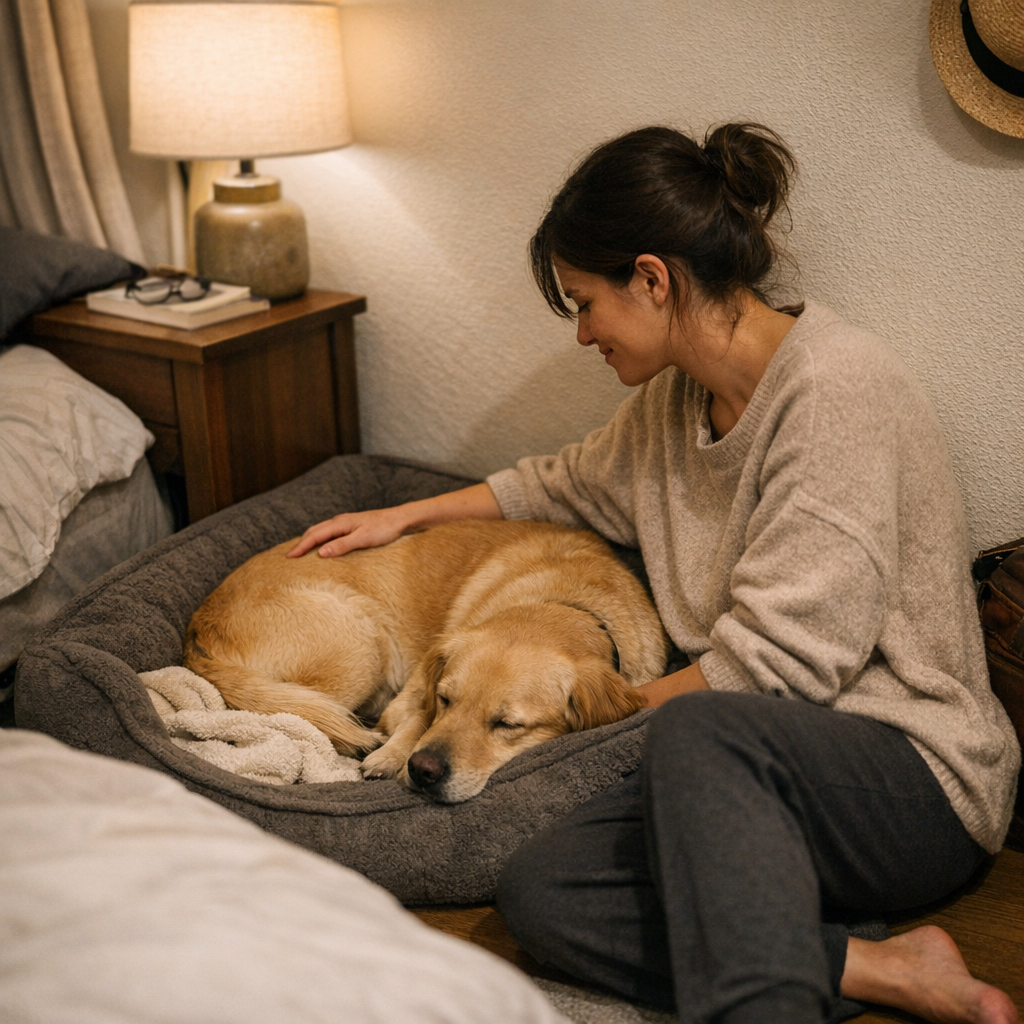
I started noticing the unsettled pacing just after lights-out—a quiet sign that something in the usual routine was off. Most nights, my dog would jump on the bed, circle slowly once, lie down, and then moments later get back up to circle again or shift to the edges. At first, it seemed minor, but over time this pattern became the new norm: bedtime wasn’t really arriving, just being postponed bit by bit.
With each night, the sense of unfinished business became harder to ignore. You start to notice after a few mornings—both of you waking up a little more tired, feeling off the usual rhythm. I’d arranged what seemed like a comfortable spot in the corner where toys usually gather, but restlessness, occasional sighs, or soft whines from distant sounds kept creeping back. It wasn’t so much about the bed’s softness, but where the bed ended up each night.
The Subtle Weight of Where Things Land
Dogs have a quiet honesty about how they claim and test their resting places. I’d put the bed out of the main walkway, but only just—the bed slowly shifted a foot or two from the wall over days, ending up in the path of hallway echoes or exposed to every passing light. It wasn’t chaos, but it did keep a low-level alertness hanging over our quiet evenings.
This low hum of disruption kept coming back: not a direct problem, but a drag on those last calm moments before sleep. On nights when a door clicked at the wrong moment, my dog would immediately stand, track the sound, then circle again, searching for calm in the edges of the room.
Moving the bed felt trivial, but putting it firmly against a solid wall made more difference than changing a blanket or adding pillows. Sometimes the shape of an evening depends as much on what’s blocked out as what’s added in.
When Routine Isn’t Really Settling
Soon, I stopped needing to time the pacing; I just felt it—the wind-down hadn’t landed. There’s a texture to how a dog keeps trying to find rest, adjusting or pausing when distant noise rattles the calm, if the setup doesn’t invite stillness. I folded the quilt differently, doubled the mat, cleaned the area more often. These helped at first, but the pattern of that small unfinished feeling would return when something else interrupted the flow.
Sometimes the routine resets itself in small ways: a toy pushed halfway under the bed, the water bowl nudged just out of reach by morning, a towel moved away when it’s needed for cleanup. You adjust, but these minor frictions pile up night after night more because of the bed’s position—not its softness or shape—than anything else.
This is where the practical side of dog ownership meets everyday comfort. Sometimes you don’t need to replace things, just move them.
The Slow Effect of Small Shifts
A few nights after pushing the bed firmly against the most stable wall, the circling dropped to a slow single turn. The changes showed up in smaller ways: less sighing before sleep, no unexpected returns to the doorway to check sounds, even the toys stayed gathered in their usual spot. The house felt quieter, as if waiting for the right arrangement all along.
The lesson wasn’t about finding a perfect spot or turning routine into ritual. It was that comfort sometimes arrives when the small frictions are quietly removed. I kept the change mostly out of respect for mornings that started with less fatigue. Even now, if the circling returns, it’s a reminder to check what in the setup is subtly pulling the routine off course.
We keep settling and re-settling, both of us. Some patterns shift on their own; others need a gentle push back toward calm.