When Nighttime Patterns Shape Quiet Moments at Home
Small mismatches in a dog’s evening routine cause repeated disruptions and poor rest; adjusting one detail can transform end-of-day flow.
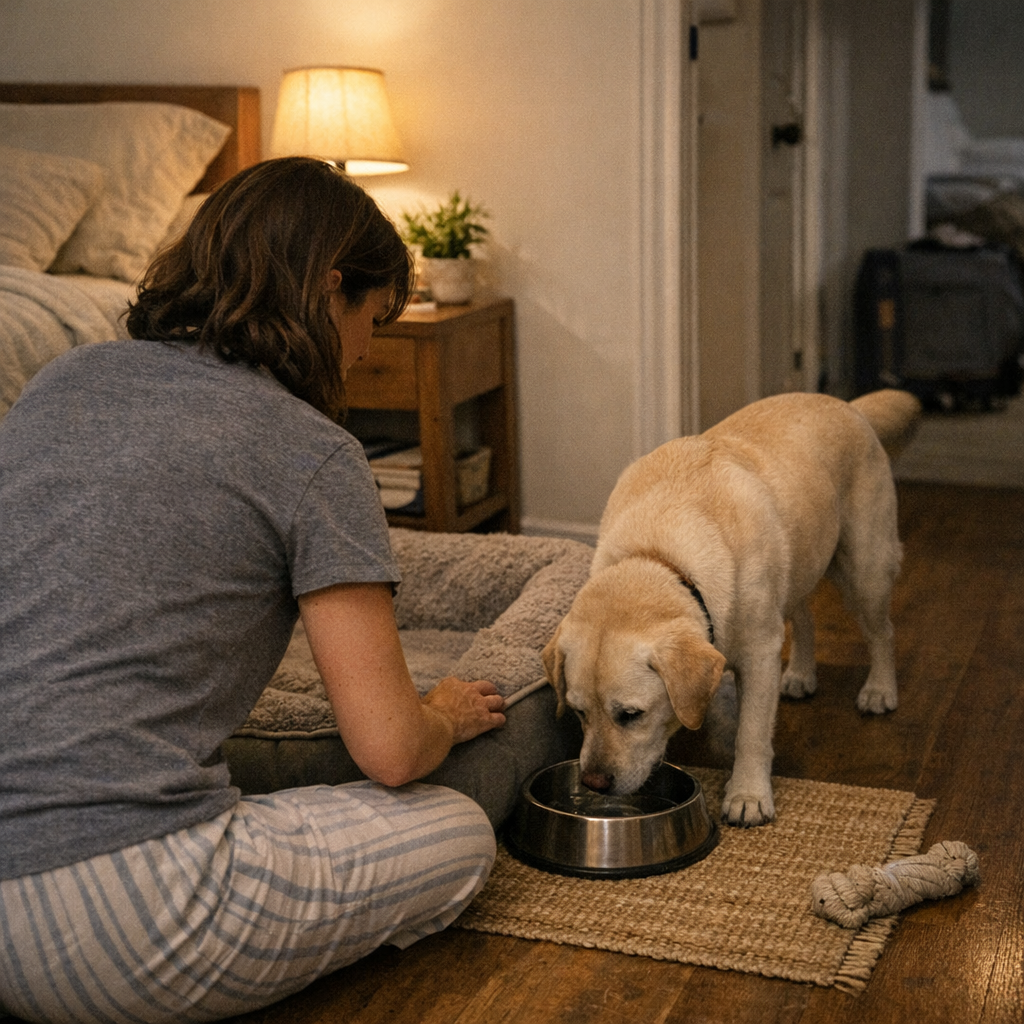
You start spotting it after about a week: the pace of your dog’s evening doesn’t quite match the effort you put into making everything comfortable and predictable. For us, it showed up around bedtime—after the walk, after the last bark at the window—when I expected everything to just settle into ease. But some nights, sleep drifted away because my dog stalled, circling in that small patch between bed and water bowl, like she was looking for a step I kept missing.
You expect routines to smooth themselves out over time. You’d think once everything was set, the rest would fall into place. But sometimes it doesn’t. That’s what kept happening.
Where the Pattern Keeps Catching
Most nights followed the usual routine: towel by the door (usually reached too late when actually needed), water swapped and bowls reset, bedding fluffed and moved just so. Everything appeared in its place on the surface. But there was a narrow stretch of floor that kept drawing her traffic—sometimes she doubled back after failing to settle, often lingering in that in-between space where neither “rest” zone felt quite right.
You notice it after a few mornings stepping over toys you thought you’d already gathered. Or after coming back from the kitchen to find her waiting again—in that tight gap by the bowl—not fully sure whether to settle down or nudge the bowl for another drink.
At first, it looked fine. But the slowdown came from that same three-foot stretch. Over and over.
Tidy Doesn’t Always Mean Easy
I’d assumed a neat setup was enough: crate flush against the wall, bed folded in the corner, bowls aligned along the baseboard. On paper, nothing was out of place. In reality, small collisions piled up—a leash buried just out of reach after a walk, the crate angled awkwardly so passing through with a handful of dog towels was tricky, water placed just far enough from the bed to require a detour. It was detail work, but it mattered.
The difference showed in subtle ways. She’d hesitate before finally curling up, shift her resting position a couple of times, or pause long enough that I’d end up whispering her name—half out of habit, half hoping she’d just settle and let the night come quietly.
What caught my attention wasn’t a mess. It was how she’d lock eyes with me across the room, almost asking if one small shift would help things actually fit.
The Unheard Signal
There’s a kind of sleep that comes by accident: when you move one thing just right, and the interruptions simply fade. One late weeknight, I pushed the water bowl closer—within easy reach from the bed, no crisscross through a busy traffic spot, no blocking the door. That was all it took. The circling stopped. She drank, stepped over, curled up—and that was it. The pause that had been the bottleneck turned into a quiet, honest finish.
You realize it’s not about finding a perfect setup. Most nights, everyone just wants fewer reasons to get back up. The quiet surprise was that the solution wasn’t about looks or a big rearrangement. It just felt less forced, less cluttered, less half-done.
Now, when evenings wind down, I still trip over toys and stack towels in wrong spots sometimes. But the path to calm is straighter. You stop noticing what’s missing and start feeling the difference in those last, unbroken steps across the room.
There’s more to these little fits and resets if you want to see them: http://www.dogpile.myshopify.com