When Open Storage Turns Into Everyday Clutter
Visible tool storage speeds access but requires strict overflow control; using an open rack for essentials with a closed bin keeps resets fast and space clear.
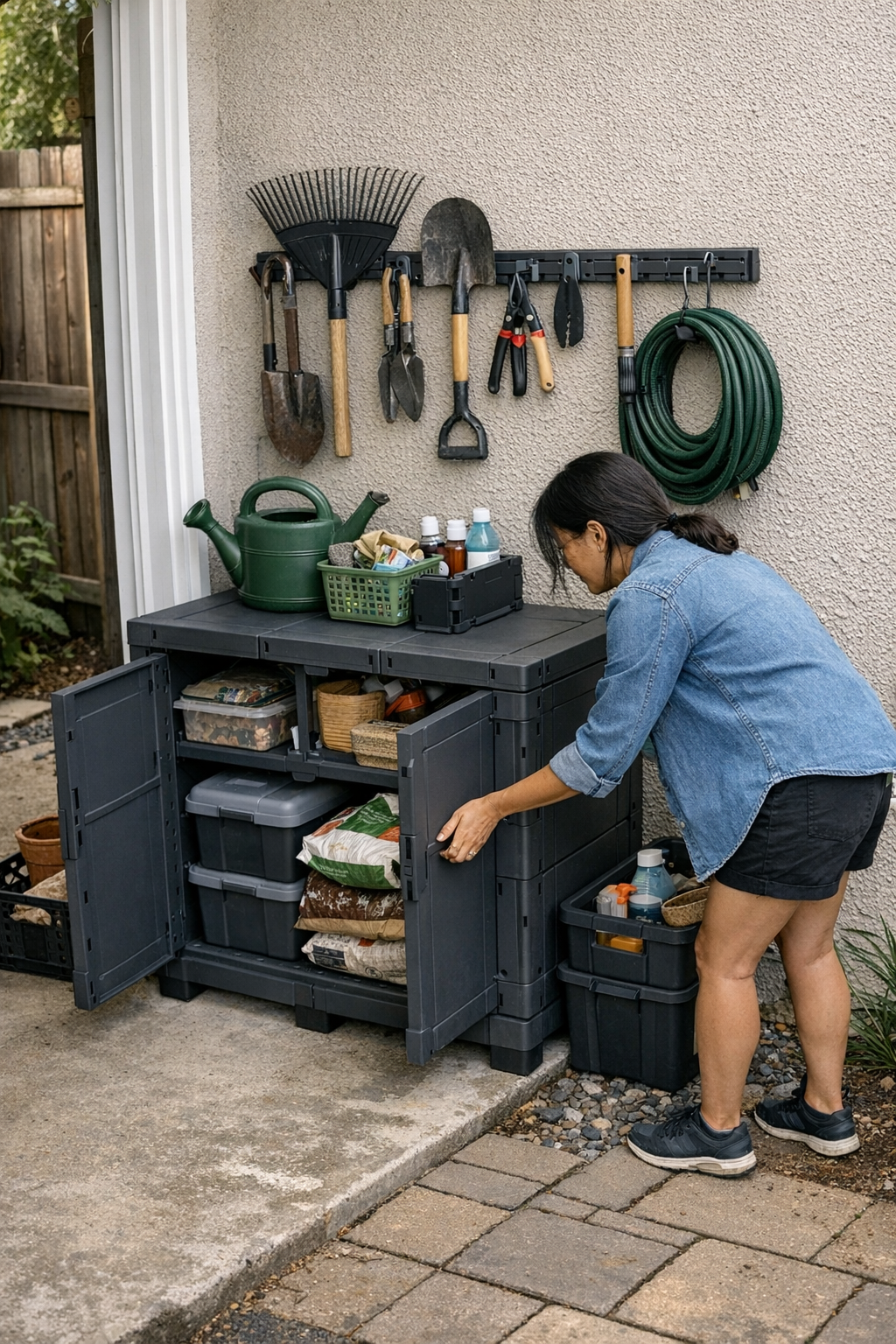
You don’t always notice when order slips into disorder, not at first. It usually starts with something simple—tools set just shy of their home along the garage wall, a rake left leaning instead of hanging. Over a week, small steps sidestep tools that weren’t there before. What was once an open pathway now gently squeezes you as you pass.
I’d always believed in keeping things in view. Tools ready to grab felt practical, especially when projects overlapped or a neighbor wandered over needing a spade. The logic was simple: visibility meant fewer steps wasted searching or fumbling. But open storage, I realized, comes with its own kind of slow creep. Tools slip out of line, a trowel’s handle juts the wrong way, and soon the walkway—once free—asks a little more effort each time.
You don’t notice it immediately.
Where Clutter Quietly Gathers
At first, I appreciated the wall rack. Everything visible. Quick to return, even quicker to grab. The kind of system that looks like efficiency from across the driveway.
But as the days added up, I found myself beginning to step around what was meant to stay out of the way. One rake migrated right into the walking path; a spade wobbled at the edge. Nothing dramatic, nothing that would stop the project—just the growing sense that retrieving the right tool now meant maneuvering around yesterday’s tools first.
That was the part I kept coming back to. The advantages of keeping things open—they unravel not with a bang, but in the slow shuffle of making space for things that haven’t been put back with intention.
The Subtle Shift of Systems
I made a small change, almost an afterthought. Below the rack, I added a closed bin—a place for anything not in daily rotation. One rule: tools used every day could live on the rack; the rest went into the bin, no exceptions.
Almost right away, something shifted. The overflow—the quiet tendency for things to sprawl—stopped. Movement through the space felt easier. It became clear: every storage choice shapes how easily you move and reset, not just how neat things look at the end of the day.
It didn’t make the work itself any easier, but I found space to breathe, and a little less friction in returning the routine to order. Sometimes it only takes a small change to return flow to a space that had grown unconsciously crowded.
Paths Rediscovered
Some days I wonder how long I tolerated the slow pinch. In hindsight, it’s always obvious when things could have been easier. Only by shifting a single habit—making sure unused tools had a true place—did I really see how much mental clutter I’d been walking around.
There’s something satisfying in reclaiming those inches of space. Not just for movement, but for a feeling that the work ahead has room to begin again. It’s gentle, but it lingers.
These small changes took shape on afternoons tidying my own shed, with more details quietly gathered over here: http://www.tidyyard.myshopify.com