When Order Fails Under Pressure in Everyday Drives
Breakdowns expose when neat car setups delay access; purposeful emergency kit placement and cable routing boost reliability and speed.
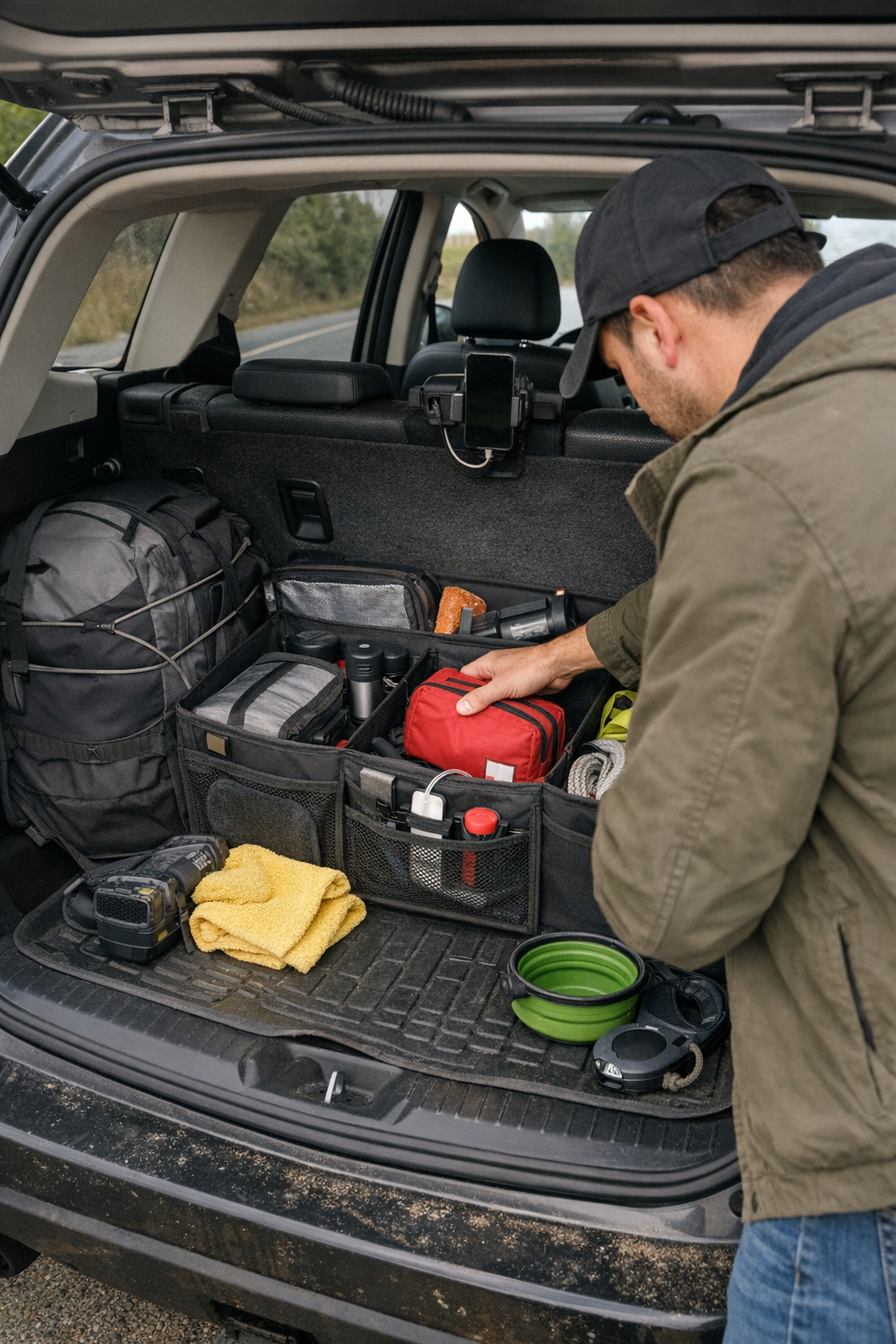
There’s a certain satisfaction in stepping back and seeing the car’s interior neat and sorted—everything tucked away, cargo squared off, cables hidden. It creates a kind of calm, the idea that order will protect you from whatever the day might throw at you. After years of habitual tidying, that was the image I chased: nothing out of place, trunk closed with a clean click, every charger and emergency kit out of sight. It looked right. But I kept noticing something else, and not on a good day—always in that odd, rushed moment when need and access didn’t quite meet.
Where Routine Meets Reality
You notice it after a few trips. The best arrangement is still the one that doesn’t slow down your routine—not just the driving itself, but the small pauses that aren’t planned: sliding back in on a cold morning, reaching for a charger with your hands full, or trying to remember which bin you stored the jump kit in after groceries had covered it. Clutter sneaks back, cables tangle, and tools shift out of reach no matter how confidently you shut the trunk last time. It looked fine at first.
Access matters more than surface neatness. Those times I needed the phone charger fast—only to fumble under stray papers or find it looped around another bag—the frustration was sudden and out of proportion. When the emergency kit slipped under the floor mat, one hurried stop quickly turned a calm plan into a scramble.
What Gets Buried Stays Hidden (Until You Need It)
It’s not the sunlight highlighting fingerprints or the quiet migration of coins under the seat that slows you down. It’s when neatness becomes layers, and layers become barriers. I thought keeping dog leashes, backup wipes, and charging cables hidden would make every trip smoother. Instead, the difference kept showing up: unzipping, shuffling, unloading—these small actions added minutes, stretched waits, and made every retrieval just difficult enough that the whole point was lost.
The frustration wasn’t with mess, but with an organization system that looked good but worked against actual use. I found myself shifting things out of the way just to grab something basic—a battery pack or a flashlight—like the setup I built to save time was now making me late. That was the part that kept coming back.
What Eases Return Means Everything in Practice
It took a few cold mornings, some night errands, and more than one rushed roadside moment to settle in: the best setups respect the repeated rhythm of car life. Moving a jump kit to a seat-back pouch—just within easy reach—turned a tense interruption into a simple reach. Guiding a charger along a fixed, out-of-the-way path kept it free of shared clutter and tangled cables. It wasn’t a big overhaul, just small edits that ended up untangling more than just wires.
The ease is in the return—the way you reenter the car, find what matters quickly, and move on. Not in the spotless shine, but in quiet, reliable access.
After living with your setup long enough, what feels organized sounds different from what actually gets you back on the road. Sometimes real order is less about looking finished and more about feeling ready.
If you’re curious, some tools built for this kind of use live quietly here: http://www.drivewellsupply.myshopify.com