When Order Meets Everyday Tool Use
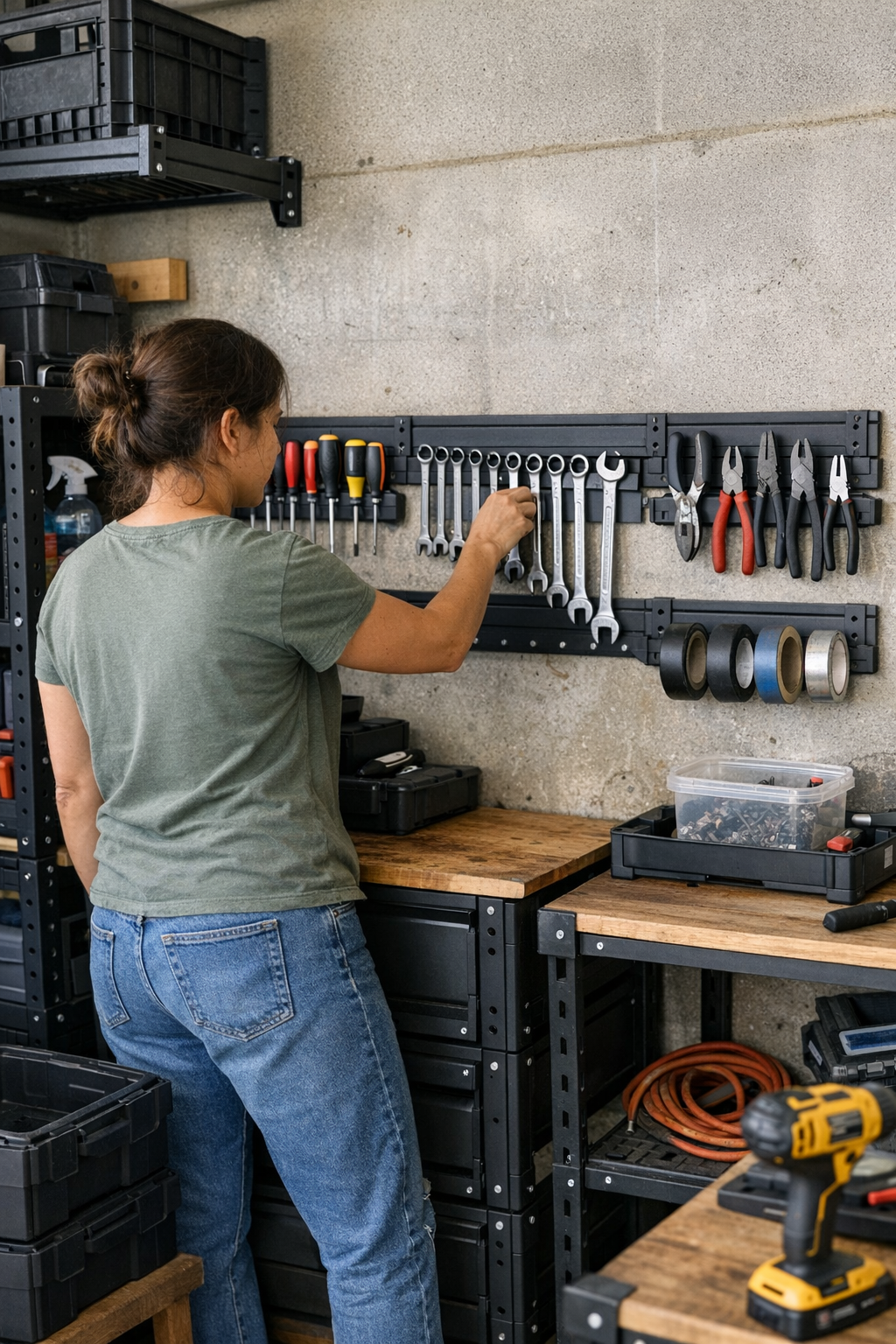
Splitting wall rails by category transforms storage into a workflow system, preventing misplaced returns and keeping project flow clear.
There’s a certain satisfaction in hanging every tool in plain sight, the wall forming a tidy tableau of order and possibility. For a while, it feels like a promise—a promise that your workshop or garage setup will stay under control even during busy projects. But as the days roll on, when evening repairs stretch longer and the need for one screwdriver blurs into another, that promise begins to fade at the edges.
You don’t notice the problem right away. But you feel it.
The surface still looks organized. Underneath, though, something subtly resists.
Friction Lives in the Gaps We Ignore
At first, everything lines up. Clamps beside wrenches, tapes filling gaps between sets of pliers. There’s a kind of visual calm in seeing every slot taken, every handle lined up just so on the wall-mounted rails or floor-based racks.
But then comes real use—a weekend’s worth of fixes, a weekday scramble to beat the clock. Returning tools becomes its own little puzzle. Overlapping handles slow the process. An awkward fit turns a five-second grab into a minor scavenger hunt. A slot is blocked, a rail overflows, and what once looked methodical now trips you up in small, invisible ways.
It’s easy to call this “organization,” until the minutes slip away and a half-finished job stares back at you from your workbench or raised-bed system.
The Simple Logic That Restores Flow
A while back, I tried moving away from these cluttered, mixed rails. Every time a project ramped up—especially when more than one person needed access to the wall or mobile storage at once—the old system stumbled. There was too much thinking: scan, shuffle, rehang, repeat.
So, I assigned each rail its own dedicated role. Wrenches get a rail. Pliers their own. Never the twain shall meet.
It sounds borderline obsessive, but with every tool resting in its lane, something shifts. Returning is faster—a direct shot, not a guess. You don’t need to pause and reorganize in the middle of the job. Lost tools stop wandering across the floor or slipping behind other storage. Clutter doesn’t stand a chance.
Sometimes the smallest change ripples farther than you’d expect.
Order Isn’t Always About Looks
A wall of perfectly filled rails feels satisfying, but it can be a clever camouflage for disorder. If there’s ever that moment where you hesitate, hovering with a tool in hand, improvising a sideways fit—chances are, the system’s breaking down. And the more pressure you put on it, the more leaks appear.
This isn’t just about being neat. When your returns match your motions—when every tool naturally finds its way home—suddenly, the space supports you. There’s relief in that. Tools stop wandering. Projects stretch a bit longer before fatigue sets in. That bench edge stays clear, save for the project itself.
I realized how much smoother things ran after a night of repair work. No missing tools, no mental load spent tracking what belonged where; just work, unbroken.
There’s a quiet clarity in aligning surface order with daily rhythm. Some spaces teach the lesson slowly, in the time saved and the clutter you don’t even see anymore. These thoughts came together while reshuffling my workshop wall, one rail at a time.