When Organized Spaces Hide Everyday Chaos
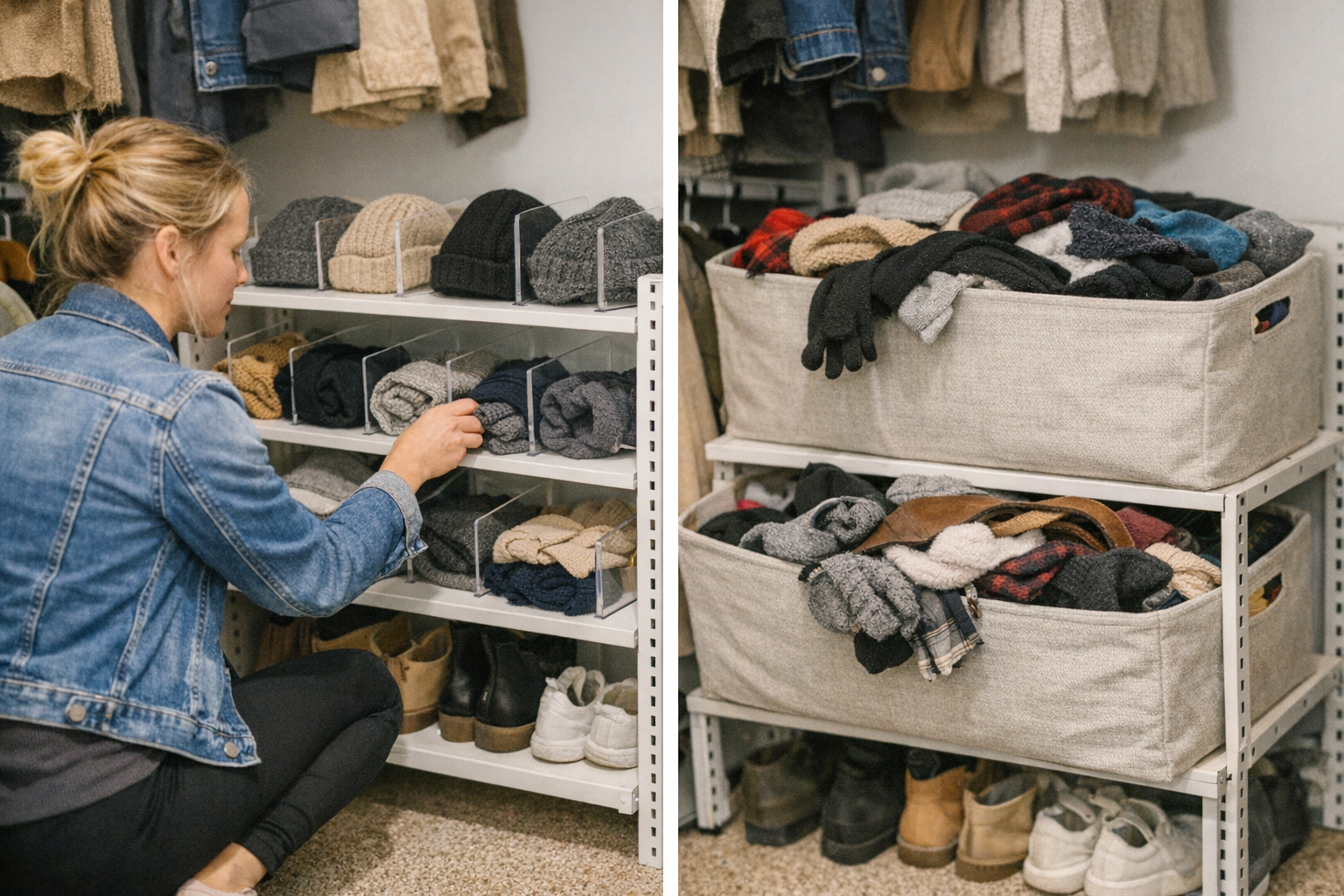
A storage system with shallow shelves and dividers prevents overflow, keeps routines clear, and maintains separate categories for easy access.
It’s easy to mistake organization for order. At first, a freshly arranged closet or a tidy shelf promises peaceful mornings and effortless routines. But the truth reveals itself slowly, accumulating in small pauses and quiet annoyances—a missing glove, a tangled belt, that single moment when you can’t quite find what you need. Hidden inside these moments is the real story of storage: the difference between looking organized and actually living it.
Storage isn’t just about making things look neat. It’s about how the space handles everyday life—how it keeps categories clear, limits what’s visible, and keeps choices simple from one day to the next. Over time, that difference matters more than it first appears.
The Moment Order Slips
You don’t notice it immediately.
The first days after reorganizing feel promising. Maybe you’ve picked up deep bins or stylish baskets, feeling certain they’ll keep chaos out of sight. But over a week, quiet mess creeps in. Socks disappear behind bins, scarves sink beneath hats, and the top layer of baskets surprises you with forgotten odds and ends. Every time you reach in, a little extra effort is needed. You begin to feel it—even if you can’t see it all at once.
An afternoon rush to grab a favorite scarf becomes a small ordeal—pulling out layers, putting things back, always searching. Order has softened into a daily shuffle.
What We Think Organization Looks Like
Side by side, two closets can start from the same place—shallow, divided shelves for one; deep bins for the other. Each looks polished at first glance. But within days, categories start to blur in the bin-and-basket world. Clean lines fade as socks and shirts drift together. Some items go missing until the next big reset. In contrast, shelves divided into clear sections quietly reward you with an easy reach and a single, satisfying motion.
You barely notice this when things are running smoothly. But when time is tight, the hidden inefficiency rises to the surface. That’s when you realize the setup itself is helping—or quietly working against you.
A Subtle Shift in Perspective
Sometimes, the solution isn’t a bigger container, but a smaller one.
After swapping out deep bins in a hallway closet for shallow shelves with acrylic dividers, habits changed instantly. Instead of a jumble, each hat, glove, and scarf stood upright—easy to spot, effortless to grab. Suddenly, putting things away didn’t require a reset, just a simple placement back into its clear home. The difference wasn’t just visual: routines held steady, categories survived daily use, and the quiet background clutter never built up unchecked.
It’s a gentle reminder that storage isn’t about hiding excess. It’s about making boundaries real—a little bit clearer every day.
The space you return to should feel easy, even after a long week. And sometimes, that ease reveals itself only when you take a step back and listen to the rhythm of your own routines.
These thoughts came together while reworking an old hallway closet—one shallow shelf at a time.