When Organized Spaces Quietly Become Hard to Use
Garage clutter builds silently when storage blocks easy return and movement. Small tweaks restore access, prevent dead corners, and ease resets.
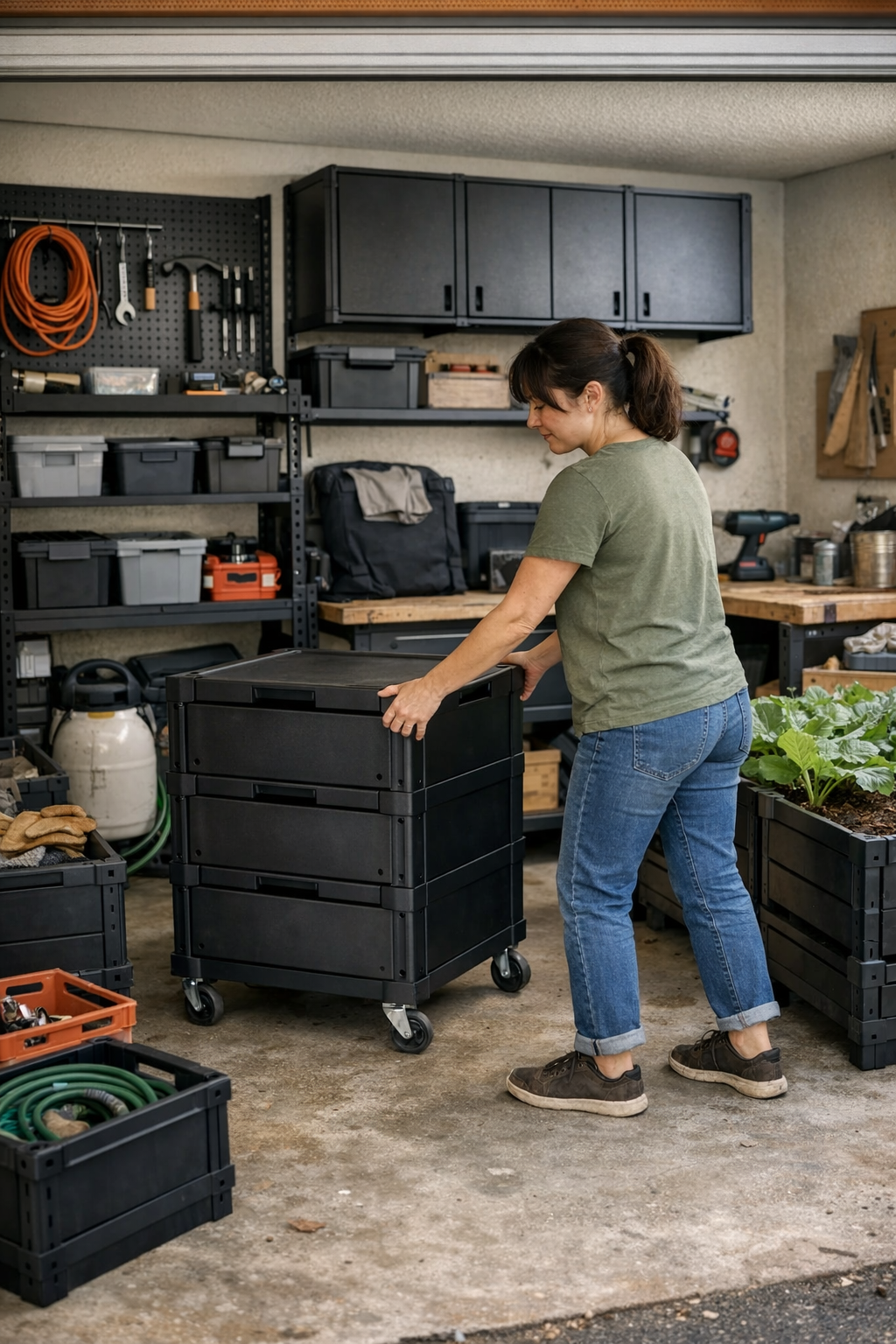
There’s a special kind of satisfaction in a well-arranged garage or workshop. Rows of shelves, a fresh set of wall-mounted cabinets, maybe a mobile chest with its drawers perfectly flush. For a moment, it feels like everything has finally found its place. But that sense of order is fragile, and easier to lose than most realize.
It doesn’t announce itself with a crash. More often, it fades quietly—one misplaced tool, then a tote blocking the usual path—and suddenly the daily rhythm falters. The challenge isn’t about how much you can store or how polished things look when first set up. It’s about how smoothly items move and return, again and again, when real life resumes.
When Stillness Becomes a Problem
Most storage setups look impressive right after the final bolt is tightened or the last drawer slides in. Cabinets stand solid, racks stretch along the walls. But it’s in the repetition—taking things out and putting them back—where true functionality is tested.
You don’t notice the friction immediately. But you feel it.
A fixed rack designed to keep clutter off the floor can become an obstacle if its corners trap bins or block access. A sleek row of cabinets feels complete until door swings invade a narrow walkway, making it awkward enough to sidestep. In my own garage, the gap between looking organized and feeling usable became clear during the first rainy week. A stray rake, an orphan tool bag—each interrupted a path that once felt open.
Friction Hides in Repeat Routines
The difference between a setup that works and one that only looks right often hides in small, repeated moments.
After a busy Saturday in the garage, things drift. Something meant for later is set “just for now” in the easiest spot. By Monday, the garden hose has spread across the walkway. Before long, the area near the rack becomes a holding zone for overflow. Clutter doesn’t arrive loudly; it slips in quietly.
I found that shifting my mobile chest a few feet—parallel instead of flush—suddenly made both the cabinet and rack accessible again. It was a simple fix, but the impact went further: that “lost” corner of shelving came back to life, and putting things away after projects took far less thought. The space stayed open, almost by accident. No more working around obstacles. No more quiet negotiations with returning gear.
The Subtle Art of Return
It’s easy to focus on how tidy a space looks on day one. But over time, what really matters is whether the layout supports movement and gentle resets.
If a storage unit—mobile or fixed—makes it harder to walk, reach, or return items in the moment, it quietly undermines its own purpose. When bins and tools stall in the same spots or you have to shuffle past a parked chest to reach something simple, that’s the signal. These aren’t just organizational hiccups; they’re reminders that the system needs room to breathe.
Look for ease of return. Notice when something keeps ending up on the floor, or if a walkway shrinks week by week. Sometimes, moving one piece—just a touch—restores the flow.
What stays usable, in the end, isn’t surface order. It’s how the space lets you move, reset, and keep going—without friction stacking up in quiet places.
I found myself thinking about all this after one small change in my own workspace, and how order, at its best, is never really finished.
These reflections came together after an hour of quietly reorganizing my own garage.