When Organized Spaces Start to Feel Like a Chore
Storage setups prioritizing daily visibility and category separation make finding and returning items faster, preventing clutter over time.
It’s funny how only a few days can reveal the true story behind any space you think you’ve organized. There’s a quiet satisfaction in those first moments—everything tucked away, bins and shelves lined up just so. The word “storage” carries a kind of promise: that things will stay where you put them. The first morning, order feels fresh and possible. But beneath that surface, something else is at play.
Real organization isn’t in the setup; it drifts in over days, each time you reach for something you need. That’s when the friction appears. It’s more about the spaces we move through than the things we’re putting away.
Surfaces Can Fool Us
You don’t notice it immediately.
A bin looks tidy until you’re rifling through layers for a missing glove. Shelves flaunt their openness, but leave chaos out in the open when categories start to blur. The difference between what looks orderly and what feels usable is subtle at first—almost imperceptible.
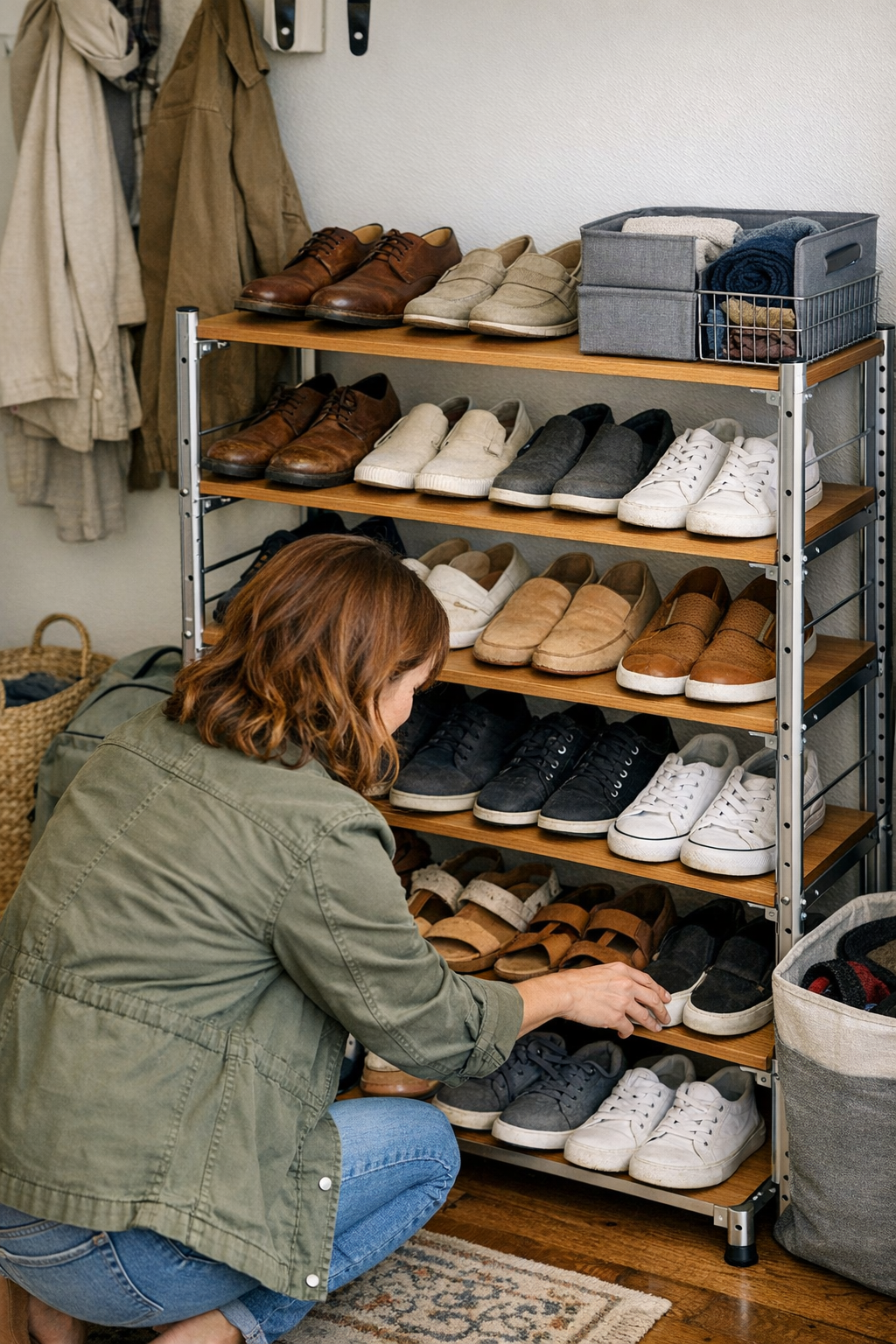
Then you feel it. Lost time in the morning, a small sigh when finding a pair of shoes becomes a ritual of digging rather than a simple reach. I’ve watched this play out in my own front closet: neat lines at the start, then, inevitably, an overflow. Order as a display is much easier than order that holds up after a week of living.
Hidden Friction in the Everyday
The test is rarely on day one. It comes after morning routines settle in. A deep basket, practical in theory, swallows essentials whole. Dividers that seemed precise blend categories till nothing is where it should be. After a handful of days, a closet or cabinet finds its “real” state—a pattern that’s less about how it looks and more about how it works.
There’s a world of difference between tidy appearances and effortless function. Finding myself hunting for the same thing each morning, I realized the setup was slowing me down—not because I was messy, but because the storage didn’t fit how I actually lived. A gentle refresh came from simply splitting an overloaded bin into open racks, grouping by use instead of just by size or color. Instead of searching, I was reaching. Instead of resetting order every week, it just held.
When the System Disappears
You know a system works when you stop thinking about it.
If you catch yourself constantly shifting, restacking, or searching, the problem isn’t your space—it’s the fit. Some things are better seen than stashed away. Others benefit from a gentle boundary, not a deep container. Over time, the most functional storage becomes almost invisible, a living part of your routine, not something that interrupts it.
It’s a small kind of relief: the disappearance of friction, the smoothing out of everyday actions. The best systems, I’ve found, are the quiet ones. They reset themselves.
I noticed this while rearranging the hallway one afternoon, shoes sliding less, mornings moving a little faster, the closet blending back into the background.
These thoughts took shape one rainy weekend, while shifting shelves in my own home.